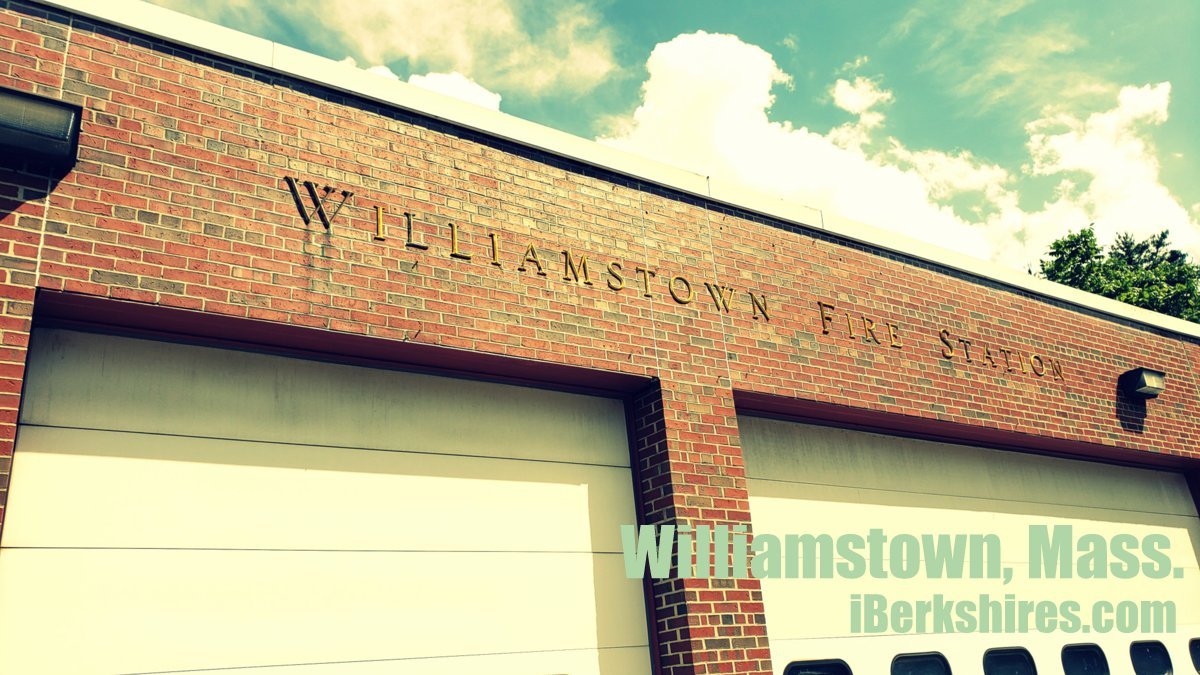
Williamstown Fire District Urged to Make New Station a Net Zero Project
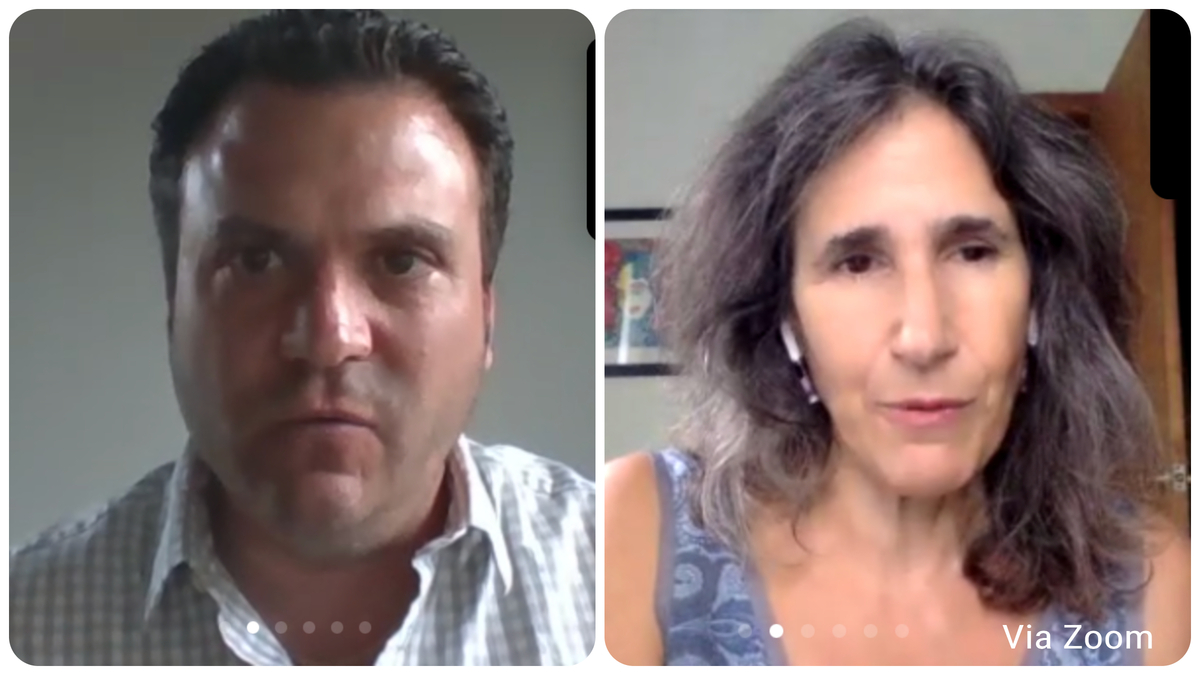
Building Committee member David Moresi and COOL Committee member Wendy Penner offer differing perspectives on construction of the planned fire station.
The occasion prompted an unexpected discussion about priorities for the building project.
Wendy Penner of the town's Carbon Dioxide Lowering [COOL] Committee asked before the vote whether the Building Committee had solicited proposals from architects with an eye toward net-zero greenhouse gas construction.
"There was a vote at town meeting [in June]," Penner said. "The residents voted the town of Williamstown should commit to a plan that will lead the town and residents to set and achieve a goal of net zero emissions by 2050."
After hearing that all the architects who responded to the district's request for proposals had cited experience with LEED-certified design and that the district leadership was in conversation with Penner's COOL Committee colleague Stephanie Boyd, Penner was appreciative.
"I want to thank you for your leadership in setting that important goal," she said. "Hopefully, in the long term, it will save money, even if it involves some greater upfront cost."
Prudential Committee member David Moresi, who also serves on the Building Committee, reacted by saying the goal of the district needs to be to build the best fire station it can build to serve the town.
"I do not see it as a model building or an experiment for us to employ certain building techniques that, in the future, could fail the project," Moresi said. "I'm not working against the COOL Committee, but we have a very specific purpose, and I do not want to muddle it, and I do not want excessive cost increases to the town.
"There are a lot of other projects coming up in Williamstown that I think will be more fitting for that. This is a public safety building. … We have a specific time frame and a limited budget, believe it or not, to work with."
Prudential Committee Chair Richard Reynolds sought to find a middle ground between the two perspectives, saying the district needs to be thoughtful in its design process.
"We want to make [the station] a good representation of the community's values," Reynolds said. "In the end, there might be some give and take."
Penner said she was not suggesting that the district do anything in the building's design that will compromise its integrity or the safety of the community but asserted that the goal of net zero carbon emissions is "not really an optional thing" for society.
"There might be a need for creativity and taking a longer term perspective," she said.
The four Prudential Committee members who attended the special meeting (John Notsley was absent) voted unanimously to accept the Building Committee's recommendation and authorize it to enter contract negotiations with Pittsfield architect EDM and New York's Mitchell Associates, the firms that submitted a joint response to the district's RFP.
First, Reynolds asked Building Committee Chair Elaine Neely to explain the selection process her panel used to choose among the four finalists from among seven respondents.
"It was a very difficult process because basically all seven [respondents] could have built this building for us," Neely said. "They were all so well qualified."
Prudential Committee member Ed Briggs raised concerns about the fact that the Building Committee had not visited any completed projects of the respondents before making a final selection.
Neely said the respondents had submitted numerous pictures of their past projects and floor plans with explanations of how they approached various problems. She said the Building Committee might have the opportunity to make site visits during the design phase of the project after the architect is on board.
"I don't know that the ones they've designed are going to necessarily end up being what we want," Neely said. "Certainly there are some things that are in every design, like the number of bays. But there are other things up in the air, and they'll come and ask us all what we want before they start to build it."
Wednesday's vote authorized the Building Committee and the district's owner's project manager to negotiate with EDM/Mitchell. Neely did not know if it would be possible to have a proposed contract in time for review at the next regular Prudential Committee meeting on Aug 18; Reynolds said his colleagues should anticipate having another special meeting for the purpose of approving the contract.
Tags: energy efficiency, fire station,