BCC Debuts Berkshire Culinary Institute
PITTSFIELD, Mass. — Berkshire Community college has overhauled its hospitality and culinary program to meet the needs of an ever-growing industry in the Berkshires.
"Last year, Berkshire Community College put the Hospitality and Culinary program on hiatus, and it turned out to be terrific timing," Director of Workforce Development Jay Baver said.
"Because when the pandemic hit, we hired a new professor for the hospitality portion of the program who re-imagined the entire curriculum and updated it."
For the fall semester of 2021, the college is launching the Berkshire Culinary Institute, which offers new courses and updated facilities for those looking to pursue a career in the industry.
The program has three certificate programs — lodging management, culinary arts management, and food and beverage management — and a new associate's degree program in hospitality and tourism management.
This program is designed to turn out professionals for positions such as cooks, chefs, event managers, food and beverage managers, front desk supervisors, innkeepers, and general managers.
Hospitality faculty and curriculum coordinator James Storey revamped the academic aspect of the program while Baver did the workforce side to first create a fast-track hospitality and culinary program that ran online to great success.
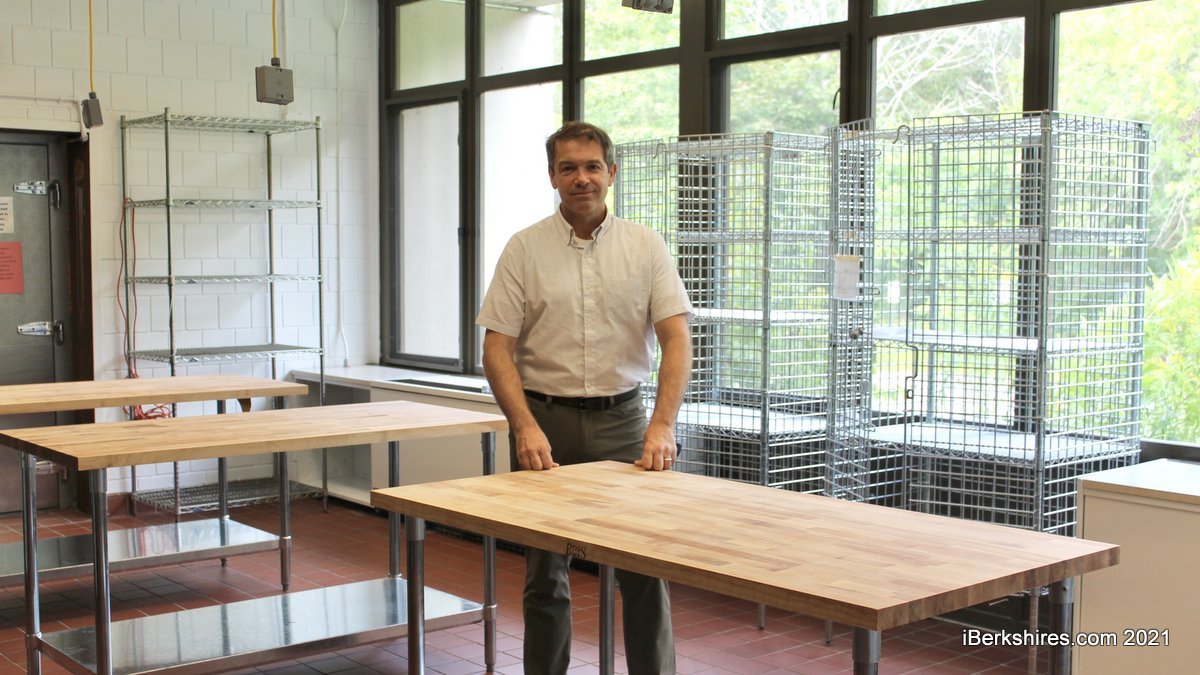
With a $400,000 grant awarded by the Massachusetts Skills Capital Grant Program, the college will purchase a host of new appliances to replace the former teaching kitchen and transform it into a specialty bakeshop.
The grant program, launched in 2015, was created with the intent of replacing outdated equipment at technology in vocational high schools and community colleges.
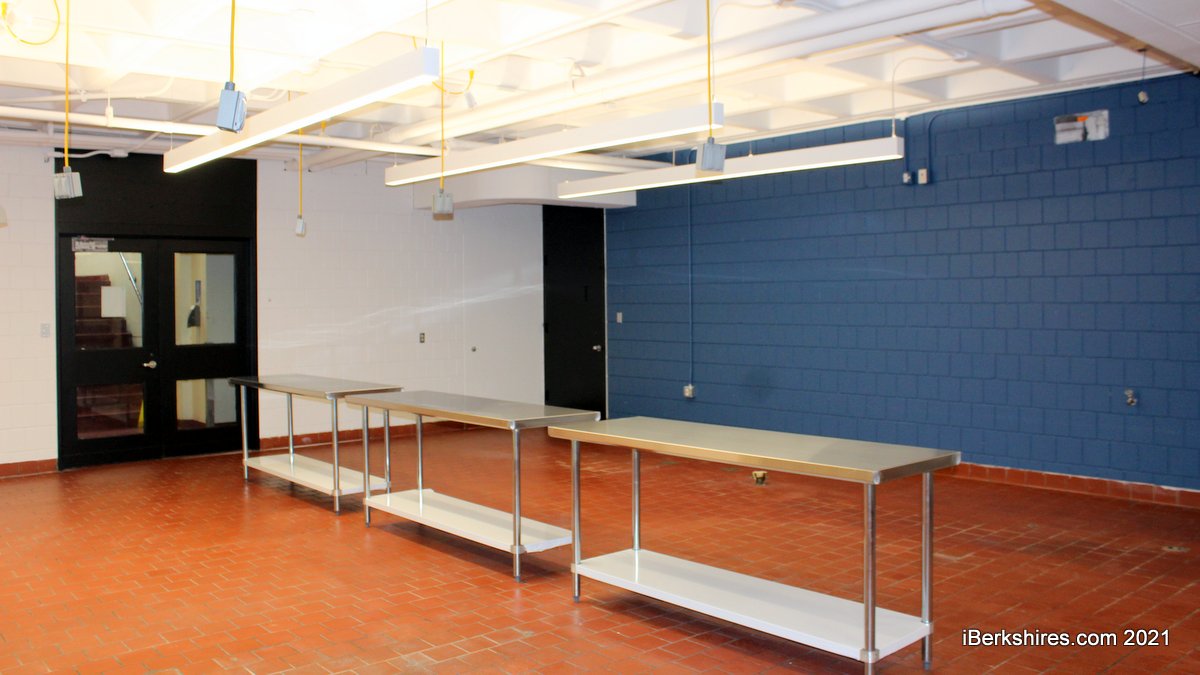
A large part of the former cafeteria will also be transformed into a new culinary space that will be available for other uses including catering preparation, cooking labs, and classrooms.
Class sizes will be small, averaging at 15 students.
"We're going to utilize the cafeteria kitchen as the new main teaching kitchen and we are going to convert the old teaching kitchen into a specialty bakeshop," Baver explained.
"The old cafeteria kitchen is this large commercial kitchen and is now the main teaching kitchen for all the culinary students and right adjacent to it is this big open space that has been completely renovated. It has power that comes out of the ceiling, there's going to be big stainless steel tables so that the students can run culinary equipment, use knives and things, and have a teacher up in front with plenty of space."
Reportedly, the college has had an "incredibly quick" turnaround with construction in order to be ready for classes in September.
Though the classrooms will be ready to go for the new semester, they will be awaiting some equipment that is difficult to get because of the pandemic. Once those arrive in a few months and all of the renovations are completed, culinary students will make the fare they create available for faculty and other students as a way to provide hands-on training.
Investment group Mill Town Capital sponsored BCC's application for the Massachusetts Skills Capital Grant Program and has vowed to support the new program by employing four interns from the college for three years.
These internships will be paid and the entities have agreed on a livable wage of around $15 an hour.
Mill Town's support is reportedly a $173,000 upfront investment.
Local coffee producers Currency Coffee has also partnered with the program, pledging $50,000 in equipment and consulting.
Baver emphasized the importance of filling jobs in the industry, especially after COVID-19 caused a mass exodus of industry workers even with the demand for their services has been consistent.
"It's not just Berkshire County, right now it's nationally, there is unprecedented demand for culinary and hospitality professionals," he said. "Some of the industry estimates are that through the course of the pandemic, our industry lost 50 percent of its employees, and they're not going to come back."
Large names such as Miraval Berkshires Resort & Spa, Canyon Ranch, and Main Street Hospitality group were not able to operate at full capacity because of a lack of employees, specifically cooks, servers, and housekeepers.
"What I've been telling local businesses is that from the consumer standpoint is, we're going to be forgiven this year for not having enough employees, everyone gets it, no one could have planned for this, but I don't think we're going to be forgiven next year," Baver added.
"So we have about a year, a little less than a year now, to really get staff trained, getting new people into the industry, and these programs that we have, the fast track non-credit program, the certificate programs, and the degree programs and you throw in the Berkshire Culinary Institute, we have the infrastructure to meet the demand, we just need the students to get into the program."
In regard to the increasing metrics in the community spread of COVID-19, Baver said he is prepared to quickly transfer this education online if needed.
"The work that I've done in the workforce has been to bring all of the hospitality and culinary training online, so should we be required to go online, we're ready," he said.
"Professor Storey developed some of the online architecture we use already, so he's more than capable of putting his curriculum online immediately," Baver said, "but we're all hopeful that we can do some in person."
For more information or to apply for one of BCC's programs visit www.berkshirecc.edu/apply.
Tags: BCC, culinary program, hospitality,