Wall to Be Moved to Make Space in Williamstown Fire Station
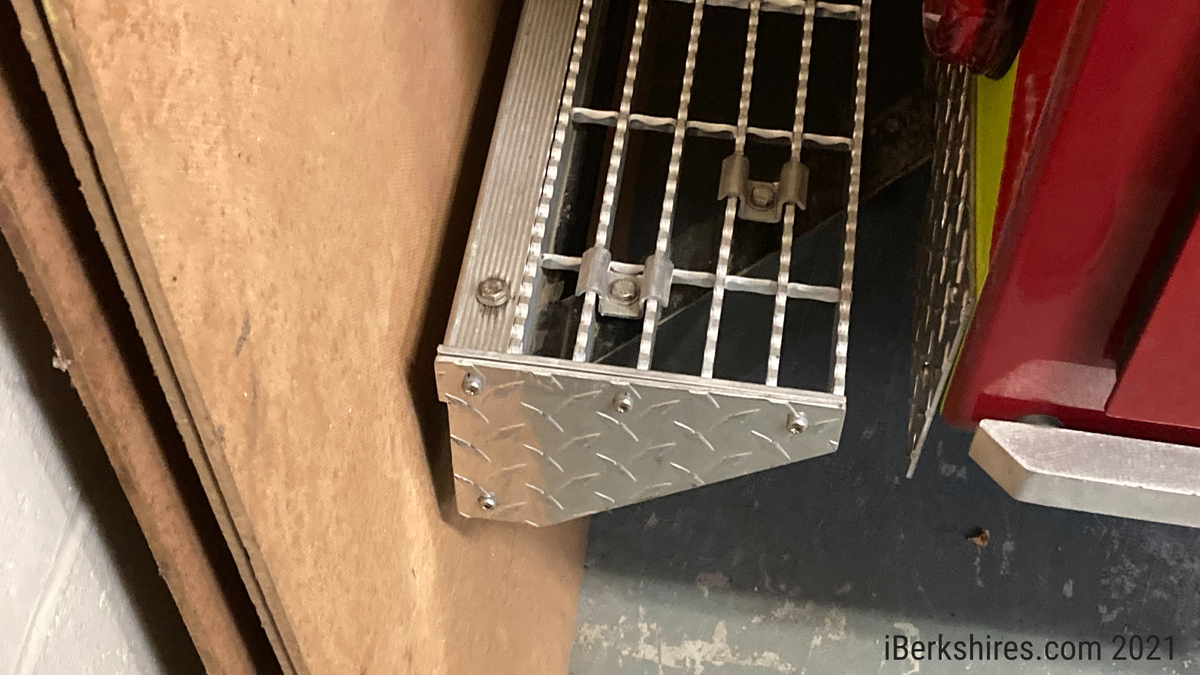
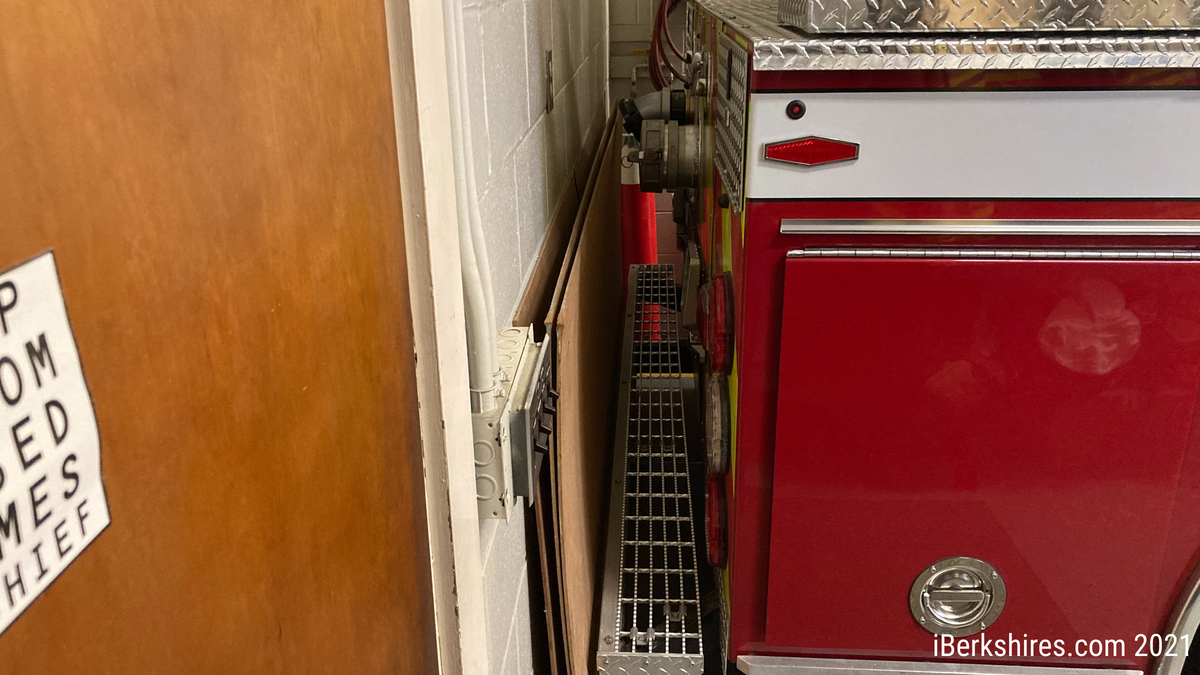
Sheets of plywood keep the fire truck's bumper from hitting the back wall.
The five-person Prudential Committee that oversees the district voted last Monday to enter into a contract for design services on the new Main Street station. And the panel agreed to spend up to $14,000 to move an interior wall in the Water Street facility.
Fire Chief Craig Pedercini said the wall at the rear of the apparatus bay needs to come back about 4 feet, eliminating a closet and taking up between 1 and 2 feet of space in the station's meeting room at the rear of the structure.
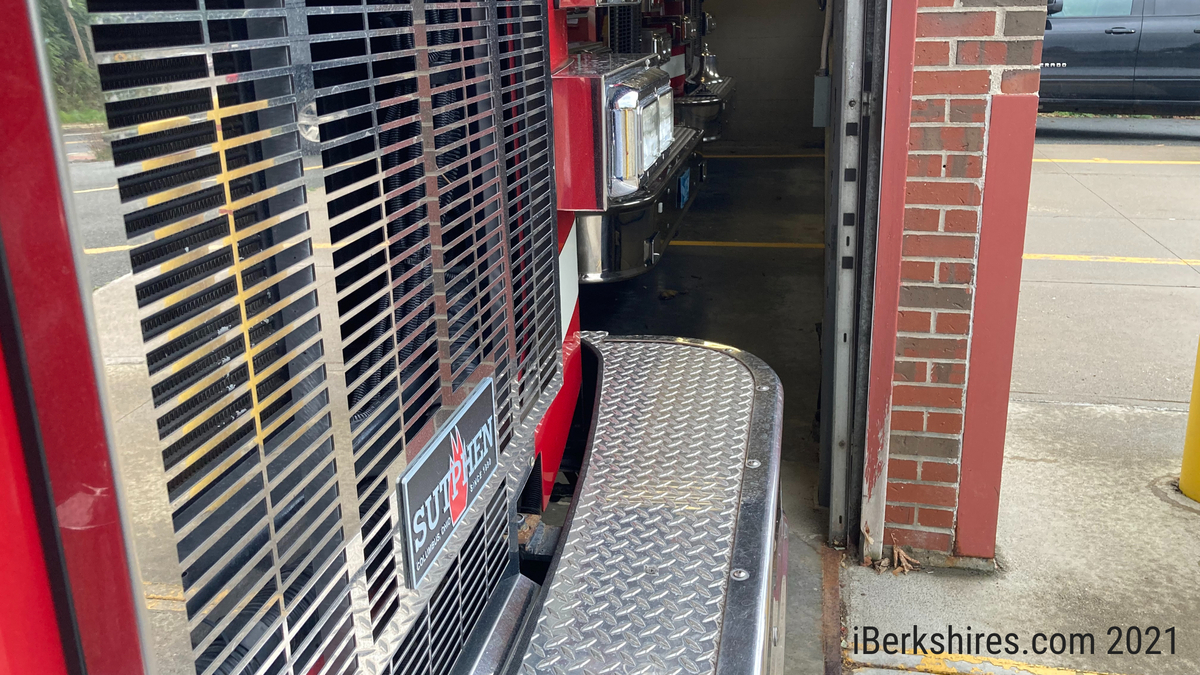
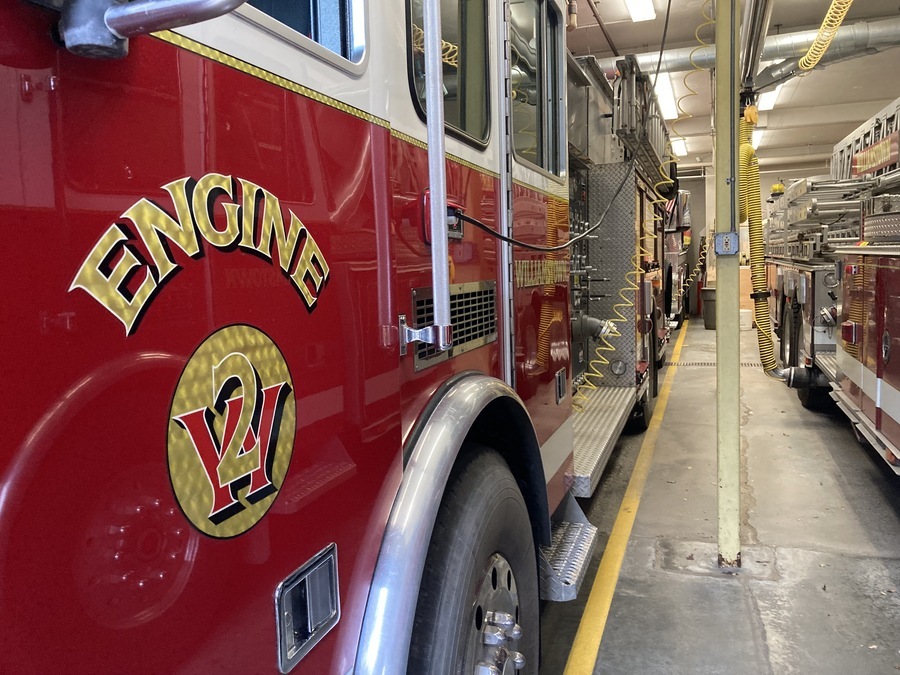
The current arrangement of trucks, since the addition of a tanker earlier this spring, leaves two engines packed so tightly that the one in the rear is right up against the existing wall.
"We're going to lose meeting room space, but, on the other hand, we're going to be able to walk between our trucks, and the the guys won't have to step up on the bumpers to cross over from one side to the other," Pedercini said in a meeting telecast on the town's public access television station, Willinet. "I'm just worried, especially when the trucks are wet and we're washing them. I don't want somebody to slip and fall.
"Right now, it's a tough situation because in order to go around, you have either have to open the door in the front and walk outside or go around through the meeting room."
At the request of the Prudential Committee, Pedercini obtained quotes from three contractors to do the work. Two came in at $14,336 and $17,325, and the latter indicated he might not be able to do the work in October or November as the district hoped, Pedercini said.
The low bid, from Waldron and Associates Builders, was for $10,600 with the caveat the job may cost as much as $12,600.
"[Waldron] made a note in there saying if they had to make a fourth cut [to the existing wall], that will add an additional $2,000," Pedercini said. "But they think they don't have to. On the high end, this would be $12,600."
The job also will require an electrician at an expected cost of about $600, Prudential Committee Chair Richard Reynolds said. Committee member David Moresi suggested that the district also may want to address the floor that is being newly incorporated to the bay; currently, the meeting room has a tile floor, and Moresi noted that if that space gets wet when engines are being washed, the tile will "lift that up."
Moresi suggested that, with the addition of a small sum for unseen contingencies, the committee authorize Pedercini to spend up to $14,000 on the project.
In a separate series of votes, the committee authorized Reynolds to negotiate minor changes to a contract with Pittsfield architect EDM to design a station officials hope to build on a Main Street (Route 2) parcel next to Aubuchon Hardware.
The district's Building Committee recommended accepting the joint bid of EDM and its partner, Mitchell Associates, in early August, and the Prudential Committee has been working out the details of the design contract over the last month.
The most recent modification saw the district and architect agree to limit the scope of Phase 1, which EDM originally proposed to cost $157,000. The district needed to bring the cost down to $85,000, in line with what the appropriated funding it has in the fiscal year 2022 budget approved by district voters in the spring.
Reynolds told his colleagues that the new scoping letter moves some of the design work, like engaging a green engineer, out of the initial phase, but it is expected to be done later in the project.
"That doesn't mean we don't want to engage a green engineer," Reynolds said. "Because of the funds that we have available, some of the work won't take place under the services here."
Reynolds said some of that other design work could be covered by proceeds from a state grant for which the district has applied. The district may not know until January whether those grant funds will be awarded, he said.
"So, at the very least, we're trying to get ourselves to that point or give us an awareness of whether we're going to receive any funds, and, if not, then we'd have to consider a special district meeting so we can present to the community additional funds needed before the end of the fiscal year for them to be able to vote on it," Reynolds said. "And I'd assume that will include additional designer services and supplemental services that will allow us to move forward."
Tags: fire station,