image description
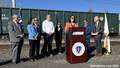
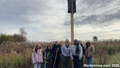
State Sen. Adam Hinds will run for statewide office after three terms in the Senate.

Hinds Says State Needs Visionary Leadership in Bid for Higher Office

By Brittany PolitoiBerkshires Staff
Print Story | Email Story
PITTSFIELD, Mass. — State Sen. Adam Hinds believes that the commonwealth needs visionary leadership to take on some of its biggest issues and bring the state together.
 
On a sunny Wednesday morning, he confirmed his candidacy for lieutenant governor on the steps of City Hall with supporters and his wife, Amherst College professor Alicia Mireles Christoff, and their infant son, Rafael Fernando Hinds. He then headed to Latino's Kitchen in Springfield and on to Beacon Hill for two more media stops. 
 
"It's increasingly felt like this is a really unique moment in our history, that the pandemic exposed so much about some of our greatest weaknesses. It's also highlighted our greatest strengths as a commonwealth and reveals so much about what needs to be fixed," he told iBerkshires.
 
"It's a rare moment when there's a will to take on big issues and it overlaps with the resources and to do it, and so this moment does not call for more of the same, it's going to take visionary leadership to take on the incredible challenges we face and people who can actively bring the commonwealth together, and that's what my background has been about."
 
Hinds believes that the office of the lieutenant governor should play an essential role in making sure the commonwealth is moving into the future in an equitable and strategic manner.
 
This is a critical moment, he said, and the state is not even getting its fundamentals right in terms of public transportation, child care, and affordable housing.
 
"I hear from folks in the region and beyond who are deeply concerned about transportation options that are not getting them what they need, and child care access, and affordability and housing costs that are going up," Hinds said.
 
"So it's clear that there is a need for a new approach. I think the lieutenant governor's office has always been about being a strong link to towns and cities and I will certainly continue that."
 
The three-term senator also believes that it is time to have a representative from Western Mass in some of the highest offices to make sure that the government is working for every corner of the commonwealth.
 
Hinds grew up in Buckland and attended Mohawk Trail Regional High School. After graduating from Wesleyan University and earning a master's degree from the Fletcher School of Law and Diplomacy at Tufts University, he spent more than a decade as a United Nations negotiator in the Middle East before returning to Pittsfield. He was a founding director of the youth violence prevention program Pittsfield Community Connection and later led the Northern Berkshire Community Coalition in North Adams.
 
"Being from here, I get it, far too many people feel like the government in Boston doesn't know where we are on a map, or that their voices are not being heard and that government doesn't work for them," he said.
 
"So I think it would be powerful not just to Western Mass, but to communities throughout the commonwealth, to have somebody who is from Western Mass, and to just send that signal that I'll wake up every day wondering about what we're going to do for every region in the commonwealth."
 
Hinds is somewhat following in the steps of his predecessor, Benjamin Downing, who held the Berkshire seat for a decade and is now running for the Democratic nomination for governor. Hinds won election to replace Downing in 2016 and had no general election challengers in his last two elections. 
 
Lieutenant governor candidates run independently for the nomination in their parties and then as a team with the gubernatorial candidate. 
 
Three other Democratic candidates have so far declared a run for the office in 2022: Bret Bero, a businessman and Babson College lecturer, state Rep. Tami Gouveia of Acton, and Scott Donohue of Melrose, who had initially filed for governor.
 
Hinds' focus in particular has been on climate change and resiliency, transportation needs in Western Mass, aid to rural schools, and economic development for small towns. 
 
Currently, he is still leading the Senate effort to reimagine Massachusetts in the post-pandemic world, serving as the chair of a new Senate Committee on "Reimagining MA: Post-Pandemic Resiliency" and as Senate chair of the Joint Committee on Revenue.
 
He said a report released last week by the committee on post-pandemic resiliency put a sharp point on the need to make sure the state is developing the workforce for the future. Hinds said training and investments need to be connected to that need.
 
"It's also been clear that things like child care we need to be essentially restructuring accessibility and affordability, bridging the digital divide has been an issue that has risen to the top because it's not just a rural issue," he added.
 
"It's also our downtown and urban areas that are experiencing a big gap at a time when the economy and health care and entertainment and purchasing are moving online, so that is another big area of investment."
 
Write-thru at 4:10 p.m. with more information and comments from the candidate. 

Tags: election 2022,   Hinds,   


If you would like to contribute information on this article, contact us at info@iberkshires.com.

Lanesborough Property Tax Rate Up 5%

By Breanna SteeleiBerkshires Staff

LANESBOROUGH, Mass. — The Select Board on Monday approved a single tax rate that will increase the average homeowner's property bill by at least $670.

With a rate of $18.20 per $1,000 valuation, the average single-family home valued at $373,784 will see a $668 increase, and the average commercial property, estimated at a value of $577,990, will increase by $1,125 per year. This rate is 91 cents higher than last year's $17.29 per $1,000 valuation.

"Historically, as part of their annual budget policy, the Select Board and Finance Committee has endorsed a single tax rate option, providing no exemption or discount to a particular property class or group, voting a residential factor of one, which is what we'll do tonight, affirms a single tax rate and proportionate sharing of the tax levy burden between all classes of property," Principal Assessor Ross Vivori explained during the joint meeting with the Finance Committee and Board of Assessors. 

This year's levy is $11,760,845, which is a 11.28 percent increase from last year, or $1,192,521.

The town's total taxable value is $648,200,324; about $541 million in residential, almost $9 million in industrial, about $52 million in commercial, and about $44 million in personal property. It is 5.7 percent higher than the previous year.

For fiscal 2027 the max allowable levy is $12,313,803, the town is levying $11,760,845, leaving an excess levy capacity of $552,957. There was more than $6.5 million in new growth, which was described as contributing about $112,855 in tax revenue at the prior year's rate.

Finance Committee member Al Terranova suggested that the rate may change if revenues, such as from the state, changed. 
 
"I just don't want people to look at this and, 'Oh my goodness, I'm going to pay $600 more a year,'" he said. "They would  just pick out that one number, because you don't know what the actual number is."
 
Select Board Chair Deborah Maynard said all the figures are based on the tax recapitulation sheet, which includes estimated revenues and state cherry sheet numbers. 
 
"But there's no way around that, that's the number we're paying," added Select Board member Jason A. Breault. "That's the tax rate."
 
Ross said property values are rising because people are paying more for homes, but that's not driving the tax rate — town spending is.
 
"If the [property] value goes up and nothing else changes, the tax rate stays the same," he said. "What's driving the tax rate up is the budget ... everything's gone up and you've got raise the money to operate the town. It is what it is." 

In better news, the board accepted what Accountant Angela Garrity agreed was a "healthy" amount of free cash at $949,833. 

The board also heard from the public about putting a moratorium on data centers and battery storage facilities at its next meeting as well as Old State Road residents asking about the speed bump removed at the intersection of Target and Old State Road.

The residents said two years ago they had asked for the speed bump and were wondering why they were not warned it was being removed. 

The three people said they were afraid to cross the street for their mailbox or walk their dogs. They also said it is very hard for them to leave their driveway at the intersection. 

The Select Board could not respond during public comment, but at its last meeting, it decided to remove the speed bump based on information from police that it was "useless" as a deterrent and from Emergency Medical Services Director Jen Weber that it was dangerous when transporting patients.

An ad hoc committee with Weber and Police Chief Robert Derksen and board members Breault and Jeff Walters to discuss the best options on reduce speeding in some areas. Maynard reminded people that community members wanting to serve are being asked to submit citizens' interest form with the town.

Lastly, Alison Dixon from Berkshire Regional Planning Commission and Berkshire Environmental Action Team's Executive Director Brittany Ebeling presented two Municipal Vulnerability Preparedness action grant projects. 

One project is the road stream crossing prioritization and assessment program for town-owned bridges and culverts to prioritize crossing replacements. Dixon explained that undersized culverts were identified as a vulnerability in the town's MVP and hazard and mitigation plan. The project is expected to span two years and will notify nearby landowners before field crews work around culverts and bridges. Community members were also invited to share knowledge about crossings they believe have been problematic.

The second project will cover ghost dams. BEAT and BRPC will be working with watershed organizations and a youth team from Greenagers over the next two years locating and documenting unmapped, human-made dams, also called ghost dams, which may pose flood risks. The goal is to create a Berkshires-wide map and connect towns and landowners with information and resources for flood-resilience planning.

View Full Story

More Pittsfield Stories