From Krazy Kat to Calvin and Hobbes: Norman Rockwell Museum Traces Evolution of Comics
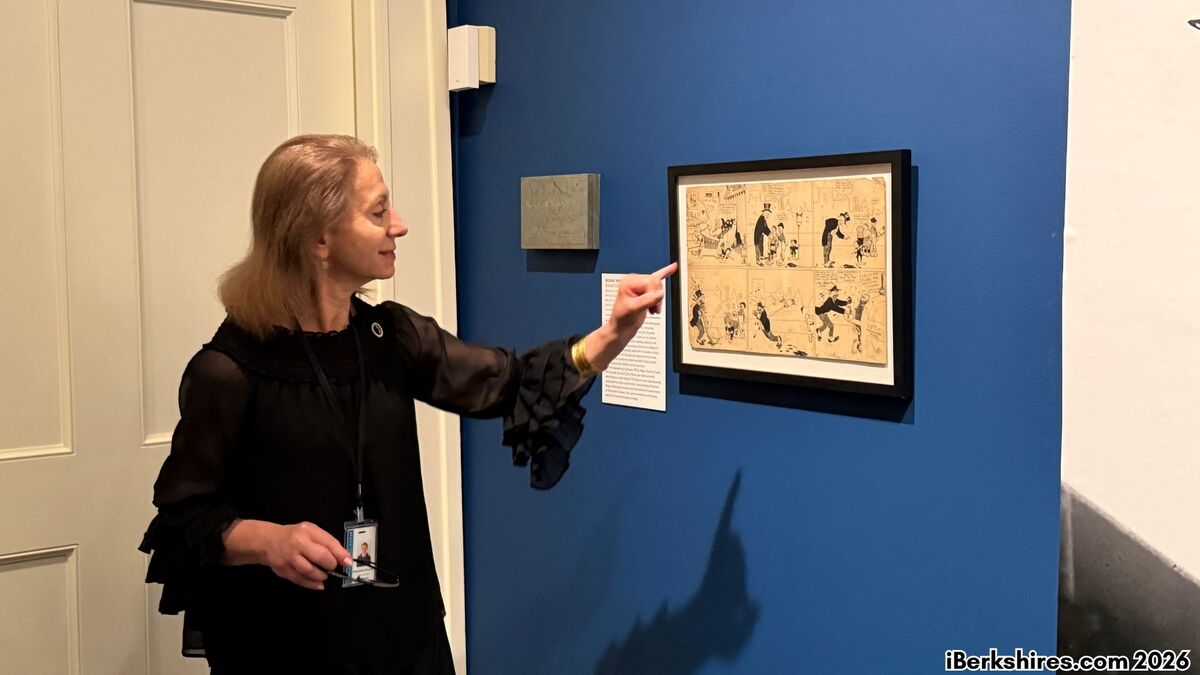
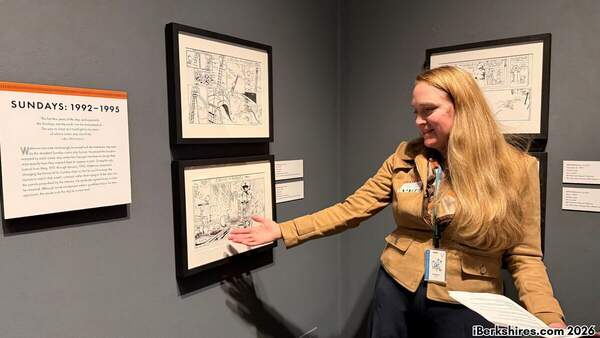
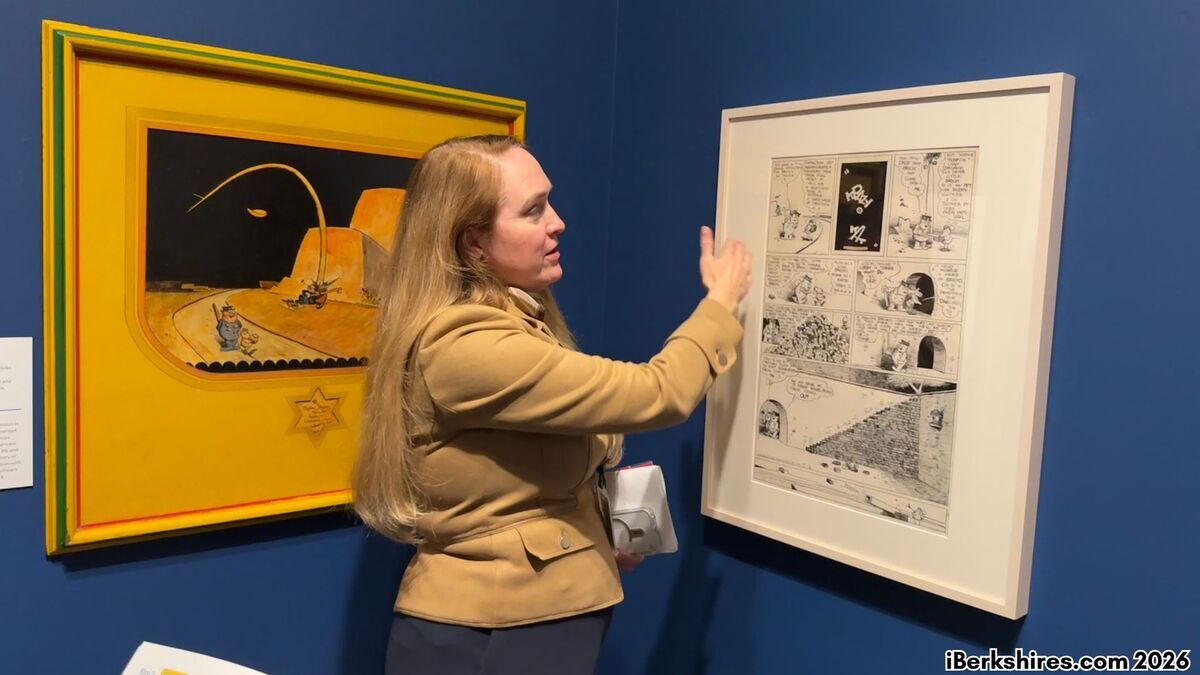
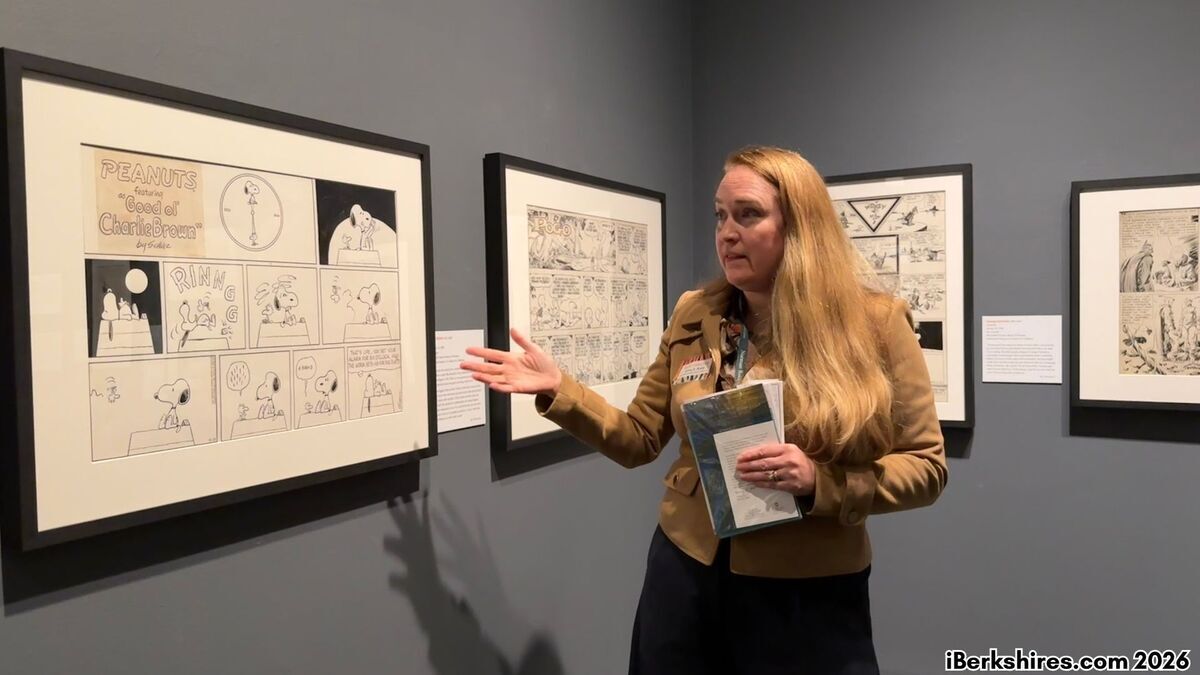
Stephanie Plunkett, the Norman Rockwell Museum's deputy director and chief curator, highlights work by George Herriman. Two exhibits exploring cartoonists are on exhibit at the museum through May.
While the ways audiences engage with these art styles have shifted, the artistic techniques and cultural influence of these early cartoonists continue to shape how stories are told today.
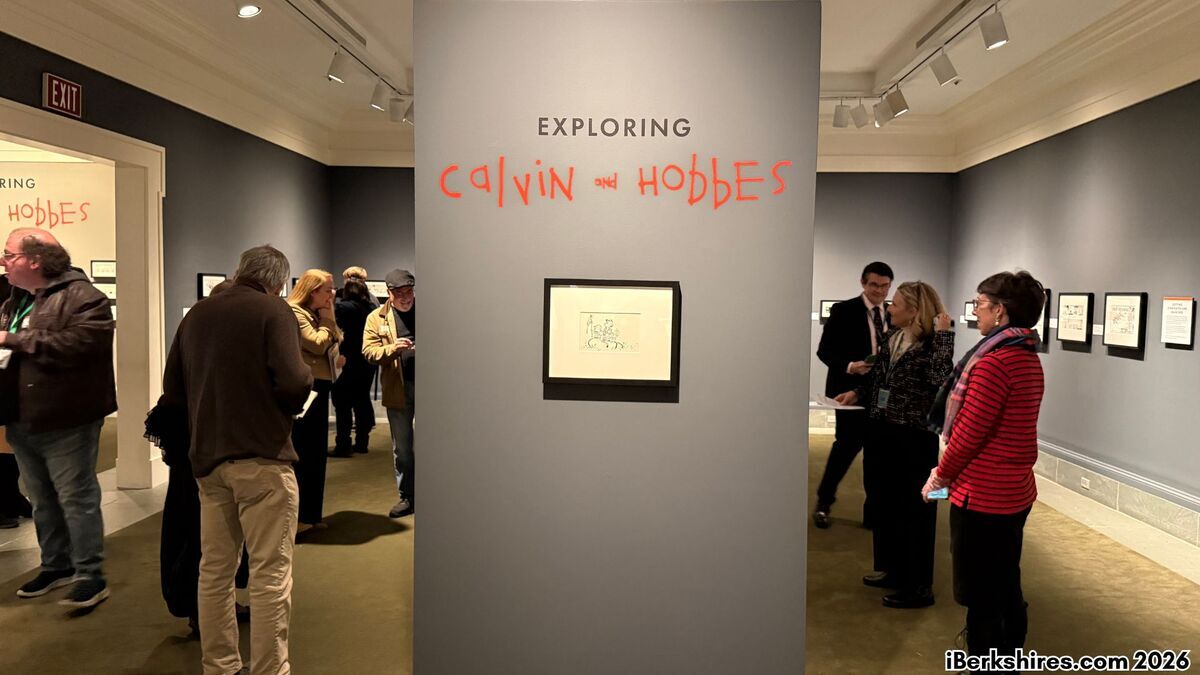
The Norman Rockwell Museum explores just that and more in its two new exhibits, "Exploring Calvin and Hobbes" and "George Herriman, Krazy Kat, and the Path to Calvin and Hobbes," which opened Saturday, Nov. 14, and runs through May 31, 2027.
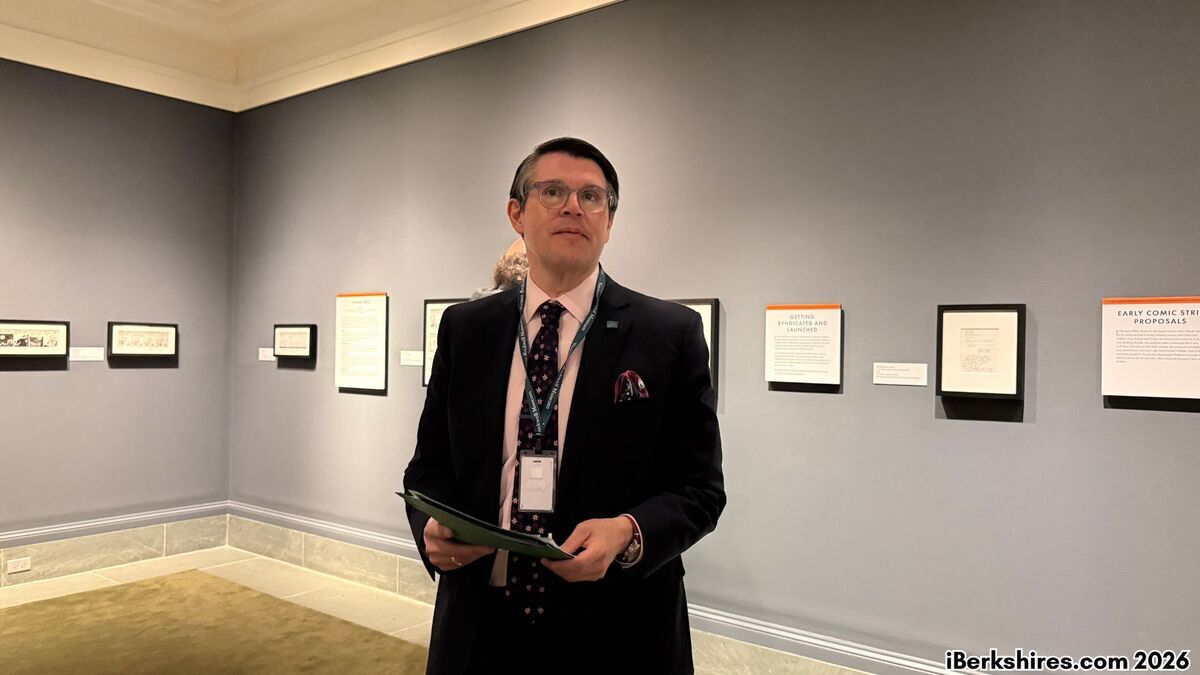
"At their core, both exhibitions celebrate the power of humor in an increasingly complex digital world. Humor remains one of our most vital tools for connection. I would even go so far to say we need humor now more than ever," said the museum's Director and CEO Graham Boettcher.
"We need this form of uncomplicated joy brought into our lives, but comic art does more than make us laugh. It gently mocks our shared humanness, holding up a mirror to our quirks, our anxieties, our boundless imaginations, and our deepest affections."
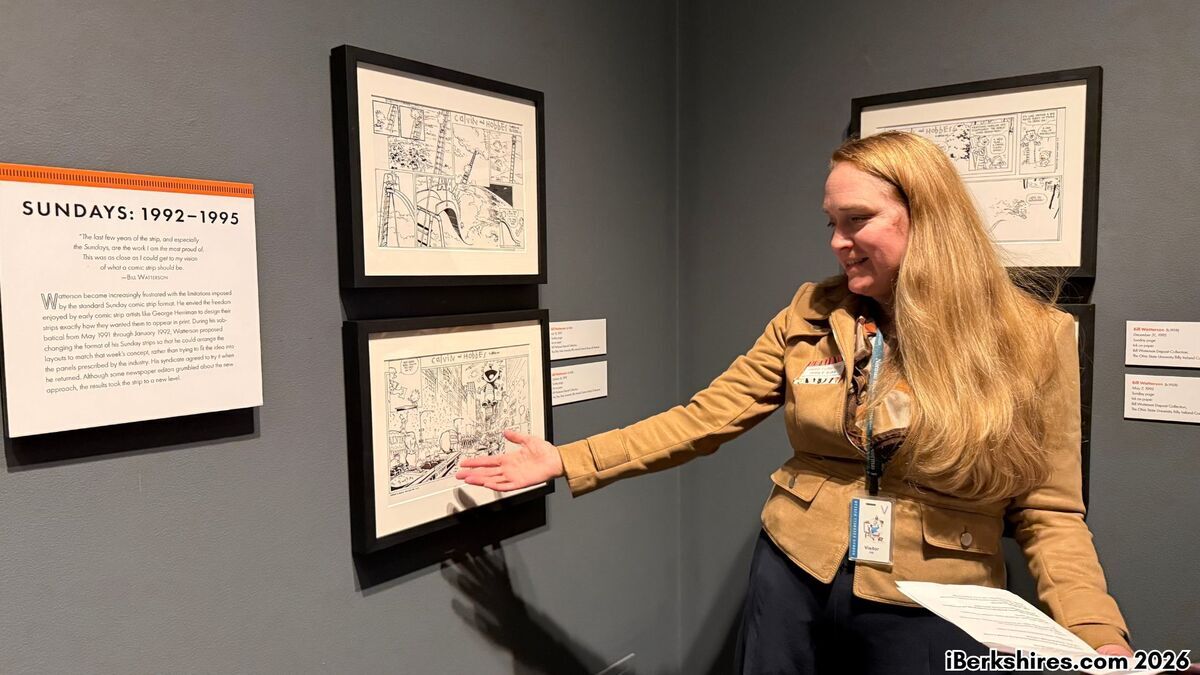
"Exploring Calvin and Hobbes" highlights the work of cartoonist Bill Watterson, whose popular newspaper comic strip ran from 1985 to 1995.
The traveling exhibition was organized by the Billy Ireland Cartoon Library & Museum at Ohio State University and curated by Jenny Robb, its head curator of comics and cartoon art.
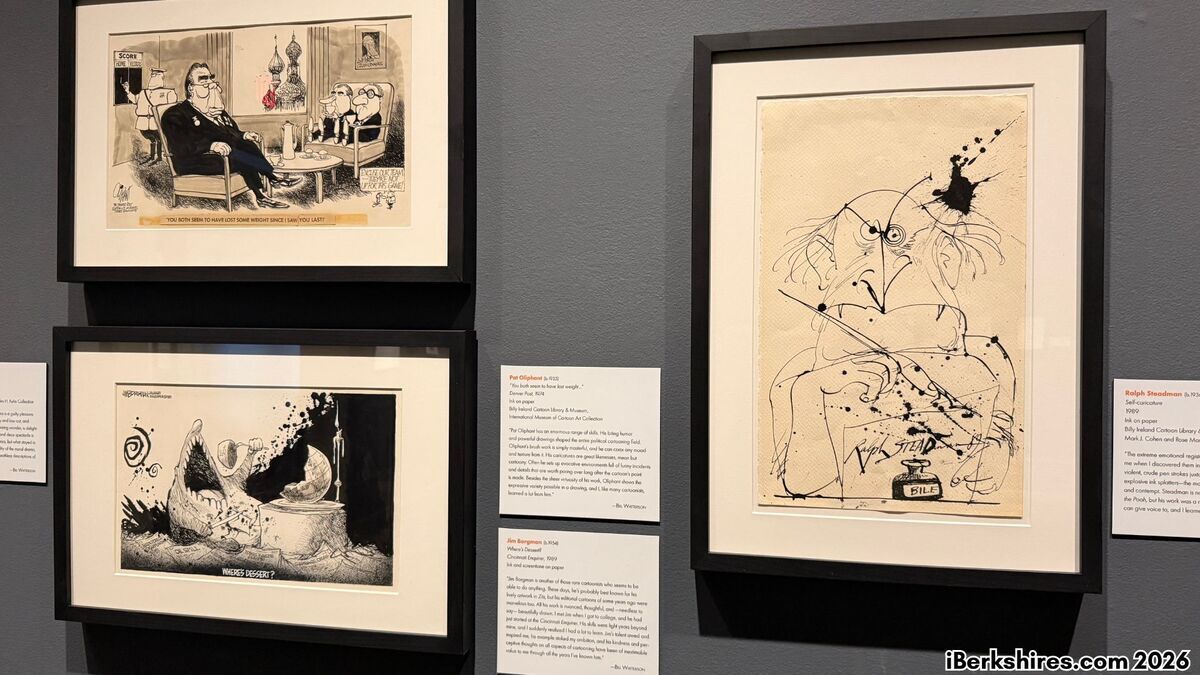
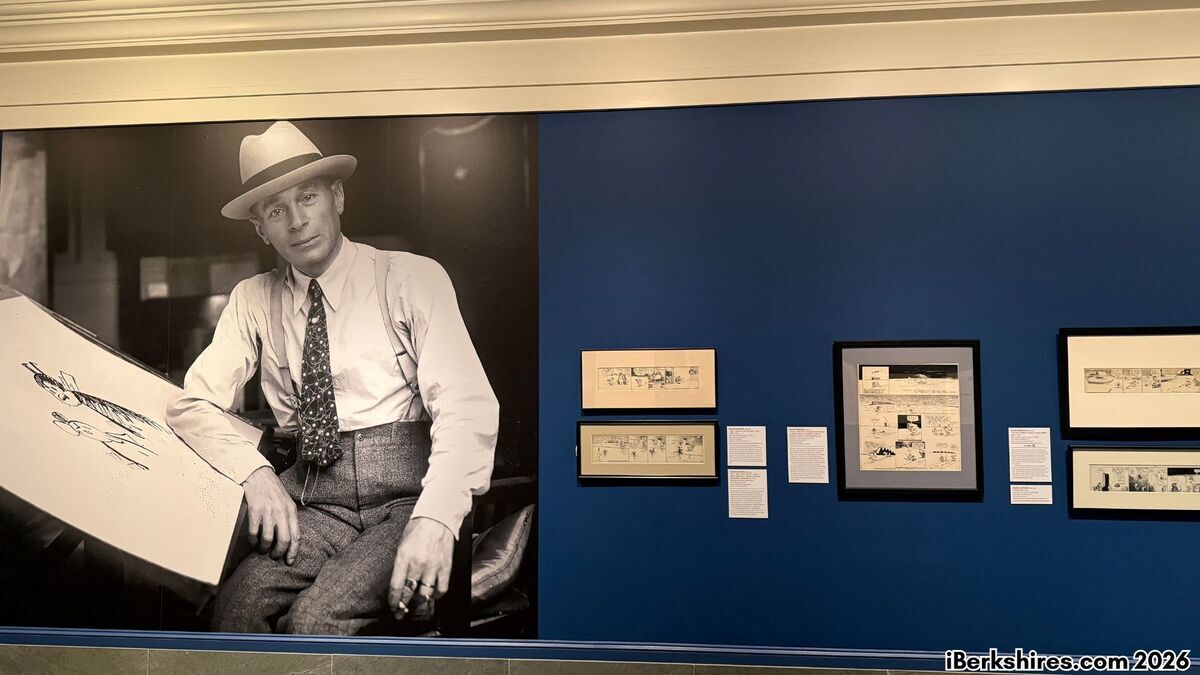
It features original daily and Sunday strips from the museum's collection of more than 3,000 original works by Watterson, along with artwork by cartoonists who influenced him, including George Herriman and Charles M. Schulz.
This marks the first time the complete exhibition has traveled outside its original showing at the Billy Ireland Museum, Robb said.
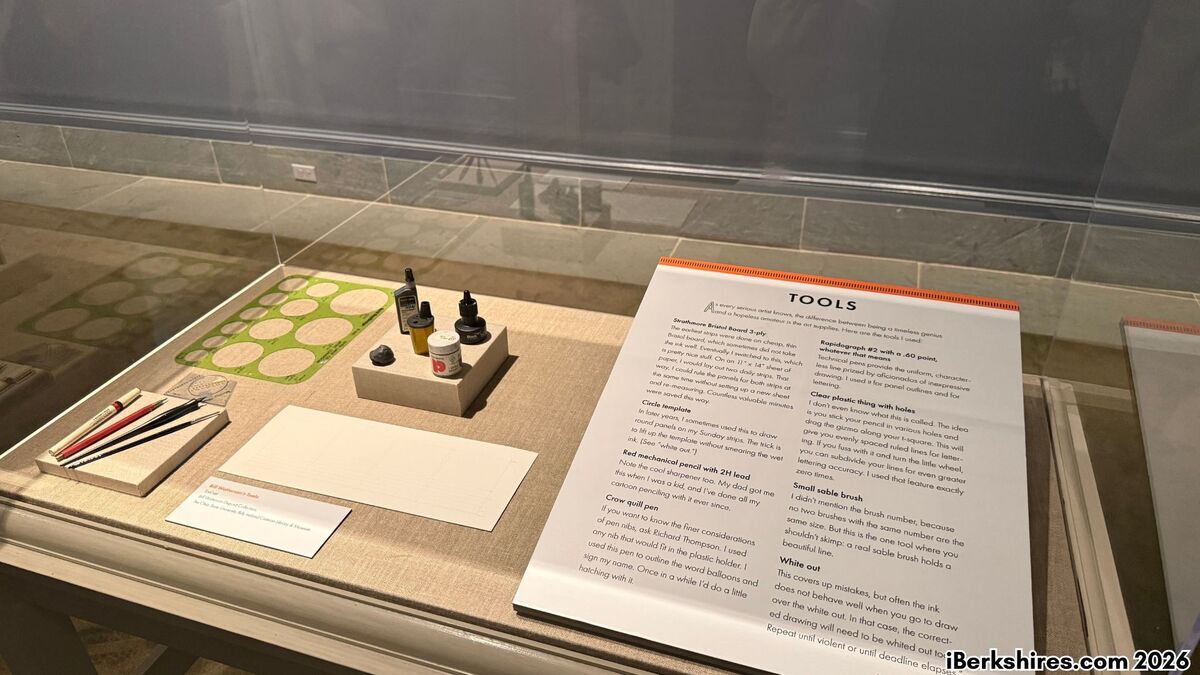
The exhibition delves into Watterson's creative process, from his early setbacks as an editorial cartoonist and numerous rejected comic-strip proposals to his eventual success with Calvin and Hobbes.
"If he hadn't failed at being an editorial cartoonist, we wouldn't have Calvin and Hobbes," Robb said.
The strip follows 6-year-old Calvin and his companion Hobbes, a tiger who appears alive through Calvin's eyes but is seen as a stuffed animal by everyone else.
Watterson intentionally avoided defining Hobbes as imaginary to allow readers to consider the characters' different perspectives, Robb said.
It also showcases how he challenged traditional newspaper formatting and used humor to explore human relationships, popular culture, imagination, childhood, and philosophical questions about life.
His push for greater creative control over Sunday layouts allowed him to experiment with panel sizes and arrangements, expanding the storytelling possibilities of the medium, Robb said.
The accompanying exhibition, "George Herriman, Krazy Kat, and the Path to Calvin and Hobbes," explores the artistic influences that helped shape Watterson's work.
Herriman's "Krazy Kat," which debuted in 1913, was a very important foundational cartoonist that influenced generations of cartoonists, including Watterson, said Stephanie Plunkett, deputy director and chief curator.
According to the museum, he helped expand the medium through lyrical storytelling, inventive characters, dreamlike landscapes, and wordplay that explores identity and emotion.
The exhibitions encourage its visitors to step out of the fast-paced digital world, slow down, and spend time examining each panel, appreciating the details and storytelling that might otherwise go unnoticed.
"We live in such a fast-paced society with digital media coming at us 1,000 miles an hour, and how nice to have the opportunity to slow down, look closely, read, laugh, learn something new," Boettcher said.
As visitors browse the comic strips displayed throughout the museum's three back galleries, Boettcher hopes they will embrace a similar slower, more thoughtful approach when viewing the museum's other artwork and perhaps carry that into their daily lives.
While vastly different art styles, Rockwell, Watterson, and Herriman share the fundamental ability to tell stories through images, Boettcher said.
Watterson challenged the rigid formatting traditionally imposed on newspaper comic strips. His push for greater creative control over Sunday layouts allowed him to experiment with panel sizes and arrangements, expanding the storytelling possibilities of the medium, she said.
Plunkett said she hopes these exhibits demonstrate the importance of visual storytelling in capturing life's small moments, the interactions among us, and the things that make us human.
Rockwell loved stories, believing they are the "first thing and the last thing," Plunkett said.
Watterson, Harriman, and Rockwell were all interested in the psychology of people, in human foibles, and the things that make us imperfect but also wonderful and unique, she said.
"Despite the fact that each of these artists is working in very different ways, at the bottom of it is this great humanity, where there's some insight, some understanding of human nature, because they were all great observers of people, and I think that becomes an important element," Plunkett said.
The decline of local newspapers has changed how audiences encounter comic strips, but the art form itself has continued to evolve through digital platforms, graphic novels, manga, and social media, Boettcher said.
"Comic book culture is as strong as it's ever been," he said, pointing to the continued popularity of Marvel and DC, independent publishers, and the growing influence of Japanese manga and anime.
"The art form endures," he said. "Where we receive it, the platform will ebb and flow."
Like the resurgence of vinyl records, he believes printed comic strips could eventually experience a revival as audiences rediscover older formats.
With the rise in artificial intelligence, many people are also developing a greater appreciation for using physical tools to make their art, Plunkett said.
In addition to viewing the exhibitions, visitors can explore their own creativity through an interactive comic strip activity designed particularly for children. The activity encourages participants to use illustrations to tell stories inspired by their own experiences or imaginations.
The activity is intended to show visitors that they, too, can become visual storytellers, regardless of their artistic abilities, Plunkett said.
"I think one of the things that's amazing about all of these artists' work is they all started with nothing. They started with a blank canvas, a blank piece of paper, and interpreted it in a way that was completely unique and meaningful to themselves," she said.
"One of the things we want to do is to let people know that they too can create something, and it doesn't have to be perfect."
Tags: cartoons, comics, norman rockwell museum,