Fire Officials Reminder: Change Clocks, Check Alarms
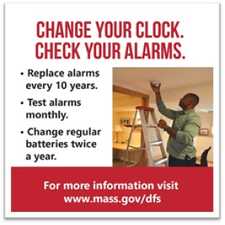 |
STOW, Mass. — With the end of daylight savings time coming on Nov. 7, Massachusetts fire officials issued a seasonal reminder to check smoke and carbon monoxide (CO) alarms when you change your clocks.
"Working smoke and CO alarms are key to surviving a fire or carbon monoxide leak," said State Fire Marshal Peter J. Ostroskey. "As we 'fall back' this weekend, remember to check your alarms when you change your clocks. Unless you have newer alarms with 10-year sealed batteries, this is a good time to replace the alkaline batteries in your smoke and carbon monoxide alarms or replace the entire device if it's more than 10 years old."
Ostroskey also highlighted the importance of CO alarms as we head into the colder months.
"Carbon monoxide is the leading cause of poisoning deaths in the United States," he said. "The primary sources of carbon monoxide in the home are furnaces and other fuel-burning appliances. We can't see, smell, or taste carbon monoxide, so it's important to have working CO alarms to alert you to this invisible killer."
Replace Aging Smoke Alarms
"Smoke alarms are like any other household appliances: they don't last forever," said Chief Michael Winn, president of the Fire Chiefs Association of Massachusetts. "Alarm manufacturing dates are printed on the back of the device. Smoke alarms usually need to be replaced after 10 years, and carbon monoxide alarms after five to seven years. If the date on your alarm is more than 10 years ago, or if there's no date at all, it's time to replace it."
Replacement Alarms Should be Photoelectric With 10-Year Sealed Batteries
The State Fire Code requires replacement battery-operated smoke alarms in older one- and two-family homes to be photoelectric and have 10-year, sealed, non-replaceable, non-rechargeable batteries and a hush feature.
"We see too many disabled smoke alarms at fire scenes where people really needed them to work," said Ostroskey. "Fire officials hope that if smoke alarms are easier to maintain, like those with long-life batteries, people will keep them in use rather than disabling them or forgetting to change out the batteries."
Modern Fires Burn Faster
"Changes in construction and manufacturing make today's residential fires burn faster," said Ostroskey. "In the average house fire, there are only one to three minutes to escape after the smoke alarm sounds. Working smoke alarms give you precious time to use your home escape plan before poisonous gases and heat make escape impossible."
"No one expects to be a victim of a fire, but the best way to survive one is to have working smoke alarms," Chief Winn said. "Take a few minutes to protect those you love by changing the batteries in your smoke alarms this weekend. And if you have parents, grandparents, or older neighbors who might need a hand, volunteer to check their alarms and change their batteries, too."
Home Fire Sprinklers
Home fire sprinklers can provide residents additional time to escape and contain or even extinguish a fire, but working smoke alarms are still needed to alert people to danger.
Senior SAFE
Nearly 40 percent of last year's fire deaths involved adults over the age of 65. More than 200 fire departments across Massachusetts have grant-funded Senior SAFE programs. Seniors who need help testing, maintaining, or replacing smoke alarms should contact their local fire department or senior center for assistance.
For more information on smoke alarms or the Senior SAFE program, visit www.mass.gov/dfs or contact your local fire department.
Tags: fire safety,