Lack of Cable Contract Hampering Dalton Community Television
DALTON, Mass. — With increased community participation and an undated cable license, Dalton Community Cable Association's potential is endless.
During the Cable Advisory Committee's public hearing last week, several people voiced their support for the organization they say is an integral part of the community.
The station has been operating in Dalton for more than four decades, broadcasting on topics including public interest, education, local news, and local sports.
The last time the town had a contract was in 1997 with Time Warner Cable, which was purchased by Spectrum in 2016.
This is a long time to not have a contract and not get capital funds, said Pittsfield Community Television President Sue Doucette, a Dalton resident.
"So that people understand, you get a percentage of the franchise fees, I'm hoping you get 5 percent, which is the most Spectrum will get, but they'll fight it. But you also need the capital funding to maintain this equipment," she said.
"Spectrum [now Charter Communications] needs to realize nothing in this world is the cost going down on, nothing. So, they need to maintain or improve the monies that they're already giving because everybody's costs are going up on every single thing."
Previous attempts to update the contract stagnated because of communication difficulty between the cable company and station, said Richard White, committee vice chair.
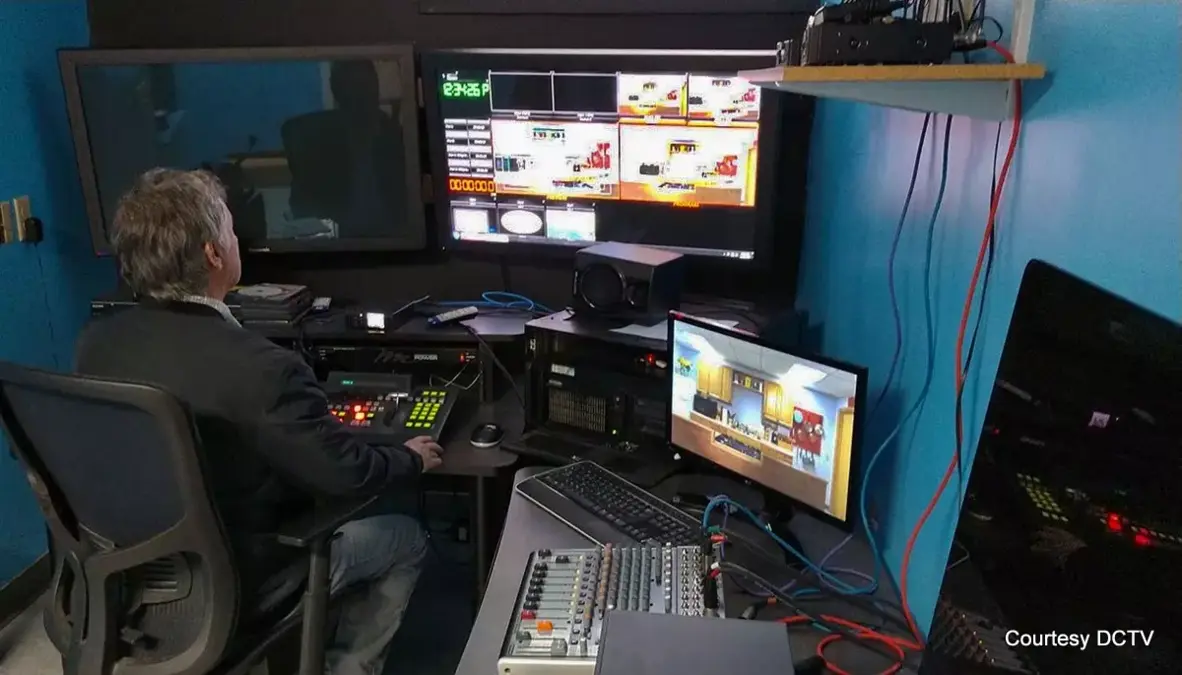
The station has grown but its outdated equipment has restricted its capabilities.
That includes slow internet speeds, operating on old analog equipment, inability to broadcast in high-definition, and limited streaming options.
The committee hopes to negotiate a 10-year license contract which would include PEG (Public, Educational, and Governmental) capital, capital contributions, franchise fees, connections, and other items to be negotiated to help meet cable association's needs.
Community members also demonstrated their hopes, with Michele Marantz highlighting the need for new microphones and White that the station can obtain closed captioning, which it currently does not have.
Select Board member Tony Pagliarulo emphasized his hope that ensuring the station's autonomy be included in the contract
The station's programming of local meetings, including the Select Board, School Committee, annual town meetings, and more acts as an anchor of transparent government.
"The service is crucial for residents unable to attend meetings in person, enhancing community engagement and transparency, and we know today, transparency is top of the mind, or should be," interim Town Manager Terry Williams said, summarizing the nearly dozen letters of support the town received for the station.
"The service helps combat misinformation by providing direct access to discussions and decisions affecting the community. Many seniors rely on DCTV for information, especially those who cannot attend evening meetings due to mobility issues."
That's important in a generation where local newspapers are disappearing and the national media ignores small town stories, White said.
DCTV is instrumental in recording the town's unique challenges and triumphs, which become valuable historical resources for researchers, students and future residents seeking to understand the community's evolution, he said, adding that beyond governmental, the station's programming is also available to local nonprofit, community members, churches, youth groups, and more to share their message, recruit volunteers, and promote community events.
The programming allows the community to remain connected and educate the town's youth, White said.
The town's attorney William Solomon said the shows give a glimpse into the community's and businesses' needs.
Marantz highlighted food insecurity, especially given the recent freeze of the Supplemental Nutrition Assistance Program during the government shutdown.
More than 700 people in Dalton rely on SNAP benefits, so can the station be used to spread the word about the need for donation to local pantries and food banks, she said.
Townspeople have a variety of different backgrounds and interests which can be showcased on DCTV, including gardening, cooking, woodworking, and more, attendees said.
They started generating ideas, such as visiting the station and interviewing those involved.
During the meeting, additional programming opportunities were considered, including a business spotlight and art demonstrations.
To add these additional programs, the station needs volunteers, members said, because the station only has two staff members. Those with an idea who want to work with DCTV are encouraged to reach out to the station.
Having community television on cable is of primary importance, Solomon said, however, it's a positive if a public access corporation can have its own ability to stream.
This is especially true considering that cable companies do not have to pay a fee to the local public access station for streaming its content online, he said.
This has been a topic of legislation recently because of the evolving way people consume content.
Before streaming, PEG stations relied on franchise fees from cable companies for most of their funding. Cable subscribers would pay the fee as part of their cable bill to cover the associated costs.
"This funding model worked well in years past. Now, though, many customers are canceling their cable subscriptions in favor of online streaming services," wrote Caleb Tobin, a production technician at Holbrook Community Access in the CommonWealth Beacon last year.
"As the number of cable subscribers drops, so does the available funding for PEG stations, forcing many stations into tough situations where the revenues from franchise fees simply aren't enough to cover a station's operating expenses. As funding continues to decline, stations may face the choice of either cutting back on coverage or closing their doors for good."
This decrease in funding also enhances the need for volunteers to produce the programming, committee members said.
Doucette offered to work with committee members to help them find grant opportunities to assist in funding. There are also organizations such as the Boys and Girls Scouts who need volunteer hours and may be able to help.
Tags: public hearing, public television,