Lanesborough Officials Begin Budget Deliberations
LANESBOROUGH, Mass. — The Select Board and Finance Committee last week began a detailed look at the needs for the fiscal 2027 budget from the Police, Fire and Library departments.
Both the Police and Fire departments will be asking for capital funds toward replacement vehicles.
Chair Deborah Maynard laid out the format and cautioned the participants that it was going to "be a civil meeting."
"There's not going to be any yelling or talking out of turn, but we certainly would recommend and be glad to hear questions from the audience as we discuss these department budgets," she said.
There have been recent complaints about angry comments and yelling at some town board meetings.
Police Chief Rob Derksen presented a budget increase of $277,717, around 4 percent, but noted that police salaries are currently in negotiations. He separated his budget from the Baker Hill Road District, which is currently under discussion to be dissolved. The draft said the department had a 44 percent increase, but that was combined with the Baker Hill Road District.
Derksen said the department is running under budget and that compared to the national average spending on local law enforcement of $407 per capita annually, Lanesborough spends around $313. He also said the average operating budget is 10 to 15 percent of the municipal budget and that the department is operating at almost 7 percent.
Select Board member Michael Murphy asked what he would say if the town asked to cut his budget by 5 percent.
"It's people, but 73 percent of my budget is people," the chief said. "The only way you're going to make substantial cuts is cutting people, and then I can't provide you the same level of service that we have now."
More than half the time last year, there was a single officer working, and two years before that, 70 percent of the time there was a single officer, he said. "So you make cuts to personnel, you're going to have a lot of gaps in the schedule."
The department is asking to replace a 2017 Ford Explorer for $80,000, which will appear on the annual town meeting warrant as Article 14.
There are currently five vehicles in the fleet, with the last one replaced 10 years ago. Originally the Baker Hill Road District was going to supply $40,000, but this is no longer an option. The chief does hope he can come in less than $80,000 and is working on getting quotes now.
"For those who think the elimination of Baker Hill Road District means your taxes are going to go down, there may be reasons to vote to dissolve the Baker Hill Road District, but lower taxes are probably not one of them," said Finance Committee Chair Lyndon Moors. "And I think this is where the first instance of the rubber meeting the road ...
"Part of our calculus going forward, how do we manage this loss of revenue to the town and support the services that we have grown accustomed to supporting."
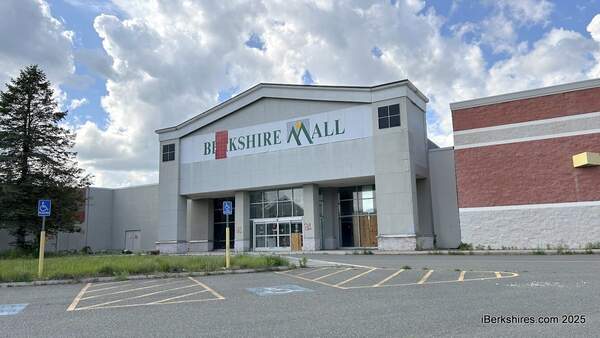
The road district, a separate municipal taxing authority, was established with the development of the Berkshire Mall to collect taxes from the property, and included the disbursement of annual payments to town's Fire, Police and Public Works departments to mitigate the mall's impact. The mall closed more than a decade ago and the new owners sued to reduce its obligations; a settlement last month included the dissolution of the road district.
Fire Chief Jeff Dechaine said his budget request is only going up $150. He said he was able to move some money around, including decreasing the costs of members' annual physicals because of how many will be getting them this fiscal year.
When asked about equipment upgrades, he said they are good with equipment for now and have been able to use grant funding to keep their items in good shape.
"Over the last four years, you know, my team and I, we've written grants. We've brought in probably $10,000 a year to replace equipment, and I have a grant out right now, maybe over $12,000 so we're doing 50 percent again on our equipment repair and replacement budget every year. So we're trying," he said.
Murphy asked Dechaine what he would say if asked to cut his budget by 5 percent.
"So I could not test any equipment," the chief responded. "It's really kind of tight, there's not a lot of extra built in."
The chief increased his salary $3,000 to $18,000, and was asked by a resident if he would consider only raising it $1,000. Dechaine noted that there were unused salary lines that were shifted several years ago toward training and equipment, "it's $1,450 less than it was four years ago."
"I don't do this for the money. I've been doing this 37 years. So at the end of the day, I look at the time that I spend, and the time that I spend away from my family and to get this job done, and to just 100 percent volunteer that time, it's not sustainable," Dechaine said. "I just want to be fairly compensated for my time. And even at $18,000 I think the job's worth more for what I do, but again, not taking anything for the last three years, I feel like it's time."
He said it would be a difficult ask for anyone coming in to cut that $3,000 from their budget.
"I want to make sure that we have the right equipment, that everything's tested and that our folks are safe, right? I'm not going to cut any corners," he said. "I'm not cutting any corners on safety. It's my job to let the people know what they need and why they need it. If you don't want to pay for it, that's certainly your prerogative."
Town meeting will decide on the use of $100,000 in free cash, Article 13, toward the replacement of a 1996 fire engine.
Town Administrator Gina Dario said the funding will come from multiple sources, including a stabilization account of $381,000 that's been built up over time for an engine and a borrowing of the balance.
Dechaine said Engine 2 is 30 years old, the longest times they have ever gone without replacing an engine, and by the time it does get replaced, it will be about 33 years as it is a 900-day build.
He said Engine 2 has a commercial cab in chassis and fits four.
"We're replacing that in time with the same type of apparatus. The custom cab is exponentially more expensive, and we don't need that," he said.
He noted that buying used is tough as there are not many options and you won't get warranties or modern safety features and a new build will last longer and be safer for the town.
The committee also decided that they will invite the Firemen's Association to a meeting to answer questions regarding the financial relationship between the town and the association. The validity of the $1 lease agreement is unclear, officials, and the money the association might have and what it could go toward.
Lastly, the Library Director Sheila Parks explained her proposed budget with a requested increase of $2,150.
This is largely for cost-of-living increases for herself and staff, dues, and books, computer-related supplies, and more.
The library receives state aid through the Massachusetts Municipal Appropriation Requirement that is primarily used for emergencies, but to stay certified, the town must appropriate at least the average of the last three years' library appropriations, plus 2.5 percent.
When asked if she could level fund, Parks said she could but it would be difficult.
"I will say the state is not a fan of libraries being asked to level fund if other departments in the town are not asked to level fund," she said. "It's called a disproportionate cut. So I'm not a person who can do math on the fly, I'm a books person. So I couldn't tell you off the top of my head, where I would cut from."
Maynard asked if she did would they lose the certification and Parks explained that the town had increased the budget several years ago cover her salary.
"Several years ago, I bumped up from 22 hours to 25 and that was a bigger bump in our budget than we had in the past," she said. "And so because of that, that number is still kind of skewing that average a little higher, but I think this is the last year that we could get away with having a very, very tight budget and still meeting the mark."
Maynard invited the audience to email the town administrator any questions they had about the budgets presented and said the board will try to answer them at the next meeting.
Tags: fiscal 2027, lanesborough_budget,