Mount Greylock School Committee Looks at Policy for AI
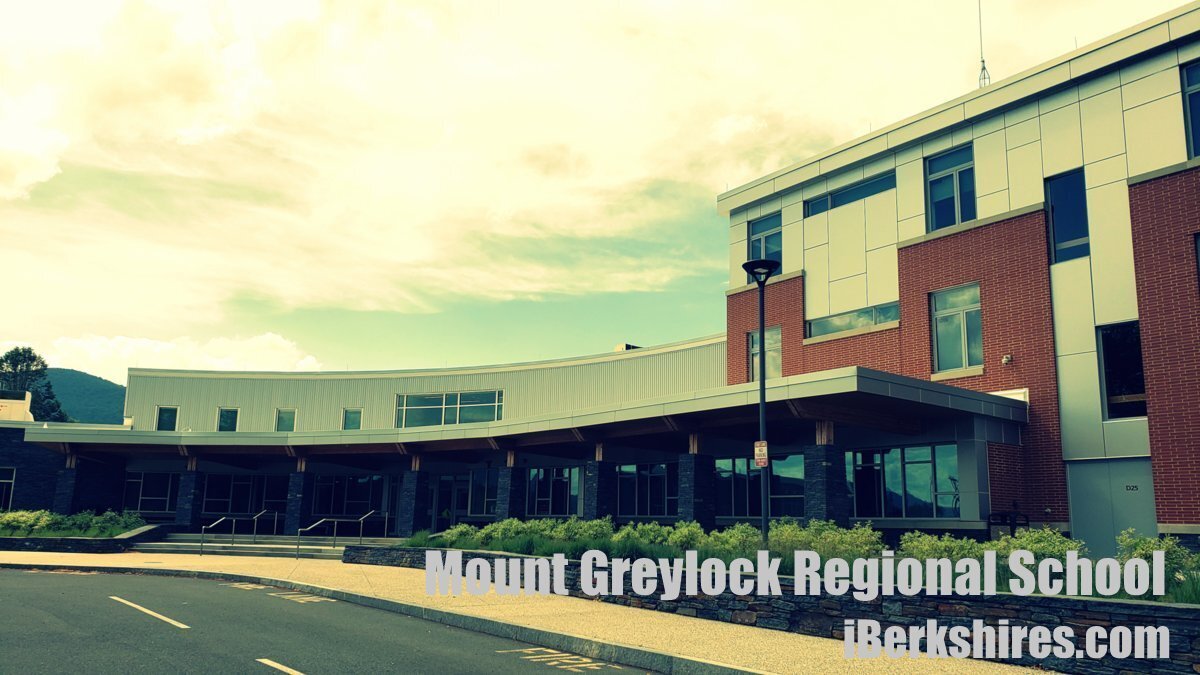
WILLIAMSTOWN, Mass. — The Mount Greylock Regional School Committee is grappling with the question of how artificial intelligence can and cannot be used by the district's faculty and students.
At a Jan. 21 in-person meeting at the middle-high school, five members of the seven-person committee heard a report from the superintendent about the issues confronting educators nationwide as online AI tools become more pervasive in society.
Superintendent Joseph Bergeron gave examples ranging from using AI prompts to help a student get started on an essay assignment to how a parent or guardian might use the same tool to help an elementary school pupil work through a multiplication assignment using the various techniques — some of which that parent may never heard of.
"I thought it would be helpful to give you a sense of what is already happening for plenty of students, plenty of families," Bergeron said.
The School Committee is developing a new districtwide policy for the use of AI.
It is new ground for the district. Bergeron told the committee at its Jan. 8 meeting that neither the Department of Elementary and Secondary Education nor the Massachusetts Association of School Committees has a model policy to deal with the emerging technology.
The Mount Greylock committee's Policy and Governance Subcommittee is working to develop a policy to bring to the full body for a vote.
"The four bullet points you see are all action items," Jose Constantine, the subcommittee's chair, told his colleagues in early January. "They speak to, effectively, a requirement by the district to ensure we do have a system of procedures for vetting and approving AI tools, that we have a means for evaluating AI tools in instructional practices, that we are actively working to develop educational opportunities and actively working to develop professional development opportunities for staff."
The subcommittee's draft does not go far enough, because it does not recognize the need to teach students about how to use artificial intelligence, Mount Greylock senior Jack Uhas told the committee on Jan. 8.
"The proposed AI policy has the potential to do immense good for students and their future, but a strong policy must begin with a guarantee that students will receive instruction on the use of artificial intelligence, and provide guidelines for faculty and staff use of AI in instruction and lesson planning," Uhas wrote in a letter to the committee.
"The truth is, the only way to ensure students are prepared for a future in an increasingly AI-centric world is to provide clear guidelines on how AI will be taught to students."
Uhas directed the district officials to one potential model for its policy, a 19-page document created by the Northport-East Northport district on Long Island, N.Y.
Bergeron told the committee he met with Uhas to talk about his concerns.
"We talked about the separation between policy and procedure guidance and the ways that this [proposal from the Mount Greylock subcommittee] is a policy and the Northport School District's guidance, that is also included in the packet, is down at the level of guidance.
"The main thrust of his interest is: Let's make sure to not just say what you can do, let's figure out ways to say what people can do. It's incredibly important that students and staff develop a solid understanding and an ability to utilize AI within good boundaries."
There will be a monetary cost for the district in order to implement new policy and guidelines effectively. Bergeron and Joelle Brookner, the district's director of curriculum and instruction, told the School Committee at its Jan. 21 meeting that new professional development opportunities for teachers and outside expertise will be required to help them teach about artificial intelligence and direct its use in the classroom.
Bergeron said that while AI could be misused to generate students' essays or other assignments, concerns about academic integrity are not unique to AI. He noted that college students, for generations, have been buying academic papers to submit as their own.
"It's still a question of ethics and choices," Bergeron said. "It's not about finding the right tool to catch people. It's more about creating the right learning environment that tests people in the right ways and has high standards."
A memo he prepared for the School Committee in advance of the Jan. 21 meeting, provided several examples of how AI could be utilized by students under the guidance of a teacher. One showed how an assignment could be structured allowing the use of AI by a student to, "expand, critique or brainstorm," after the student, "submit(s) an initial outline, a hypothesis, or a 'thesis proposal' written in class or via voice memo."
No decisions were made at the Jan. 21 meeting, but the committee members engaged in a dialogue about the issue and provided feedback to Constantine and the policy subcommittee.
One member of the subcommittee, Curtis Elfenbein is one of several educators on the School Committee summed up the question facing schools nationwide.
"[Artificial intelligence] can literally give a student the ability to pass a course without learning anything," Elfenbein said. "At the same time, it's an incredible, powerful tool students will have to learn to use.
"It's a matter of differentiating what we want students to be able to do and what we want them to avoid doing and differentiating what we want teachers to be able to do and what we want them to avoid doing."
Elfenbein noted that AI also raises ethical questions beyond academic integrity.
"[Students] need to enter into [artificial intelligence] understanding the actual cost of having this technology — the economic and ecological cost is horrific and staggering," he said. "And every student needs to know that."
Tags: artificial intelligence, MGRSD,