Mohawk Theater Proposal Generates Controversy
NORTH ADAMS, Mass. — The Mohawk Theater has been the crux of numerous debates — political and otherwise — over the past 40 years.
The most recent has been about the negotiation to sell the theater and the process under which it is being done.
Mayor Thomas Bernard two weeks ago announced that his administration had accepted a bid of $21,000 for the vacant theater for a proposed use as an events venue for hotel to be developed in the adjoining building.
The proposed sale set off a firestorm of controversy in the community — especially on social media — about the selection if this particular bidder and the price. City Councilor Keith Bona also raised concerns over Bernard's exclusion of the council after the body had been assured two years ago it would have some input on the Main Street structure's disposal. This matter will be taken up at Tuesday's City Council meeting.
Requests for proposals were solicited twice in the past year. The first RFP last December was extended and attracted two bids, neither of which were accepted. The second RFP in September resulted in a single bid that was accepted.
RFPs are different than straight bids in that the municipality is usually seeking bids that show the bidder has the expertise and capital to bring their proposal to fruition and that that proposal is sustainable and beneficial to the community.
One recent example is the Notre Dame property on East Main Street that went through several bidding processes before being approved for sale for a second time last year.
Three years ago, a local group proposed an $18.5 million hotel complex in the vacant church and school. The bid for $253,000 was recommended by the administration and approved by the City Council but, after several extensions, the proposal was rejected when the developers' financing fell through. The property was then put out to bid again with a winning bid this time of $10,000 for a housing proposal by local developer Moresi & Associates, which was already moving ahead with housing in another city property it had bid on.
The church was purchased for $500,000 in 2008 by the city, largely to ensure the steeple's future, and the property was appraised for $605,000. Moresi had previously bid a $1 for the property for housing and Eric Rudd $25,000 to expand his Berkshire Art Museum and studios. At the time, both the administration and City Council agreed that a for-profit hotel would be preferable.
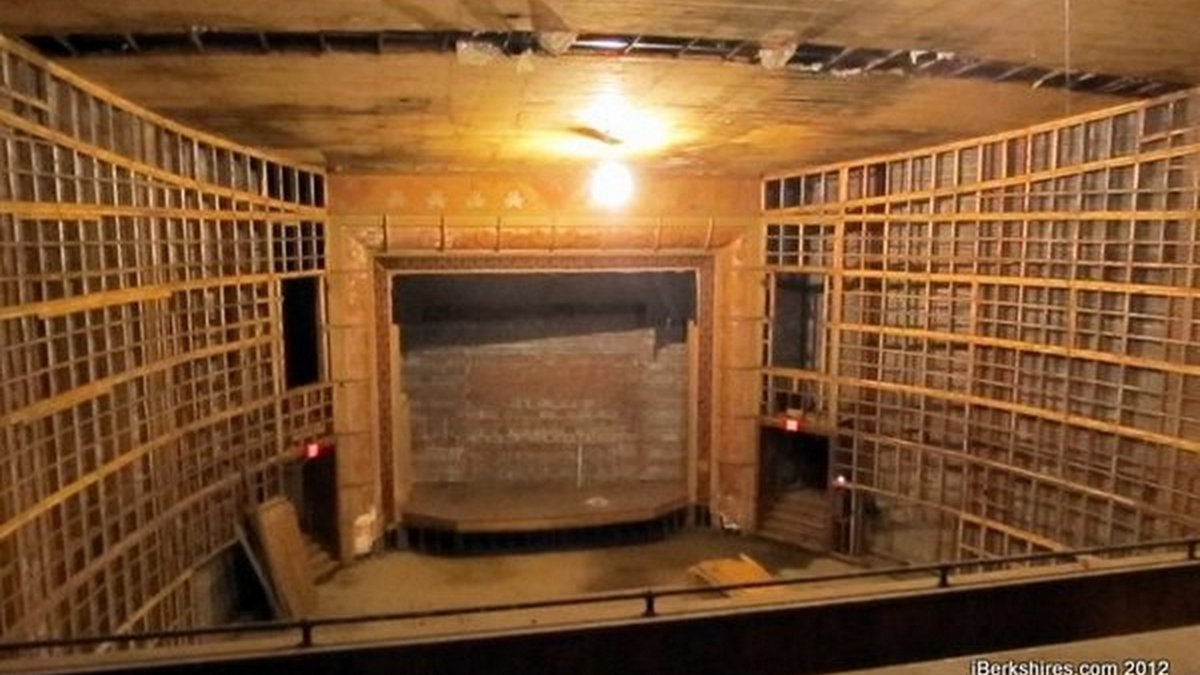
The Mohawk Theater has an appraised assessed value of $437,000 but there is nothing in the theater. It has been vacant since 1991 and currently has no plumbing, heat or insulation, and limited electricity. The Art Deco interior has been completely ripped out and the roof is nearly 30 years old.
Fifteen years ago, it was estimated that it would take $1 million just to bring it up to code. The city has already invested about $2.7 million in grant funding to stabilize the structure and pursue several studies on reuse — none of which amounted to anything.
In the case of the three proposals submitted for the movie house, Bernard said the third one was recommended for several reasons.
"We had two proposals presented in January. One we could not consider beyond submission, or the review of completeness, because it did not meet that standard," he said. "And the other one, there were concerns about, yes, the money was attractive, but it was connected to a project that has not come to fruition and I think there were a lot of assumptions built into it that had us concerned."
The winning proposal was submitted by New York City developer Veselko Buntic as Dowlin Bock LLC. Buntic purchased the 1895 Dowlin Block on Main Street and the Tower & Porter Block with partners who apparently are no longer involved.
The initial plan three years ago was to make the Porter Block into a boutique hotel but now, according to his bid, that concept has shifted to the five-story Dowlin Block that abuts the Mohawk Theater. Bernard said he believed the delay allowed for "some recontextualizing, some adapting the vision to the local context."
Buntic is the owner and operator of several businesses in New York City, including the Anable Basin Bar & Grill and the Sound River Studio event space, both on the East River in Queens, and a construction company. He said in his bid that he has more than 35 years experience in "the construction of cultural and residential facilities."
"One thing both in speaking with the proposer and in other conversations on the proposal is there's a track record," Bernard said. "It's a New York track record. But I believe that there's an ability to get things done."
Buntic's proposal is to re-imagine the cavernous seating area as a multi-purpose space for events such as weddings, banquets, conferences, art and trade shows, and live performances and movies. It would be available to the community and business organizations but also service the planned Dowlin Hotel.
The short-term benefits would include work for local building companies and building suppliers, he wrote; long term, it would be jobs ranging from catering to event planning to security and maintenance. The theater would also go back on the tax rolls as a for-profit venture.
The first phase would include assessing the structure and restoration of the marquee (the restoration of the Capitol marquee in Pittsfield was estimated at $150,000). The second phase would be the roof and any structural repairs, creating a flat floor where the sloped floor currently is and installing plumbing and a kitchen to accommodate a 1,000-person occupancy, as well as restoration of the proscenium.
His timeline is completion in several years, dependent on the building's structural assessment, and the use of private funds and some institutional grants. The bid was for $21,000.
Bernard said the proposal was studied by the proposal review selection committee, which called Buntic in to question him on several aspects of the plan including financing, the lack of progress on his current holdings and timelines. It was then recommended to the mayor's office.
The mayor said Buntic explained there had been a breakup in the original partnership that had delayed progress. However, the city's legal counsel will be putting in benchmarks for the bidder to meet and if significant progress isn't being made, the building will revert back to the city.
"The critical piece, and this is based on experience that I had being part of conversations 10 years ago about the project, was that the connection between that building and the Dowlin building became essential for any development," Bernard said. "There are lots of support programs for renovation, preservation, recreation and then you got to run the place."
The Mohawk was built to show movies — the proscenium is largely a frame for the screen not for a stage. The several studies for the theater's renovation/reuse all pointed to the need for backstage areas for any sustained use as a live performance venue. This would be achieved by blowing out the back wall of the theater and building an addition or expanding into the first floor of the Dowlin Block.
Bernard said Buntic's proposal was the one that seemed "reasonable, logical" because it would be attached to the Dowlin Block — considered critical to the theater's success and sustainability.
Of the two bids made in January, one was not considered complete. The proposal was to revamp the theater into a maker space with flexible space for events and performances at a cost of about $14 million that would be funded largely by $12 million in unspecified grants.
The other January bid was more specific but not considered because of several factors, including the proposal the theater would be used for storage and display of the models from the Extreme Model Railroad and Contemporary Architecture Museum.
The bid by Yina Luo Moore as Sincerity Builds LLC was for $100,000. Moore proposed to rent the vacant space to EMRCA for three years while she built a regional cooperative of cultural institutions that would use the space as the Mohawk Theater and Performing Arts Center.
Phase 1, including the restoration of the marquee, would be a $650,000 investment with a full-scale renovation expected to be completed in 2024. The success would be dependent on the regional consortium being able to schedule use of the space. One of the floor plans submitted shows the first floor of the Dowlin Block being used for back of house needs.
Moore has since purchased the long-vacant Adams Theater on Park Street. Formerly run as the Topia Arts Center, some work has been done on the building and there was a period this century when performances were being held there but the estimated $6.2 million project largely ground to a halt five or six years ago.
Tags: Mohawk Theater,