A New Bousquet Ready for Winter Opening
PITTSFIELD, Mass. — After receiving an extensive makeover, Ski Bousquet will open this winter with many new — and some old — features.
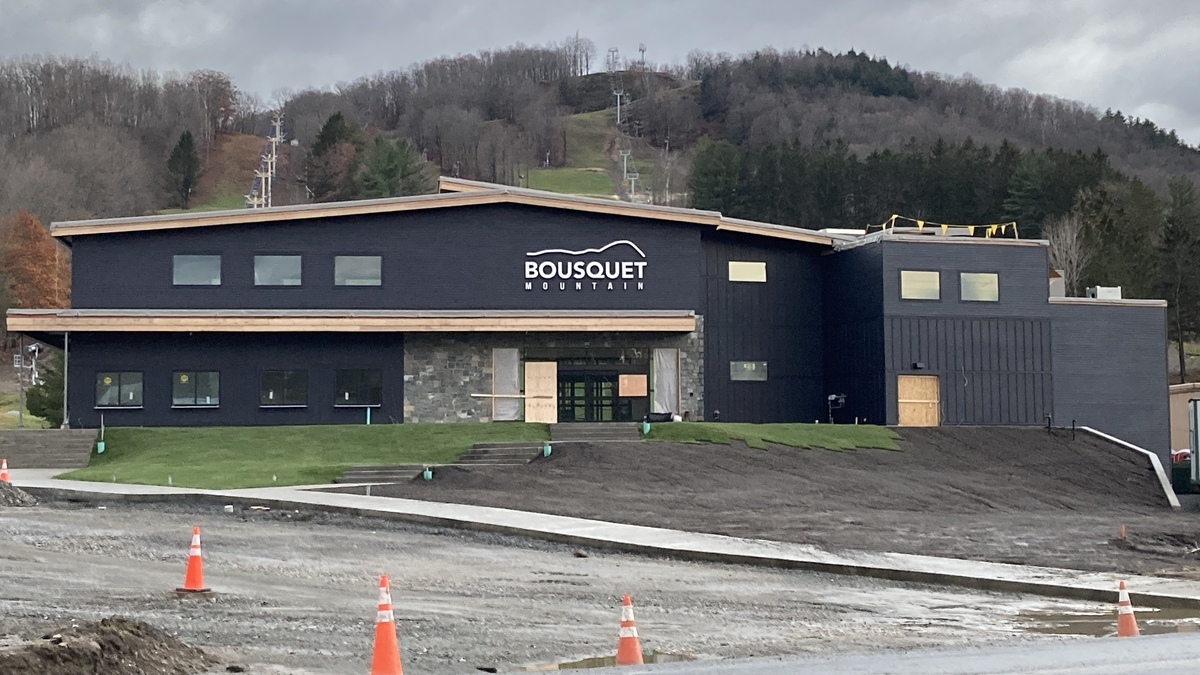
The most obvious renovation is the modern 15,000-square-foot lodge that greets visitors from Dan Fox Drive.
A far cry from the original, more than 50-year-old facility, it features a gathering space, expanded dining options, a full bar, and plenty of outdoor seating. The building was designed by Allegrone Construction.
Skiers and snowboarders can still frequent their favorite trails such as Drifter, Russell, Parker, Main Street, and the intimidating Icicles if they dare.
The chairlifts will also maintain their original titles as the Blue Chair and Yellow Chair, which now seats three at a time.
The property was purchased by Mill Town Capital in May 2020. It is part of an outdoor recreation trifecta that also includes the former Berkshire West as Bousquet Sport and the former Lakeside Christian Camp as The Camp at Bousquet.
Earlier this year, the Finance Committee recommended a tax increment finance agreement for the $11.3 million ski area and the project also received $960,000 in Pittsfield Economic Development Funds to connect water and sewer lines to Bousquet.
Bousquet's general manager Kevin McMillan recently spoke to the tradition of starting on the easier Blue Chair and feeling accomplished after advancing to the Yellow Chair.
"When kids graduate from the Blue Chair to the Yellow Chair it's a really big deal for a lot of these folks," he said. "They're skiing more challenging terrain, it's a bigger chair, it's higher up."
The advanced chair will be made of galvanized metal with Chair No. 1 painted yellow. McMillan said that kids will likely want to ride in the yellow seat on their first triumphant ride up the chair.
On the mountain, Bousquet will see an electric converted, fully automatic snowmaking system that is a quicker and more efficient process.
In this system are 80 new snow-making guns with 19 designed for full automation. Along with the guns, there are 14,000 feet of new snowmaking pipes and an upgraded pump house.
"The problem with snowmaking in this region is that the windows of opportunity to make snow are pretty small so you can sometimes have like a six-hour or eight-hour window of time and you have to decide as an operator if you want to make snow in that six to eight hours, it takes about an hour to ramp up and it takes about an hour to ramp down in the six-hour window of time you only really have four hours to make snow," McMillan explained.
"But with a fully automatic system in the center of the mountain, we hit a button on a computer and the guns start firing up within 15, 20 minutes, which is wonderful, and they self regulate, and they can oscillate so that means that the middle of a mountain is kind of trouble-free from snowmaking standpoint, which means then we can deploy our crews to make snow in other areas."
This investment in snowmaking will cover more than 45 acres of the property and should increase the length of the season.
Bousquet's "Tube Town" tubing area has been expanded from four to eight lanes with increasing run lengths.
All of these changes required a new slate of professionals to ensure that operations run smoothly.
McMillan was tapped from Zoar Outdoor, where he worked and was a part-owner for more than 30 years before it was sold, and there will also be a grooming and terrain park manager to oversee the park features.
Elements used for tricks were added to the park with the help of a Vans sponsorship and local artists will assist in decorating them.
35-year veteran Bousquet ski instructor Cindy Bartlett will return as the snow sports director to manage the ski and snowboard lessons offered for people of all ages and race programs will be led by program manager Jeremy Lawless.
To accommodate beginners, additional easy terrain has been added to the mountain.
Throughout the facility, there are technology upgrades, improved lighting, and added features to enhance the experience of visiting the mountain.
With all of these upgrades, Bousquet is also prioritizing affordability.
"We are very aware of our local community, and we've priced our season passes to make them as affordable as possible," McMillan explained.
"So we check our regional competitors and we try and stay a little below most of our competitors and make ourselves as attractive to the local skiers as possible."
He understands that working on the mountain is a tradition for many Berkshire County folks whether it is a seasonal job that is picked up for college students or to make skiing affordable.
"I think that that sort of cycle and the synergy between the folks that live here and the folks that work here are really important to us, and so we want to continue to foster a place where people want to come ski in a place where people want to come work," He said, adding that the ski area is ensuring that employees are paid a living wage.
Bousquet plans to open by December but there is no set opening date because it is dependent on snowfall.
Tags: reopening, skiing, winter sports,