Savoy Woman Gives Draft Horses Refuge From Slaughter
SAVOY, Mass. — In August, animal lover Kristie Gentile embarked on a mission to rescue draft horses from the grim fate of slaughter.
"I tend to take the horses that are less likely to be saved," she explained. "Horses with like severe disabilities or horses that aren't broke, that wouldn't make good riding horses, elderly horses. So the majority of my horses are sanctuary horses. and that just means that they'll live the rest of their life out here."
Second Chance Stables and Draft Horse Rescue is a non-profit organization whose mission is to rescue, rehabilitate, and retire or responsibly rehome draft breeds otherwise headed for, what Gentile refers to as, the slaughter pipeline.
"It's this awful, awful thing, but it's like this really well-kept secret unless you're in the horse world," Gentile said.
Draft horses are large breeds often used for labor
Many of the resident horses at Second Hand Stables have qualities that would make it unlikely for them to be saved. But these qualities are what make them more precious in Gentile's eyes.
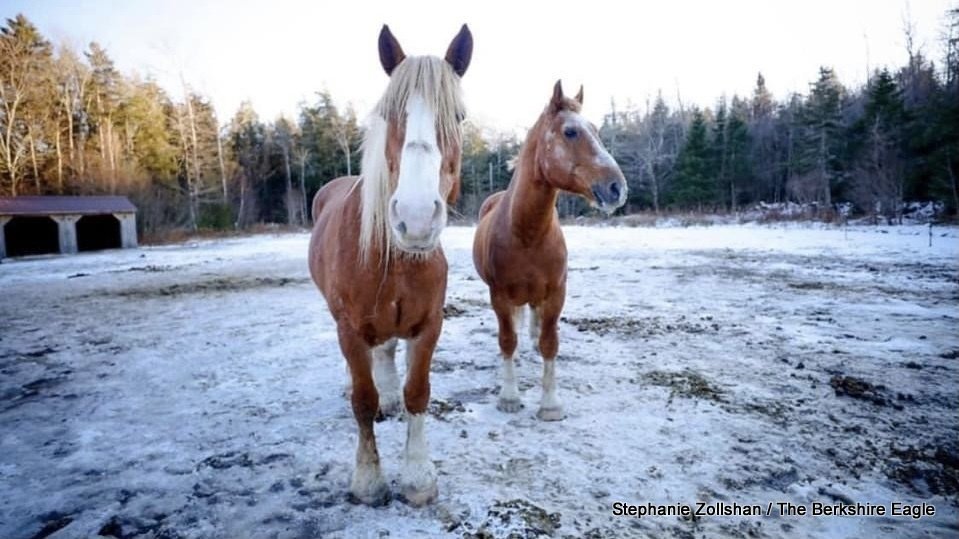
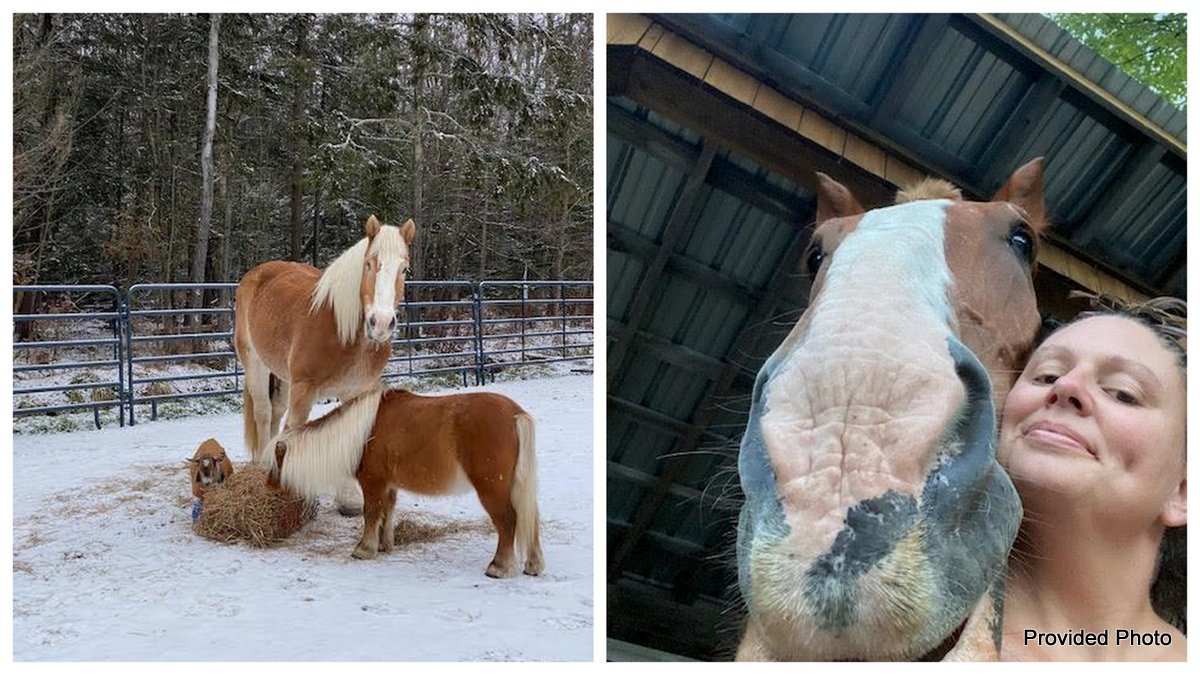
Like Dan, the Belgian draft, is completely blind and has a seeing-eye horse for support.
It is illegal to slaughter horses in the United States but it is not illegal to ship them to countries where it is allowed, like Canada and Mexico. Gentile's goal is to rescue them from an auction or kill pen directly before they are shipped.
Gentile added that horses sent to slaughter are not killed in a humane way and are not properly cared for during transit. For example, she said they are not properly fed and watered. She hopes to educate the community on these practices while rescuing horses.
"It's just a horrific horrific thing these guys go through," she said. "I've had them come to me completely emaciated. I have one right now that has put on over 300 pounds."
An article by the Humane Society of the United States about horse slaughter reads:
"Slaughter is a brutal and terrifying end for horses, and it is not humane. Horses are shipped for more than 24 hours at a time without food, water, or rest in crowded trucks. They are often seriously injured or killed in transit."
For about two years, Gentile has been involved in rescuing and fostering horses. She opened Second Chance Stables after deciding that she really wanted to focus on draft horses, who are prone to health issues because of their size. These health issues end up being costly to the owner.
Her drive to rescue the large horses was discovered when trying to find a companion for her own.
"I was around horses when I was younger. I got older had kids got out of it, and when I moved up to Savoy, I wanted to get back into it," she explained. "So, I had gotten a horse, and while I was looking for a companion for her, I stumbled across the rescue world that I didn't really, honestly I didn't even know, existed."
There are reportedly not a lot of draft-specific rescues that aren't hours away.
"There's really nothing, directly in this area, and we actually don't have any nonprofits in Western Mass," Gentile added. "So I thought this would be a good fit for the area."
Samson was the first Belgian draft that started it all for Gentile. The half-blind and very loving horse found a forever home with a caring family after being fostered through Heart and Hooves Rescue in East Brookfield.
Charlie the Belgian gelding is also one of Gentile's permanent residents. He was saved from a Pennsylvania kill pen and arrived at the rescue underweight, detached and blind in his right eye, which needed to be removed.
Now, he is being rehabilitated and has blossomed into a kind and loving gentleman.
There are currently eight horses on the property and possibly one more arriving in January.
Two of the horses who are rideable and will make good trail horses are up for adoption. Horses are given a full evaluation before being adopted out.
The rescue sits on 13 acres with complete with a barn, paddocks, and spaces for turnout, or playtime. Gentile said her "amazing" neighbors make the one-woman operation possible because they allow her to rotate the horses through their pastures and are always lending a helping hand.
The rescue has applied for a 501(c)3 exemption from the Internal Revenue Service and is able to accept donations and fundraise but a majority of the financial piece comes from Gentile.
The rescue also does sponsorships, which she tried to make more involved than the typical program.
"Basically, we do it a little bit differently than other rescues. A lot of other rescues do sponsorships where you pay a fee you get a picture or you get a stuffed animal or something like that every month. I wanted to really bring it into the community," Gentile explained. "So we started a sponsorship program, and you make a donation monthly to the rescue. But twice a month my sponsors come up they spend some time with the horses. They do some grooming or learn some horsemanship. They do some of the dirty work, cleaning poop that kind of stuff. It's more interactive. They really get to see what's going on, which is nice."
When asked what her goals are for 2022, Gentile said she would simply like to keep the rescue going, understanding that horse rescue is a costly venture.
"My biggest goal is to just be able to keep doing it. Most small rescues like myself fail within the first year. It's very hard to keep people interested. It's very hard when you don't have like hundreds of acres of land," she explained. "And people are really interested in the saving piece. They really want to help save. But trying to make people understand that these horses are saved, but they're saved with these long term chronic conditions, medications, feeding, vet bills, farrier bills. Those are the everyday costs and that's really where the money is.
"So if you're not pulling one horse every month or two, people can lose interest. So my goal is honestly, just to be able to still do this."
Tags: animal rescue, horses,