Williamstown's Community Preservation Committee Facing Four Applications
WILLIAMSTOWN, Mass. — The Community Preservation Committee this month will meet to consider four requests for funding.
Three combine to fit under the amount of Community Preservation Act funds the town anticipates for fiscal year 2023. The fourth exceeds that total on its own, but the applicant is hoping to receive its funds over a period of years.
Last fall, the town manager reported to his fellow CPC members that the town expects to have about $258,000 in CPA funds available for FY23.
On Friday, the deadline passed for applications for the current funding cycle.
The town's Affordable Housing Committee is looking for $100,000 in unrestricted funds, $40,000 of which it intends to use to honor the second part of a two-year agreement it made with Northern Berkshire Habitat for Humanity to resolve a CPA funding issue last winter.
The Store at Five Corners Stewardship Association is seeking $50,000 for needed repairs to the South Williamstown landmark.
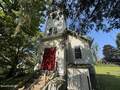
The Williamstown Meetinghouse Preservation Fund is asking for $50,000 toward a $2.5 million project to renovate and preserve the 1869 Main Street structure that currently is home to First Congregational Church.
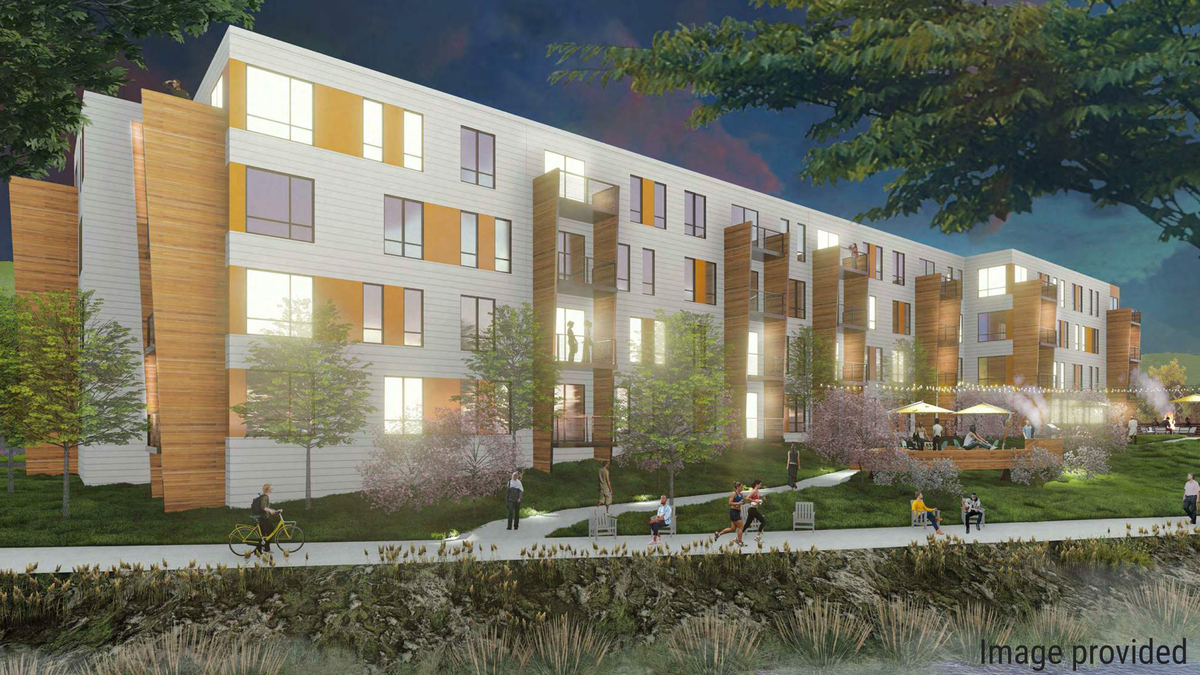
By far the largest "ask" on the agenda for the CPC's Jan. 19 meeting comes from the developer of the Cable Mills housing complex on Water Street. Mitchell Properties is seeking $400,000 in CPA funds toward the $26.2 million third and final phase of the Cable Mills complex, a four-story, 54-unit apartment building that would include 27 income-restricted units with the rest rented at market rate.
The Community Preservation Act was adopted by the town in 2002. The local CPA account is funded by a 2 percent locally adopted surcharge on property taxes (with the first $100,000 in valuation exempted) plus state matching funds.
CPA funds can be used to fund projects that achieve the aims of historic preservation, open space and recreation or affordable housing.
The Community Preservation Committee vets requests for funding each winter and recommends applications to the annual town meeting, which has ultimate say on whether projects are funded. CPC approval is the only route to town meeting; proposals cannot come before the spring meeting via citizens' petition.
Mitchell Properties' David Traggorth indicated to the CPC in November that the request his office was developing likely would exceed the town's funding capacity in a given year and thus would need to be spread over a period of years.
That brought to mind town meeting's 2007 vote to approve $1.5 million in CPA funds for Phase 1 of the Cable Mills project, which ultimately led to a bond that was taken out in 2015 and is set to be paid off on May 1, 2025.
That initial CPA commitment satisfies all three aspects of the act, providing 13 income-restricted units (10 limited to occupants making up to 80 percent of the area median income), restoring an historic mill building and providing recreation opportunities in the form of a walkway along the Green River that is open to the public.
The current application falls under the act's affordable housing provision but arguably makes a much larger impact, creating 27 units (at a cost to local taxpayers of about $15,000 per unit if the application is approved). Mitchell Properties has said that 19 of the new River Loft units will be available to residents making 60 percent of the AMI; eight will be reserved for residents earning 30 percent of the AMI.
As with Phase 1 of Cable Mills, the development is contingent on much larger allocations of funding from the commonwealth, but Tragorth in the past – and likely will again this winter – argued that state funders look favorably on applications that have local taxpayers' support.
CPC Chair Philip McKnight said over the weekend that the committee and town will look at options to fund the $400,000 commitment if the committee chooses to support the request at that level.
"A bond may turn out to be the best solution, but at this moment it is too soon to tell," McKnight wrote in response to an email seeking comment. "We have to go through the application process to see what might work best at the lowest cost."
Like Mitchell Properties, the Affordable Housing Trust is a familiar applicant to the CPC. For nearly a decade, CPA funds have been the primary source of funding for the trust, which has supported first-time homeowners through its DeMayo Mortgage Assistance Program and homeowners and renters impacted by the COVID-19 pandemic through its Emergency Rental Assistance Program and Emergency Mortgage Assistance Program. Among other things, the AHT also has acquired four building lots in town for the purpose of building single-family homes for income-restricted residents; one home built by Northern Berkshire Habitat for Humanity already is occupied and another is under construction.
A third applicant, the Store at Five Corners Stewardship Association, is a new non-profit created last year to acquire the 18th-century store at the junction of Routes 7 and 43 and rent it to a shopkeeper interested in operating it as a community resource.
The fourth applicant on the agenda for Jan. 19 is both new and, in a sense, familiar to the committee.
In 2016, First Congregational Church brought an application for $50,000 to help fund repairs to the structure, which has its roots going back to 1765, when the town was awarded its charter. At the time, the Massachusetts Bay Colony required that towns have "a church, the seat of town governance, and center of community activities." The original church was lost to fire; the current structure sits on land donated by Williams College in the 19th century.
The 2016 First Congo application narrowly passed a baseline vote to determine if it was eligible under the CPA. It was approved, 4-3-1, after some members raised concerns about the use of town funds for what is now a religious institution.
A second vote to recommend the application to the May 2016 annual town meeting failed, 5-2-1.
This time around, residents concerned with preserving the historic structure formed the Williamstown Meetinghouse Preservation Fund Inc.
"WMPF recognizes and respects the [Supreme Judicial Court's] Caplan v. Acton decision regarding use of public funds," the non-profit's application reads. "In order to emphasize separation between religious and community use of the Meetinghouse the request for CPA funding includes only areas of need that address community access and provide community benefit.
"The Meetinghouse has a distinguished architectural history and is visually and functionally central to Williamstown. Funds are needed to renovate, restore, and update the building, funds that are beyond the resources available from the congregation."
Tags: CPA,