Williamstown Community Preservation Committee Votes Funding Requests
WILLIAMSTOWN, Mass. — After one of its four applicants withdrew its independent request, the Community Preservation Committee was able to give all four what they sought for fiscal 2022.
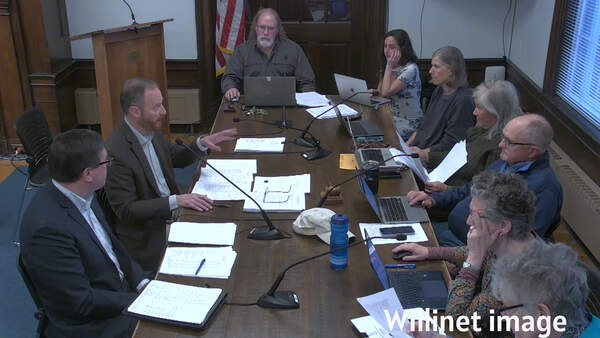
The committee Wednesday voted to send the annual town meeting three requests covering four entities for Community Preservation Act funds.
One of the three, a request for $200,000 from the town's Affordable Housing Trust, now includes a commitment from the trustees to grant $40,000 to Northern Berkshire Habitat for Humanity.
The local chapter of Habitat for Humanity had in December submitted an application for $80,000 to fund a project manager for two years to oversee the construction of homes on land purchased by the Affordable Housing Trust for that purpose.
But the $80,000 ask, coupled with three other applications before the CPC, left the committee with more requests than it had available CPA funds in FY22. And the committee faced the prospect of either underfunding one or more applicants or denying an applicant.
Trust Chair Tom Sheldon suggested a compromise, Town Manager Jason Hoch told the committee on Thursday: the Trust added $40,000 to its request for FY22 with the understanding that either the it or Habitat will be back with a request for $40,000 for the same purpose in the FY23 funding cycle.
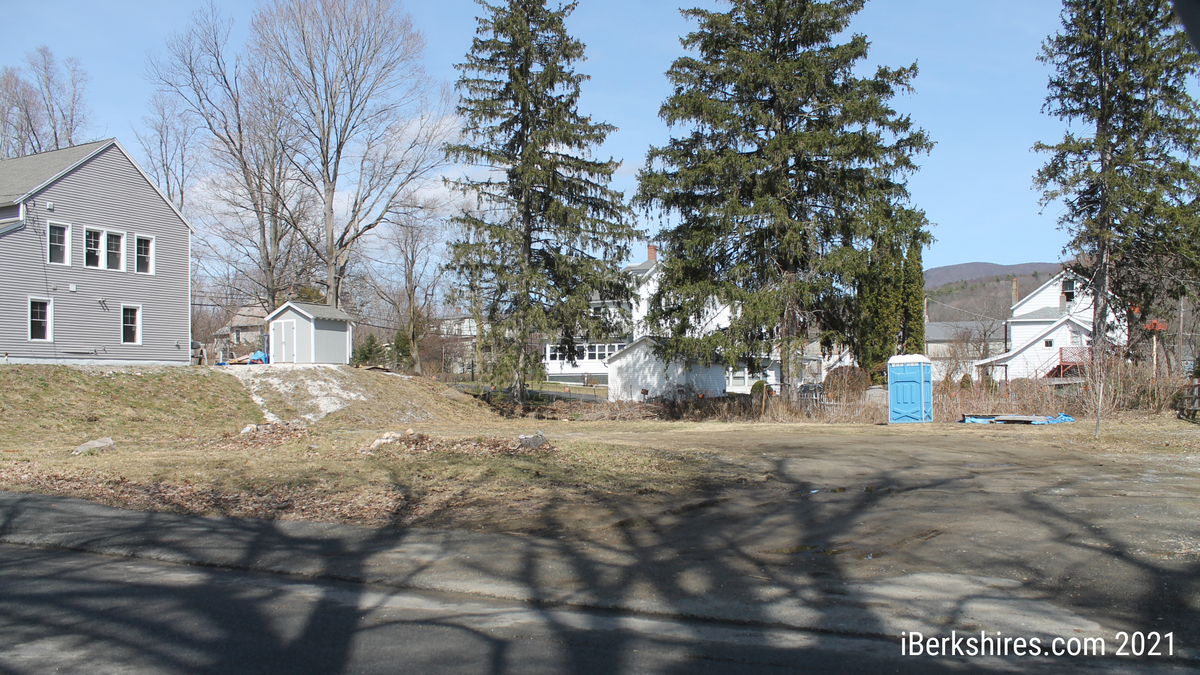
Hoch noted that the nonprofit may not need those funds if it completes a purchase-and-sales agreement on a home nearing completion on Cole Avenue and can use that money to fund the position in question.
As for the agreement between the town's housing trust and the non-profit, that is consistent both with the practice and purpose of the Affordable Housing Trust, which granted to the nonprofit the land where it is building the homes in the first place, Hoch said.
The total request from the Trust that town meeting will see from the Affordable Housing Trust includes $200,000 in new CPA funds, of which $40,000 will pass through to Habitat for Humanity, and the release of $18,722 in previously restricted funds which the trustees are asking to convert to unrestricted funds.
The committee also unanimously recommended to town meeting that it grant $50,000 to the Williamstown HIstorical Museum for a project to disassemble a historic barn on Green River Road and reassemble the barn on the museum's property at the site of the former South Center School on New Ashford Road (Route 7).
But the committee split, 5-3, on the third active request before it on Wednesday evening.
The majority favored sending town meeting voters a $56,000 request from Williamstown Rural Lands Foundation to support an Agricultural Preservation Restriction on 18 acres owned by the Galusha family, operating as Fairfields Farm. Rural Lands needs the town to help provide the local match required for the APR; the bulk of the price tag, $327,450, is coming from the Massachusetts Department of Agricultural Resources.
Jane Patton, who occupies the Select Board's seat on the committee, used the platform to question the town's prioritization of land in conservation over other potential uses.
"I am all for conservation, 100 percent, all in," Patton said. "I keep finding myself coming back to this notion of the recreational space available in Williamstown and what's suitable for that. It seems like that inventory, if you will, is ever shrinking. Just in my time in Williamstown, we have put so much in conservation that it starts to feel like we're boxed out.
"As we take more and more options away by putting all this land in conservation, we're completely missing the recreation piece."
Susan Puddester, who represents the Planning Board, agreed, saying 50 percent of the town's land is in conservation or otherwise protected so that it cannot be used for anything else.
"That's a big concern for me," Puddester said. "We can't see what's going to happen in 50 years or 100 years. I have the same concern as Jane but for other reasons."
Hoch, a voting member of the committee by statute, said the particular parcel in question is not very usable for other purposes, except perhaps to create a couple of single-family building lots. It is that development pressure that drove the Galushas to seek an APR, which the commonwealth supports.
"It's on a corner served by gravel roads," Hoch said. "There is no town water service there. It's a piece of land that has a pretty reasonable slope down to the river in a short stretch. … It doesn't have the carry capacity for more than [a couple of single family homes] without major infrastructure to support that corner."
Nate Budington, who represents the Historical Commission, argued that the parcel's value as prime agricultural land is worth preserving.
"This is not a rocky hillside where cattle are grazing," Budington said. "This kind of land, once you lose it, you never get it back."
Budington, Hoch, Melissa Cragg, Philip McKnight and Peter Mehlin voted in favor of the request. Joe Finnegan joined Patton and Puddester in voting no.
Tags: CPA, habitat for humanity,