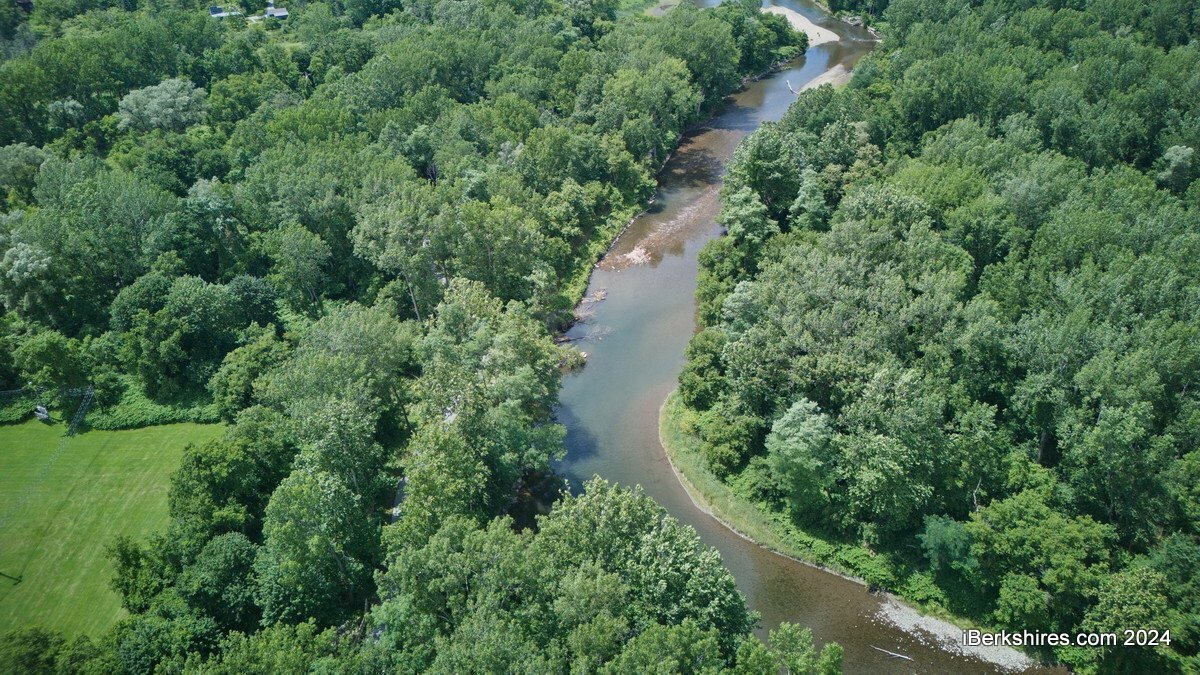
Williamstown Looks to Start Riverbank Stabilization Projects in FY27
WILLIAMSTOWN, Mass. — Town Hall is hoping to make progress on four riverfront infrastructure projects in the fiscal year 2027 budget.
Town Manager Robert Menicocci told the Finance Committee this month that the town is working with state agencies to develop riverbank stabilization plans while also pursuing help with the cost of that work.
Menicocci characterized two of the projects as small: the stabilization of banks on the Green River and Hoosic River related to small landfills.
The other two projects are further downriver from the former landfill site: near the junction of Syndicate Road and North Street (Route 7) and further downriver near the Hoosic Water Quality District's water treatment plant.
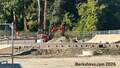
The North Street site has been top of mind for the town since December 2019, when a Christmas Eve storm brought about the loss of a large piece of the river bank and threatened to expose a sewer main line.
Menicocci explained that a final solution for the site — which has been before the town's Conservation Commission several times in the last six years — has been held up by discussions among state regulators.
"What we know at the moment is on the Hoosic River, especially, the state is looking for us to stabilize the situation before we even get to the long-term solution," Menicocci said. "We are battling with them because the part of the state that regulates the landfill is like, 'You've got to do this, and you've got to do it yesterday.' And then, the other side of the same agency looks at environmental protection and says, 'You know what, you've got a couple of things in the river there, some grass and some turtles. You can't do anything.'
"So the same agency is fighting with itself now."
The first step will be to stabilize the bank, Menicocci said. And he is hoping the town will be able to do some of that work in house.
He told the Fin Comm there is $500,000 carved out in the town's budget for FY27 to address the issue.
"If [state regulators] wanted us to do something quick and they were flexible, we could maybe do — aside from buying the materials —a lot of it ourselves," he said. "If that is the case, and [Department of Public Works Director Craig Clough] is busy working on this — by the time he comes in [with his FY27 budget request], he may know something more. We could take some of that money, maybe $300,000 to $400,000 of the $500,000 that is designated, and roll it into other things on the capital list.
"If not, we are going to need all of that just to get it stabilized — and then move on to the engineering for the permanent solution."
As for funding the long-term solution to the North Street site and other projects, Menicocci said the town is trying to see if the Army Corps of Engineers would participate in the effort.
"Because the full scope is huge," he said.
"There's a lot going on there, and we're doing our best to manage it. … We're looking for all sorts of funding mechanisms to do that."
The DPW is scheduled to make its fiscal year 2027 budget presentation to the Finance Committee on March 4.
Tags: Hoosic River, riverbank,