Clark Art Free Sunday
WILLIAMSTOWN, Mass. — The Clark Art Institute's First Sundays Free program continues on Sunday, Feb. 6, offering free admission to the galleries and special exhibitions along with a series of special programs.
February's theme is "Illuminating Illustration," placing a special emphasis on poster art and illustration in a nod to one of the Clark's current exhibitions.
Visitors can explore and array of French color prints by artists including Pierre Bonnard, Mary Cassatt, Paul Cézanne, Jules Chéret, Maurice Denis, Camille Pissarro, Henri de Toulouse-Lautrec, and Edouard Vuillard in "Hue & Cry: French Printmaking and the Debate over Colors" in the Clark Center galleries.
Also on view is a new installation of contemporary works by emerging artist Tomm El-Saieh. The exhibition, "Tomm El-Saieh: Imaginary City," is the latest offering in the Clark's on-going presentation of contemporary art in public spaces, and is on view in multiple locations in the Clark Center and Manton Research Center.
In addition, the Clark's full permanent collection is on view, featuring a rich array of works by artists including John Singer Sargent, Winslow Homer, Berthe Morisot, Pierre-Auguste Renoir, and Edgar Degas. Recent acquisitions by artists Sarah Bernhardt and Anna Alma-Tadema are featured in the galleries.
Special activities planned for the day include a pop-up display of illustrations on view in the Manton Study Center for Works on Paper from 11–1 pm. In the Michael Conforti Pavilion from 1–4 pm, visitors are invited to meet an artist and try their hand at several illustration activities.
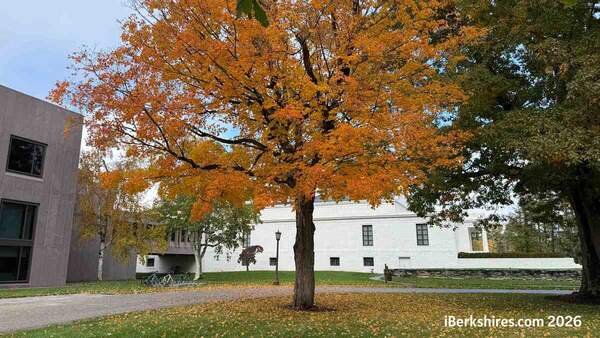
The Clark's grounds, which are always open free of charge, provide miles of walking trails. The Clark's Project Snowshoe program offers visitors the opportunity to borrow free snowshoes to explore the beauty of the campus in winter. Snowshoes are available in adult and child sizes on a first-come, first-served basis.
While admission to the galleries is free to all visitors, advance registration is strongly recommended. Proof of COVID-19 vaccination is required for all visitors over the age of 12 and facemasks are required for all visitors over the age of 5. Visit clarkart.edu to register and for details on current health and safety protocols.
Tags: Clark Art,