North Adams Planners OK Outdoor Cannabis Cultivation
NORTH ADAMS, Mass. — The Planning Board spent nearly 45 minutes discussing the cons of a proposed outdoor marijuana cultivation site, Ruby Farms, before approving it on Monday night.
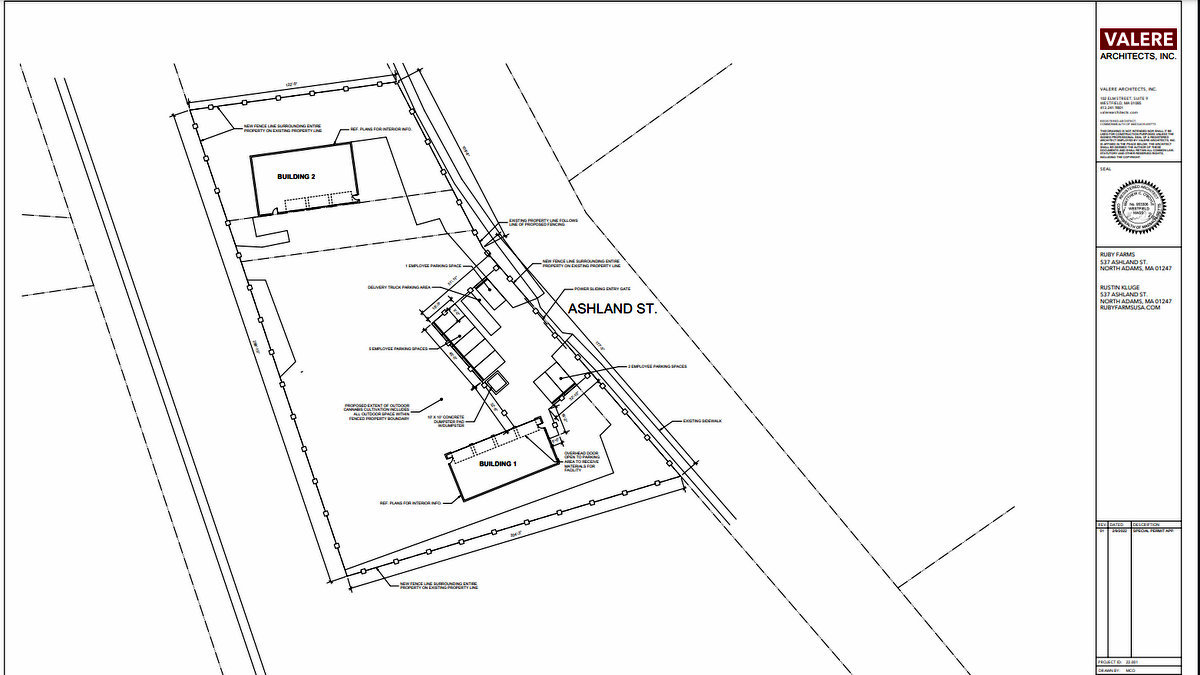
Rustin Kluge of New England Alchemy is planning to grow marijuana and process it at 537 Ashland St., currently the home of Berkshire County Construction.
His plans were approved with the condition that his parking plans are accepted by the building inspector and pending an OK from the Conservation Commission.
The commission had continued a hearing on the operation last week because it had questions about water and fencing.
Kluge said his operation, Ruby Farms, was committed to sustainability and the environment, and has operated farms in Oregon and Michigan.
"We're partners in the end of the day, we've committed to creating jobs in the community, being good members of the community and part of our gross revenue is going to the city which gives me personally a lot of pleasure," he said.
The lot is 1.2 acres in an industrial zone. According to Kluge's application, he intends to grow outside using sunlight as a more energy-efficient and sustainable operation. The entire yard will be enclosed by an opaque 8-foot fence and the two existing buildings for auto repair will have their interiors updated and reconfigured. The smaller of the two buildings will have partitions, bathrooms, security, office space, storage and processing rooms, and a secure receiving area and access to parking.
These are subject to approval by the state Cannabis Control Commission, particularly the security.
The larger building will get fewer modifications and will be contained within the fenced yard; it will have new bathrooms, processing and packaging rooms, and a "prefabricated, pre-engineered C1D1 extraction booth."
Ruby Farms expects to have 20 employees working different shifts and operate 8 to 5 daily, with deliveries limited to weekdays.
Kluge was accompanied on the Zoom call by attorneys Marvin Cable and Kyle Sosebee, who specialize in cannabis law.
The major concerns were odors from the outdoor grow and security.
Kluge said his operations had not had any security issues in their six years of operation but acknowledged there is a period in the growing season when the plants emit an odor.
"There's ways to mitigate the odor by planting other plants around the perimeter of the property that have other aromatics on them," he said. "We also like to plant those anyway because it helps with our pest management. ...
"I believe the ordinance is in the industrial zone for purpose, meaning there's lots of things that has smells to it, whether it be cement, or construction sites, or garbage dumps or whatnot."
Planners asked about restrictions to outdoor growing but Building Inspector William Meranti said the City Council had amended the ordinance to state that "all activities of a licensed marijuana establishment shall be conducted indoors except for outdoor cultivation" in 2018.
"Quite frankly, it was news to me, because my ordinance in my book said that it was all to be kept indoors," he said.
City Councilor Wayne Wilkinson, speaking in the public portion, said he had talked with the mayor and she had concerns about security and odor. In his opinion, as a horticulturist, people would be able to smell the cannabis not in only nearby but in the downtown when the buds are ripe.
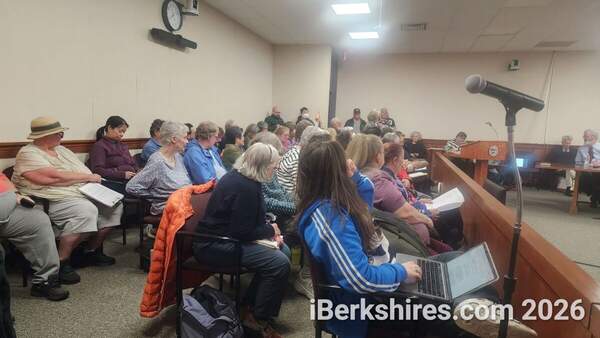
"We need to get more information from the solicitor, we certainly need to get more input from the neighborhood," he said. "Most of the people that live down there are elderly and they don't do Zoom. So we are here tonight. I think as North Adams residents they should have it's gonna affect their community, their neighborhood, they should have a right to express that."
Planner Lisa Blacker agreed that people in the neighborhood may not be comfortable with technology and suggested continuing the matter until another a public meeting could be held.
He asked the board to postpone the meeting and have an in-person meeting at City Hall.
Kluge said the amount of space was only a little over an acre and wouldn't have the same amount of odor of a 20-acre farm. There are ways to mitigate it, he said.
"It's zoned in the industrial zone and there's other aromas that come from the industrial zone that are not pleasantly smelling and they're not good for the environment and there's chemicals and bad things. This is a natural plant that state passed," he said.
Kluge said he was open to continuing the hearing for a month "to get people comfortable" but that pushing it further would mean he would lose a year of production.
Planner Kyle Hanlon agreed that "we need to get some more public input. And we certainly shouldn't feel obligated to advance this prematurely. So I'm all in favor of continuation of the meeting until we have more answers."
But Kluge said he'd already held a community meeting as required by law, though lightly attended, and signed a host agreement with the city.
The planners also had concerns about a parking plan for eight spaces when the operation was anticipating 20 employees. Kluge said they would not all be working at the same time and hours would change during the season. He planned to promote carpooling and other ways to get to work.
That planners did not see that as viable and approved a motion by Blackmer to set the condition that he would have to work with inspection services on a plan.
Despite all the discussion of continuing the hearing, the board voted unanimously to close it and then voted to approve with the conditions.
"The Planning Board has met its legal obligation and the applicant has met its legal obligation," said Planner Jesse Lee Egan Poirer. "I think it's always easy to punt to the next month or two. But I see no reason to not move ahead with with this plan. The issues people might have with odor I think could be said of any other industrial application being used on this land."
The board also approved an application by Emilee Yawn to relocate her business the Plant Connector to 73 Main St., that had formerly been a makerspace and a candy shop. Yawn said her shop has outgrown its space in the flatiron building on Eagle Street. She expects to open on April 1.
Tags: cannabis, Planning Board,