Williamstown Net Zero Greenhouse Gas Task Force Seeks Community Input
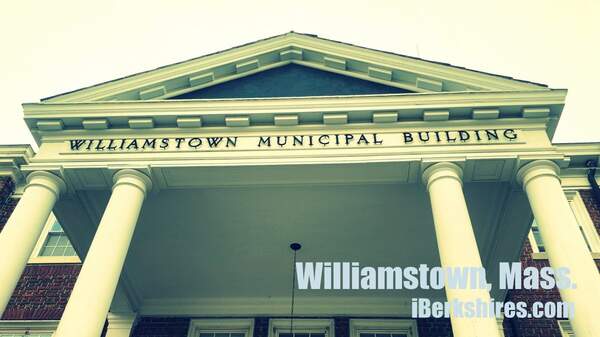
WILLIAMSTOWN, Mass. — The Select Board last week heard about two initiatives looking to make change on a regional and global scale and one proposal that would shake up the way the town taxes at the local level.
At last year's annual town meeting, members overwhelmingly voted to commit the town to a "net zero greenhouse gas emissions goal" by 2050.
Part of the resolution included a more immediate goal of forming a "comprehensive action plan" by next year.
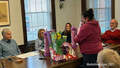
Last Monday, one of the residents on a 27-person task force working on that plan updated the Select Board on the group's activities.
"What is a net zero community?" Nancy Nylen asked rhetorically. "We're looking at a community that produces net zero carbon pollution. It doesn't mean we don't use energy, but that the energy we use comes from clean energy sources. And getting to net zero usually comes from a combination of energy efficiency, local clean energy and purchasing renewable energy."
In developing strategies to achieve that goal, the Net Zero Task Force is seeking community input, Nylen said. She used Monday's platform to announce a townwide survey where residents can share their thoughts and priorities through the website coolwilliamstown.org or on paper surveys the group plans to make available at Town Hall.
Coolwilliamstown.org is the website of the town's Carbon Dioxide Lowering (COOL) Committee, a grassroots effort that dates back to the turn of the 21st century.
"At this point, our next step is to hear from community members what is important to them as we move forward," Nylen said. "This is a big, challenging initiative that we're involved in, and it's going take a lot of creativity, work and, hopefully, some fun if we work together on this."
Nylen said the task force has gotten a positive reaction from the community to date as it does the work called for in the May 2021 resolution.
And the town is not waiting until the plan is released next year to make progress, Nylen said.
"While the plan is a big part of this, we also know this is an urgent problem, so we are taking action while we're in the midst of doing the plan," she said. "As you know, we're embarking on installing LED street lighting as one of our activities that is going to be starting this spring – changing out all our street lights to efficient LEDs.
"We talked about incorporating net zero into decisions going forward, so the Fire District, in looking at a new building, the Building Committee has voted to make a goal of a net zero building in their design. In our homes and businesses, we are embarking on an initiative with the Berkshire Regional Planning Commission to promote the new and improved incentives of Mass Save for our homes and our businesses."
Nylen said there are financial incentives available through the statewide Mass Save program for homeowners who install heat pump technology.
"Hand in hand with that will be encouraging people to weatherize their homes by insulating and air sealing," she said. "Those continue to be incredible incentives across all income levels. For those who are income-eligible, there will be no cost. For those who are in almost every other income level, Mass Save pays 75 percent of the cost of insulating your home and seals up drafts. … And [provides] advice for people looking at heat pumps.
"As part of the programs, we will have an energy advocate who will be available to help people through the process. Sometimes it can be confusing to try to take these steps. If you can call somebody, and they can hold your hand through it, that will be part of this partnership."
Nylen was joined by consultant Emily Lange from the Berkshire Regional Planning Commission.
The BRPC also was at the meeting to provide an update on its Comprehensive Economic Development Strategy.
Wylie Goodman from the Pittsfield agency explained CEDS, a process guided by the U.S. Department of Commerce's Economic Development Administration.
"In this particular version of the CEDS update, we will be greatly expanding, at EDA's request, the economic resiliency chapter," Goodman said. "That's where we look at economic shocks – like COVID, like the economic downturn we experienced with the housing crisis, climate change threats like flooding.
"We look at pre-disaster regional planning around communications and what measures the region can take to be prepared to prevent, withstand, respond to and bounce back quickly from economic shocks."
Goodman said she would email the Select Board members a series of questions to solicit input that will inform the BRPC's creation of an economic strategy. At the request of Chair Andy Hogeland, she said other town committee members could be included in that survey process.
At the end of a meeting that centered largely on discussions about matters facing the annual town meeting in May, Dan Caplinger addressed the Select Board from the floor to suggest an item that the board may want to consider in its 2022-23 cycle that begins after the May town meeting.
"One thing I want to put on your radar [that] is related to the budget and related to Article 37 [from the 2020 annual town meeting], in which all of us agreed to consider areas related to housing and make changes that are supportive of a wider array of racial and economic backgrounds," Caplinger said. "There is one area that is fully and completely within the Select Board's ambit that I'd like you to consider in the months to come.
"That is whether or not Williamstown should accept the residential exemption provisions provided under Mass General Law, Chapter 59, Section 5C."
Municipalities can exempt up to 35 percent of the average assessed values on residential properties used as primary residences, Caplinger explained.
Such an action would raise the property tax rate but, at the same time, provide property tax relief to owners of "lower valued properties at the expense of higher valued properties," Caplinger said.
He said communities on Cape Cod who have employed the residential exemption have done so to promote affordable housing for full-time residents versus second-home owners.
"It's something to take a look at," Caplinger said, "There are a number of issues involved. It's been divisive. It potentially pits members of the community against each other because different people have vested interests. Nevertheless, it speaks to … affordable housing and directly reduces an expense of home ownership."
Tags: greenhouse gases,