In the face of a pandemic, MCLA continues to spur student success
 |
Through the COVID-19 pandemic, Massachusetts College of Liberal Arts has continued to receive national recognition and support for its commitment to social mobility and academic success.
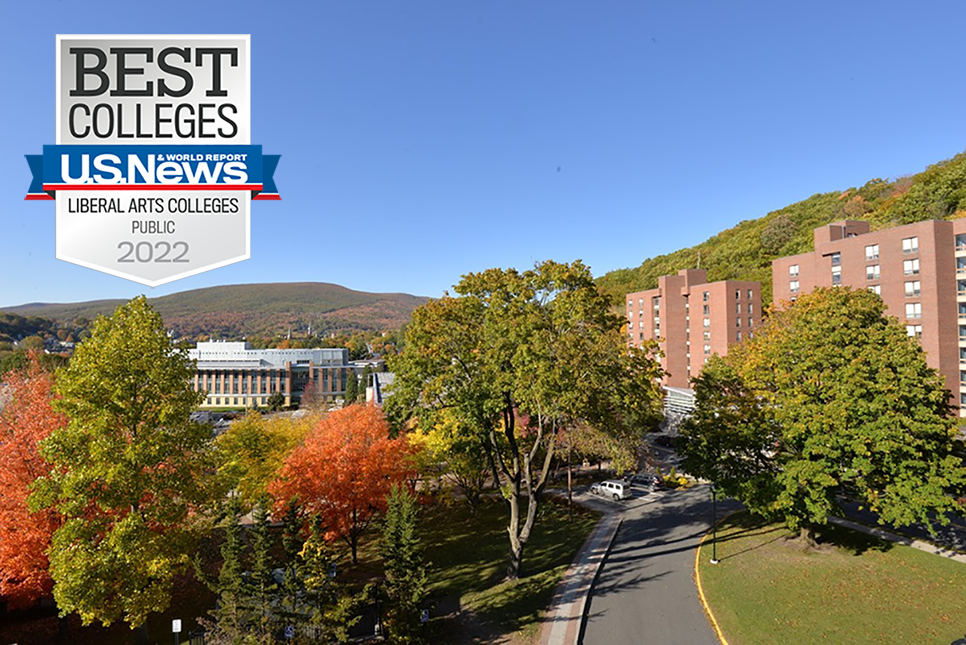
MCLA is No. 21 on U.S. News and World Report's list of the 50 public and private "TopPerformers on Social Mobility," which measures how well schools graduate students who receive Federal Pell Grants. These grants are typically awarded to those whose families make less than $50,000. MCLA was also ranked as a 2021 Top Ten College by U.S. News and World Report for the third consecutive year. It has maintained its position in the top ten list for nine of the past 11 years.
Nearly half of MCLA students are Pell Grant recipients, the highest percentage across the Massachusetts State University System. More than 40 percent are the first in their families to go to college. Nearly 85 percent of students receive some kind of financial aid. But MCLA Pell students continue to graduate at a rate higher than the national average.
"Our students are truly trailblazers," said MCLA President James F. Birge. "So many are taking a new path—many are the first in their families to go to college. Many come from families who lack access to the resources and connections that wealthier families often have. Many are juggling work and family commitments. MCLA continues to be a way for these students to open new doors, have new experiences, and live fulfilling lives, personally and professionally. I'm
incredibly proud of all our students, as well as our incredible faculty and dedicated staff, who are changing individual lives and working toward a more equitable future."
In recent years, MCLA has added new programs that help bolster student support, including the TRiO Program, which works toward increasing the retention, good academic standing, and graduation rates of low-income, first-generation, and students with disabilities, with a capacity to serve 160 students a year. MCLA's Office of Admission adopted a test-blind policy in 2020 and waived SAT requirements for students applying for the fall 2021 and 2022 semesters.
Student support doesn't only include academics. In response to economic uncertainties brought on by the COVID-19 pandemic, MCLA established the Resiliency Fund, which has to date distributed nearly $300,000 to 296 students in need. The MCLA Food Pantry combats student food insecurity, supported with student volunteer work and donations. MCLA also boasts over 100 of its own private scholarships, including five new additions since 2020.
The vast majority of MCLA graduates—93 percent—land jobs or get accepted into some of the finest grad schools in the country.
"Helping our students achieve a college education will help them earn more in their lifetimes, find fulfilling careers, and live meaningful lives," said Birge. "Public colleges help contribute to furthering economic equity every day, and we are proud to make this part of our mission as an institution."

Tags: MCLA,