Mount Greylock School Committee Takes Another Look at FY27 Budget
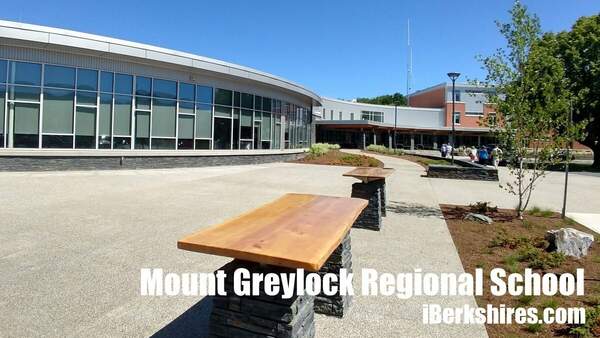
WILLIAMSTOWN, Mass. — The Mount Greylock School Committee on Tuesday decided to bring a fiscal year 2027 budget to Thursday's public hearing that maintains level services while seeking double-digit percentage increases in the assessments to each of the district's member towns.
The committee knew those increases were coming from a draft budget it saw at its March 3 meeting, but the numbers changed over the last couple of weeks — driving up the anticipated assessment to Williamstown and leading to a slight reduction for the budget hit to Lanesborough.
The draft budget in front of the committee on Tuesday includes a 13.61 percent increase in the district's assessment to Williamstown and a 10.99 percent hike for Lanesborough.
In real dollars, those assessment increases translate to $2,018,000 and $751,000, respectively versus the FY26 assessment to pay for the current school year.
Williamstown's assessment is up 0.9 percent from March 3 to March 14 while Lanesborough's is down 0.8 percent, in part because, per the regional agreement, each town pays the operating cost of its elementary school (and splits the cost of the middle-high school based on enrollment). Some of the increased cost in the last two weeks impacts Williamstown Elementary more than Lanesborough Elementary.
Tuesday's draft is likely to be relatively unchanged when the School Committee holds its annual public hearing on the budget on Thursday, the same night the committee likely will vote on the final FY27 budget — and resulting assessments — it will send to each member town's annual town meeting in the spring.
Superintendent Joseph Bergeron told the committee that the administration and the elected body's Finance subcommittee had been making modest progress on mitigating the assessment increases to both member towns before the district received two gut punches.
"Over the last couple of weeks … we went to work at finding every way [to cut the budget] that wouldn't directly harm the students in the coming year," Bergeron said. "We looked at textbooks and software … delay this, defer that. We were doing it in all three schools' budgets, and numbers were coming down.
"Then we had two things revised up that undid some of that work."
Specifically, the district learned that it needed to plan for even more employees than it anticipated signing on to the school system's health insurance than it previously thought. At the same time, it learned that the district's cost for out-of-district tuition and transportation were going up more than anticipated for the 2027 school year.
"Those two things have outweighed, at least for one of our two towns, all of the things we were doing," Bergeron said.
That means Williamstown, which already was facing a hefty 12.71 percent increase in the March 3 draft budget, now is looking at a 13.61 percent increase, more than 4.5 percent higher than the 9 percent "place holder" increase town officials used when preparing a town budget for the Finance Committee to review.
The chair of the Fin Comm attended Tuesday's School Committee meeting but did not participate in the discussion.
The Williamstown Fin Comm will be the next stop for the Mount Greylock budget after Tuesday's public hearing. The Williamstown panel is scheduled to review the budget request from the district at its March 25 meeting. The district will be before the Lanesborough Fin Comm on April 6.
The town meetings in each town are scheduled for May 19 in Williamstown and June 9 in Lanesborough, when registered voters in each town will decide on the town and school spending plans for FY27 in each community.
Out-of-district tuition costs can fluctuate dramatically in a relatively small school district like Mount Greylock, where one or two students requiring specialized programs — or graduating from them — in any given year can noticeably shift that budget line up or down.
Bergeron already had informed the School Committee that the district had seen unforeseen increases in its expenditures for out-of-district placements during the 2026 school year. But this month, those costs went up dramatically.
"One school received, a mid-year approval to increase without, really, any notification, the annual tuition from $67,000 a year to $123,000 a year," Bergeron said. "Which, for a district of our size, with a budget that is as tight as it is, that kind of a shift for a couple of folks is a big number."
Likewise, health insurance was a known driver of rising costs for the district.
An 8.75 percent premium increase from Berkshire Health Group is rippling through all its member municipal entities, and Mount Greylock is no different.
Recently, the district learned that more of its employees will be joining the district's health insurance plan thanks to a move by MassHealth.
About 30 percent of the district's employees don't participate in the district's plan. They are insured either through a working partner or, in some cases, through the commonwealth's MassHealth program.
The state this winter started notifying some recipients of MassHealth coverage that they need to start taking coverage through their employer's plan, and the state program will provide "premium assistance" to the employee to help cover their share of the plan.
Depending on the plan — family or individual or couple — Mount Greylock, by contract, pays up to 80 percent of an employee's health insurance, Bergeron said in a discussion with iBerkshires.com after Tuesday's meeting.
Much of Tuesday's meeting was spent going over a PowerPoint presentation that the School Committee plans to use at the Thursday public hearing — and, likely, subsequent meetings with town officials — to explain why this year's assessment increase is so large and why many of the drivers are expected to be one-year shocks to the system.
One key point that school officials likely will drive home: The district largely kept its assessment increases to each town under 4 percent for six years before a spike in FY26 (6.45 percent increase for Lanesborough and 7.59 percent for Williamstown).
In one year, FY21, the assessments for both towns actually went down slightly from the prior year. At that time, the district was leaning heavily on both emergency grants related to the COVID-19 pandemic and a drawing down on the district's reserves that officials in both member towns requested.
The fact that those reserves were purposely drawn down (one account went from $1.2 million to start FY20 to a planned $76,000 at the end of the current fiscal year) contributes to the need for more appropriated funds in FY27. In other words, the district no longer has reserves to help reduce the tax impact of the budget.
Had the district leaned less on reserves and sent each town 3, 4 or 5 percent increases in assessments over the first half of this decade, the baseline for appropriated funds would have been higher and the spikes in FY26 and FY27 would have been less severe, Bergeron noted at Tuesday's meeting.
Another argument that School Committee members will be making to their constituents between now and town meeting: While the district's net operating budget is up by $2.7 million from FY26 to FY27, that increase comes with virtually no increase in discretionary spending and, most importantly, no increase in personnel. In fact, the proposed budget includes a reduction of one position at the district administration level.
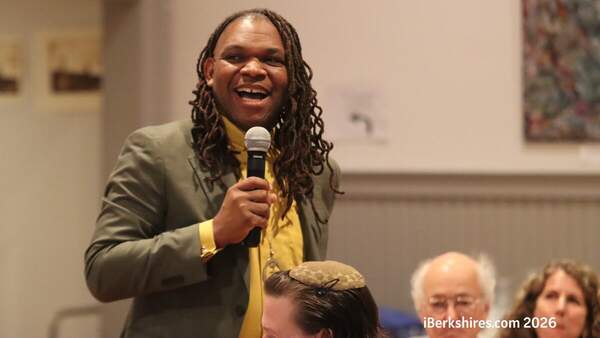
Committee member Curtis Elfenbein told his colleagues Tuesday that he was hearing from constituents that they want either a "level funded" or a "level service" budget for FY27 and asked that the district prepare language that explains the difference.
The draft budget going to Thursday's public hearing is a level service budget, officials say. But funding (through property taxes) has to go up because the cost of providing that service is going up, and the district is getting less in the way of state and federal aid and has drastically diminished reserves because it followed the recommendation of its member towns.
"The budget we're proposing right now is level staffing, and we believe it can be level service as well, even though supplies are decreasing," Bergeron said. "A level-funded budget would be absolutely debilitating. We'd be looking at 15 to 20 people who work for our district no longer working for our district. It's not a worst-case scenario we'd even consider."
No votes were taken at Tuesday's special School Committee meeting on the FY27 budget, but no one from the committee suggested that Bergeron make any changes to the spending plan he presented.
Tags: fiscal 2027, MGRSD_budget,