Berkshire Health Group Sets 8.75% Premium Rise for FY27
NORTH ADAMS, Mass. — The towns and school districts in Berkshire Health Group will see an 8.75 percent increase in health insurance premiums in the fiscal year that begins on July 1.
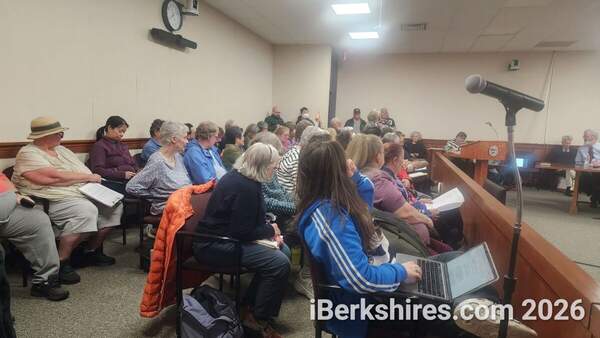
Ten of the 12 voting members on the BHG board decided Wednesday morning at McCann Technical School on a vote of 8-2 to set the health plan rates for municipal employees in the member towns and districts.
The hike is a little more than half of the 16 percent increase the joint purchase group enacted for the current fiscal year.
Wednesday's decision will come as welcome news to town managers and administrators and school superintendents who may have been fearing a repeat of FY26, but the 8.75 percent hike still likely will constrain the spending decisions that officials will be making over the next few months as they prepare to send budgets to town meetings across the county this spring.
The main decision point for the BHG board on Wednesday morning: how to cover Glucagon-like peptide-1 receptor agonists or GLP-1 medications, commonly marketed under trade names like Ozempic, Wegovy and Rybelsus.
The board decided that the weight-loss drugs no longer will be covered for all employees covered under BHG plans and will be covered only for those people who have been diagnosed with Type 2 diabetes.
Joseph Anderson of Gallagher Benefit Services told the Berkshire Health Group board members that demand for the GLP-1 medications has exploded in their member units in recent years.
In 2023, the group saw 43 claimants and 219 prescriptions for GLP-1s. In 2025, those numbers soared to 244 claimants and 1,885 prescriptions.
Anderson gave the BHG board several possible scenarios to choose from for the FY27 rate. The most expensive, including the current availability of GLP-1 medications, would have meant another 16 percent increase in the cost to group members.
The insurance consultant said Berkshire Health Group is not alone in facing the fiscal impact of the popular weight-loss products.
"[The Massachusetts Interlocal Insurance Association] is not funding [GLP-1s]," Anderson said. "For a place like the [commonwealth's] Group Insurance Commission, for the state taxpayers, it's about a $300 million a year spend. I have a [purchasing] group that, for this year, after rebates, it's projected to be a $24 million spend."
After clarifying that the people diagnosed with Type 2 diabetes still would be covered for the drugs, the board moved quickly toward one of the scenarios that reduced the availability of GLP-1s.
"I'm not an expert in any of this," Mount Greylock Superintendent Joseph Bergeron said. "I don't feel great making decisions about what people can and can't access. But I look at the numbers, and they're terrifying."
Of the three non-GLP-1 scenarios prepared by Gallagher Benefit Services, the differences involved how much the group would lean on its reserves in FY27 depending on where it set the premium.
An 8.94 percent increase in the premium would have resulted in about a $950 loss in reserves. The 8.75 percent increase ultimately chosen translated to a $79,753 projected use of reserves. A 9 percent increase would have resulted in a $23,935 addition to the reserves.
"I'm looking at Scenario 2 — approximately $80,000 from the trust, which I think is manageable," McCann Tech Superintendent James Brosnan said before moving to approve the 8.75 percent increase. "It's something I think is fair to everybody."
Blue Cross Blue Shield Massachusetts, which administers health insurance plans for Berkshire Health Group, is rolling out new supports, including nutritional counselling, for enrollees who will be losing coverage of GLP-1 drugs, the board was told on Wednesday.
Berkshire Health Group, founded in 1990, covers municipal employees in the towns of Adams, Lanesborough, Lenox, Great Barrington, Richmond and Williamstown and the Berkshire Hills, Central Berkshire, Hoosac Valley, Mount Greylock, Northern Berkshire Vocational (McCann Tech) and Southern Berkshire Regional school districts along with a couple of dozen smaller governmental units that do not have seats on the board.
Tags: health insurance,