image description
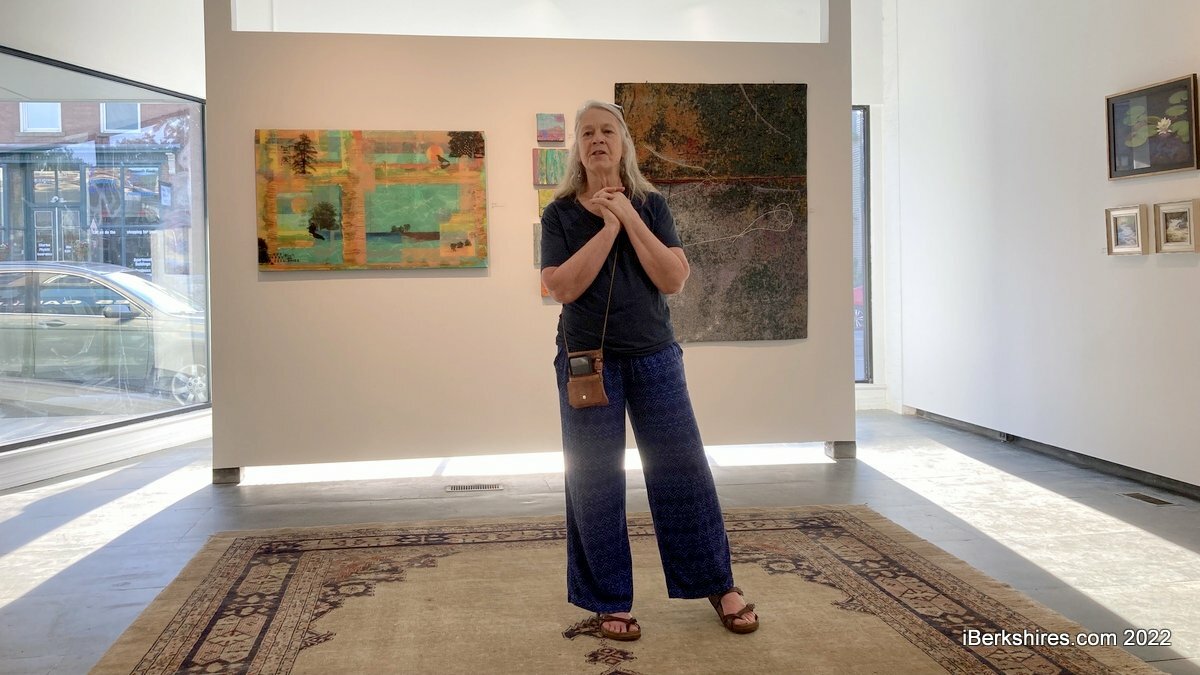
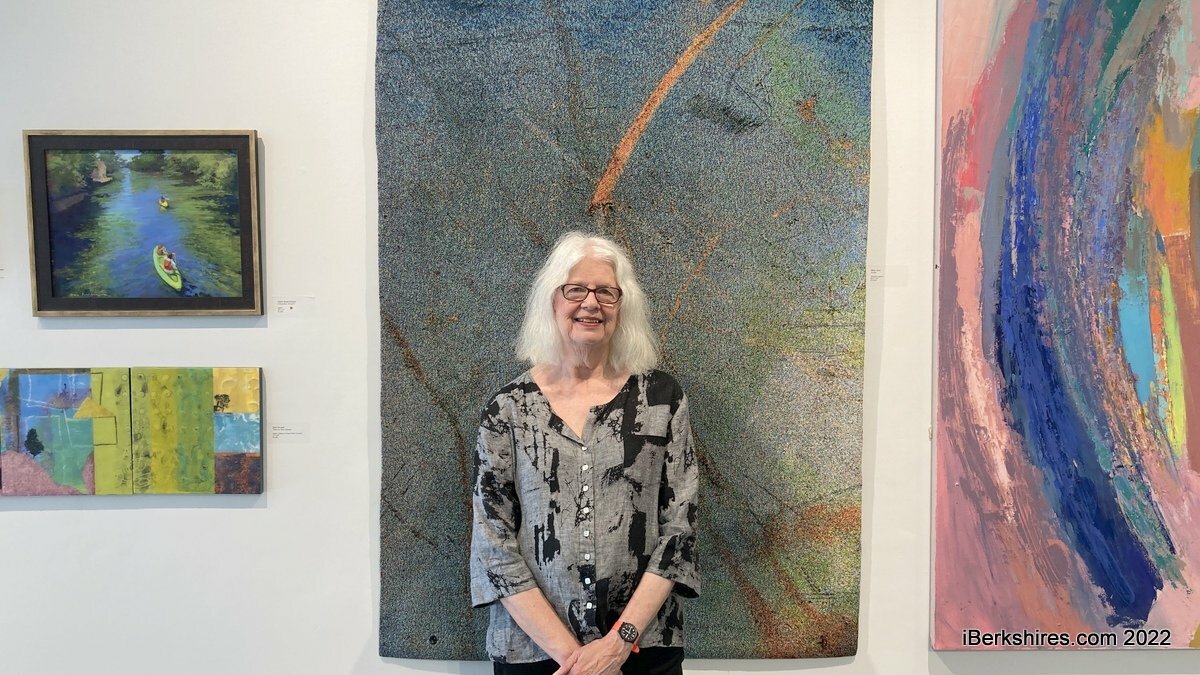
Louison House's Kathy Keeser thanks the artists who provided the work for 'A Sense of Place,' a fundraiser for the shelter, at Real Eyes Gallery in Adams.
image description
Betty Vera is inspired by textures and as well as unexpected images of inspiration.
image description
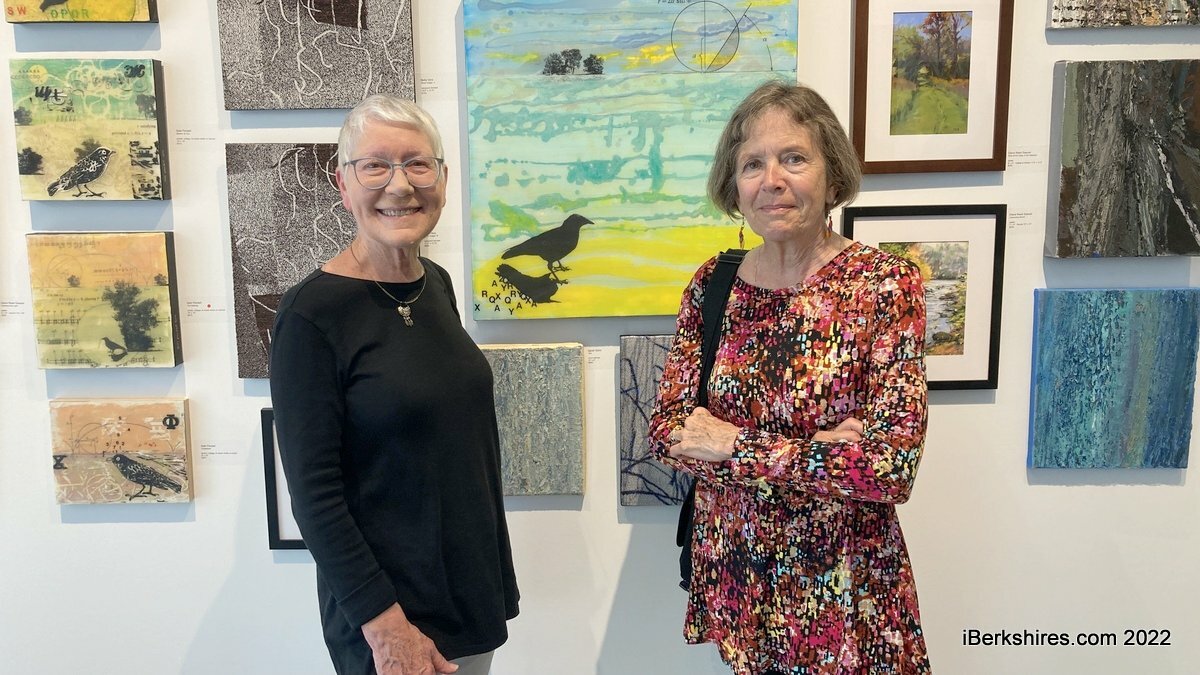
The work of Sarah Sutro is from the '80s and '90s, when she was using thick oil paints to create texture while Deb Pendell's mixed-media pieces are about how people find meaning in symbols.
image description
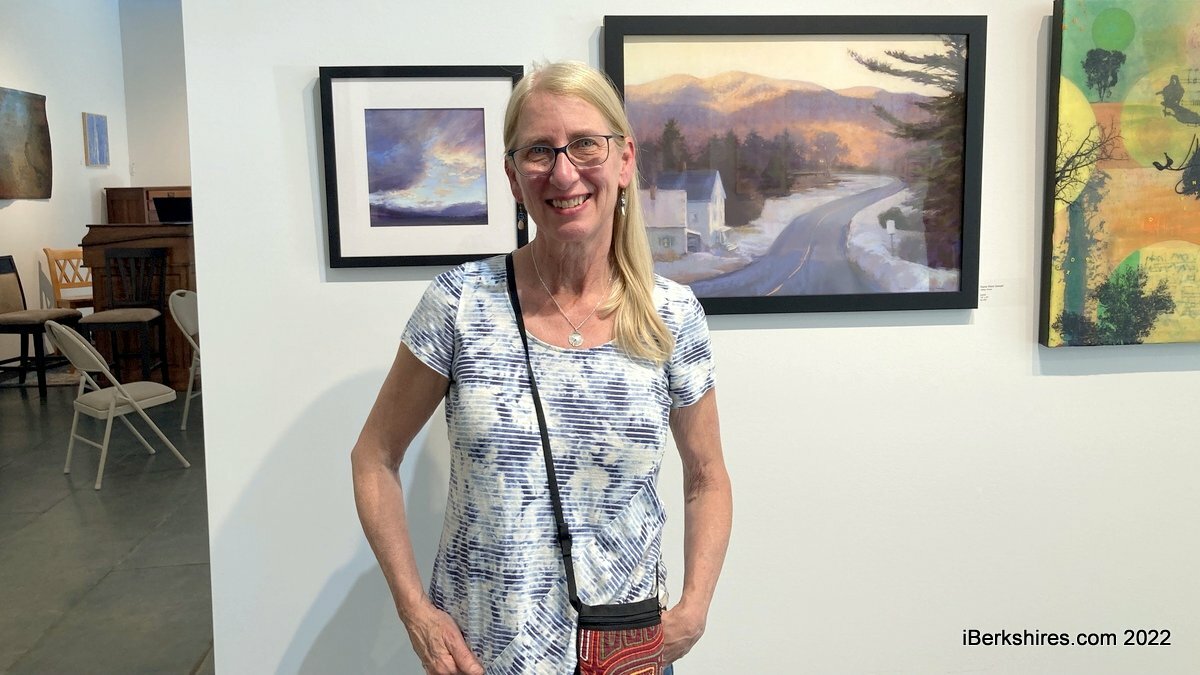
Diane Sawyer is fascinated with light, atmosphere, and the rich spectrum of color in landscapes.
image description
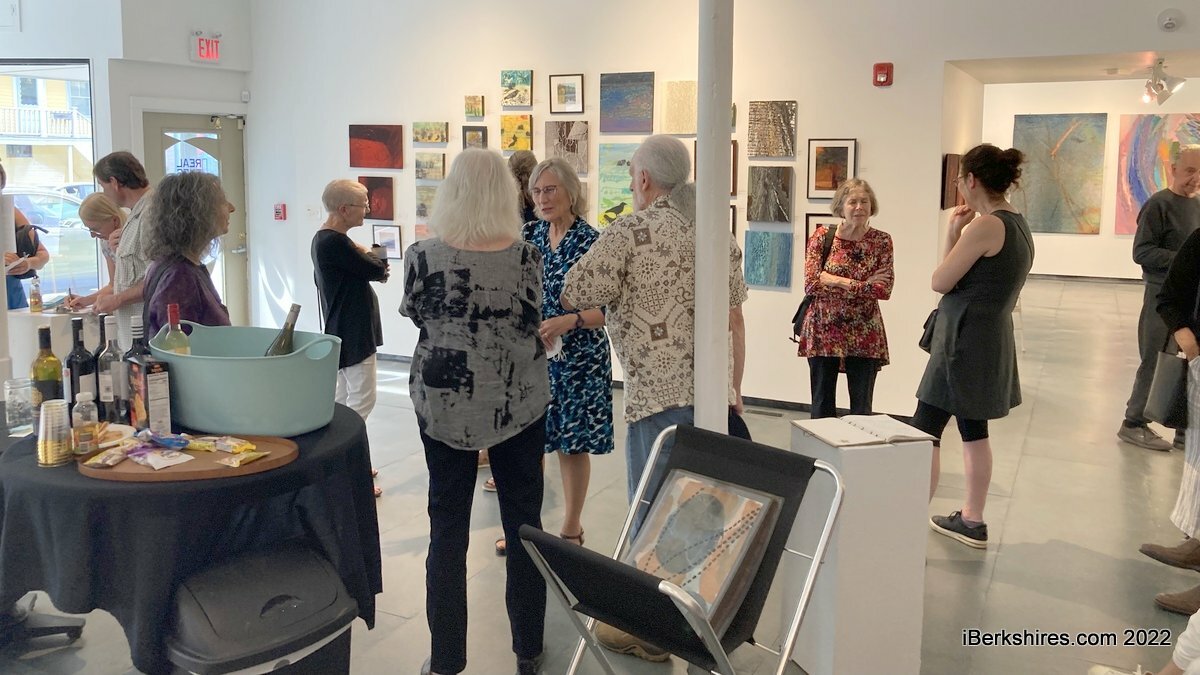
Artists and patrons mingle at Friday's closing reception. The works will be available through the gallery's website through July.

Local Gallery, Artists Support Louison House
By Brittany PolitoiBerkshires Staff
Print Story | Email Story

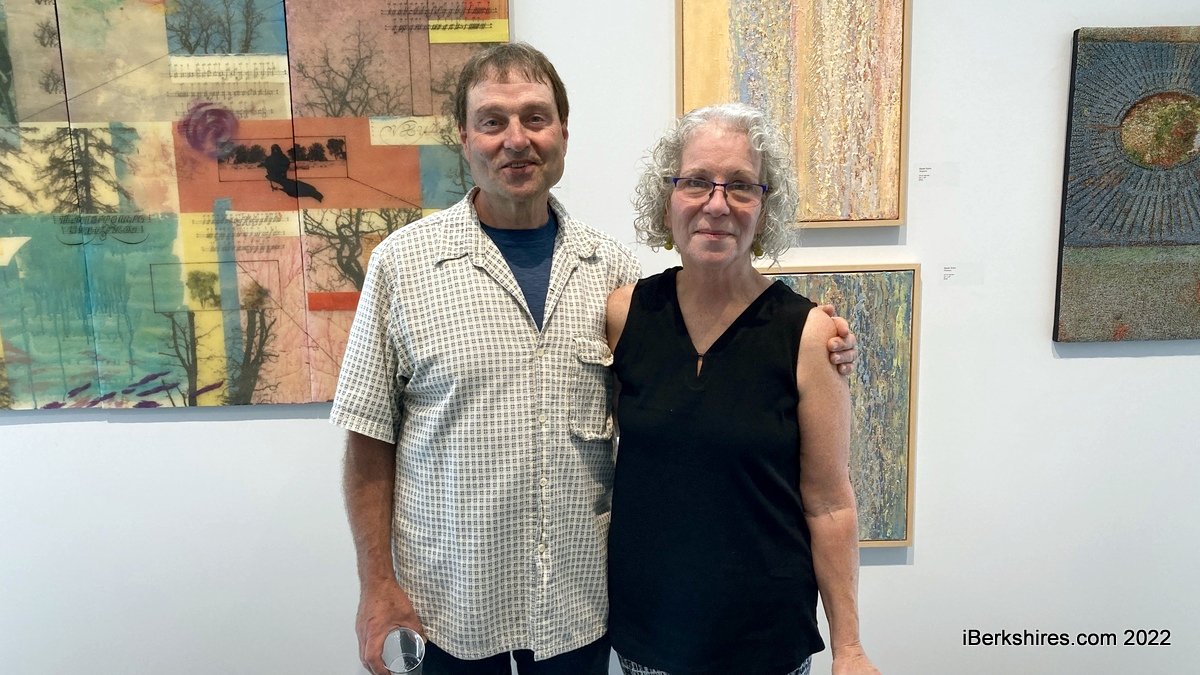
Real Eyes Gallery owners Bill and Francie Riley opened their doors to host the exhibition.

ADAMS, Mass. — An exhibition at the Real Eyes Gallery has raised several thousand dollars for Louison House to help those affected by homelessness.

"A Sense of Place" opened on June 4 and concluded on Thursday but the pieces will be live and available on the gallery's website for another month. Fifty percent of all artwork sales go to the non-profit organization.

Gallery owners Bill and Francie Riley were approached by the four participating artists who wanted to do something good in the community and happily played host. 

"The driving force behind the art show and to team up with the Louison House was the inspiration from the COVID lockdown," Bill Riley explained at a closing celebration.

"From the COVID lockdown, the artists met regularly and they wanted to give back to the community."

It has so far raised more than a third of the $10,000 goal.

The theme suggests a feeling of belonging — whether it is to a household, a neighborhood, or a town — and how a sense of place can invoke feelings of security and inclusion while lacking that can cause anxiety and a sense of exclusion.

When the COVID-19 pandemic forced people to isolate themselves, it also caused a loss of jobs and income that caused many to become homeless.

Local artists Debi Pendell, Diane Sawyer, Sarah Sutro and Betty Vera produce their work in the Eclipse Mill in North Adams.

"We've had such a good response to the show, people have loved the show," Pendell said. "And they feel that although each of us do all different work, very different, it  hangs together beautifully."

She explained that her acrylic, collage, and mixed media work is about symbol systems and how people read symbol systems and make meaning from them.


Sawyer's work in soft pastel is largely local landscapes, some that she has even done from her studio window. She is fascinated with light, atmosphere, and the rich spectrum of color in landscapes.

Sutro's featured work is from the 1980s and 1990s when she said she was working with very thick oil paint, scraping it up and building textures to create a sense of landscape.

Vera's textile work is inspired by anything around her that she finds beautiful, sometimes graffiti on a wall or the texture of a wood floor. She captures unexpected images of inspiration with her cell phone while out and about.

Louison House Executive Director Kathy Keeser attended the celebration to show her gratitude and give an informative talk about the organization.

"It was really cool at the opening to see so many artists here and it's good to see, again, so many artists in one place and the fact that you guys really have a community and support each other," she said.

"And I think that's the most important about what happened with this was the crossover."

The nonprofit provides emergency shelter, transitional housing, permanent supportive housing, and support services to those in need. It has locations in Adams and North Adams and has helped thousands of struggling and homeless residents in the Northern Berkshires.

It has received $135,000 in state and local funding recently, including $75,000 from the state's American Rescue Plan Act funds through the efforts of state Sen. Adam Hinds and state Rep. John Barrett III.

North Adams also contributed $50,000 from its ARPA funds and  the Williamstown $10,000.

During the event, four of the artists' pieces were raffled off as another form of fundraising.


Tags: art exhibit,   fundraiser,   louison house,   
If you would like to contribute information on this article, contact us at info@iberkshires.com.

State, Local Leaders Celebrate Funding Boost For Ashuwillticook Rail Trail Extension

By Sabrina DammsiBerkshires Staff

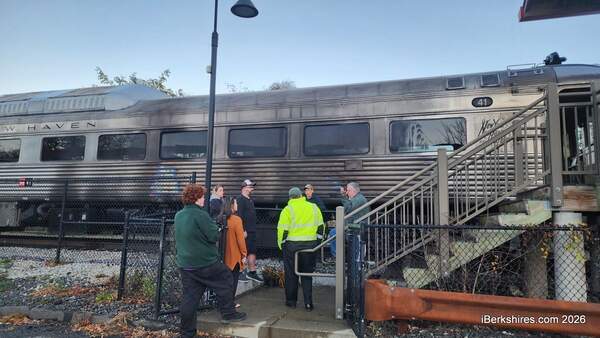
ADAMS, Mass. — State officials and local leaders kicked up their kickstands and took a ride along the final stretch of the Ashuwillticook Rail Trail on Thursday to celebrate new investments in rural communities.

Federal Funds and Infrastructure Office (FFIO) Director Quentin Palfrey joined local leaders, including State Rep. John Barrett III and Berkshire Regional Planning Commission (BRPC) Executive Director Laura Brennan, in Adams to highlight the newest round of FFIO funding. The grant will provide BRPC with $64,700 in state funds to help advance the Ashuwillticook Rail Trail expansion.

"When Governor Healey came into office, one of her big day-one commitments was to make sure that Massachusetts was fighting for every dollar possible coming out of Washington," Palfrey said, speaking about FFIO, a program created in 2023 to help the state aggressively pursue and coordinate federal funding opportunities.

This builds on a $17.3 million federal award secured last year for the project, dubbed the A2A project, which supports the design of a 9.3-mile shared-use path connecting the existing Ashuwillticook Rail Trail to the Williamstown Mohican Path.

"One of the things that she emphasized to me when we set up the Federal Funds and Infrastructure Office was that we need to make sure that these resources not only come into Massachusetts, but benefit all of Massachusetts," Palfrey added.

The additional $64,700 will allow BRPC to gather information about transportation needs in northern Berkshire County to help inform the design of the trail expansion. BRPC will partner with Williams College and Luminary Evaluation, LLC to use the University of Michigan's Transportation Security Index (TSI).

Brennan said BRPC will deploy a 16-question survey that will allow them "to research local and regional perspectives and surface the needs of our neighbors when it comes to transportation in the Berkshires."

"The best-case scenario would be if the survey turned up results that all needs are met and that everyone has access to the places and the things that they need to travel to – but we know that is not true," Brennan said. "We know that folks in Berkshire struggle to get to their place of employment, to be able to access important medical appointments, [and] other engagements. So, the transportation security index is going to help us really hone in on those specific needs, identify pockets of needs or areas where there is a strong concentration or depth of need."

She said FFIO's investment offers a "wonderful augmentation" to BRPC's current plans for the bike trail extension. It's also an investment that will make the region more competitive for other transportation opportunities.

"This is an incredibly multifaceted and valuable investment, and we deeply appreciate it," she said.

Barrett said these investments drive growth in the Berkshires.

"I've always found that if you're going to grow an area, you grow with what you have here to grow. You don't bring something in. We have a natural beauty. We have an environment that's second to none, and that's what we are going to grow on," he said.

Barrett said that in the First Berkshire District alone, 4,000 new people moved to the area.

"We're seeing that migration here. They're going to have activities. They're going to have jobs, and we're going to have a great educational system that goes with it with our two colleges that are here," he said.

Palfrey said it was clear during the initial creation of FFIO that federal funding often went to wealthier and more urban communities with larger planning departments and greater access to consultants. He added that FFIO helps reverse this trend and get projects in rural communities off the ground.

View Full Story

More Adams Stories