image description
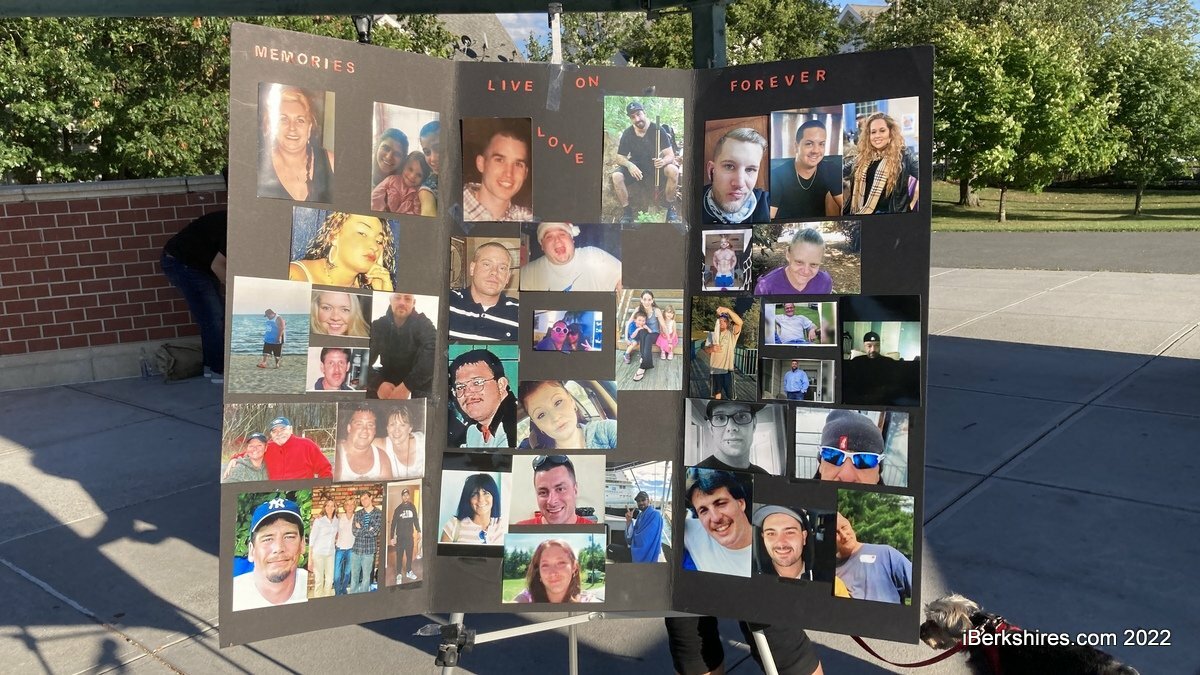
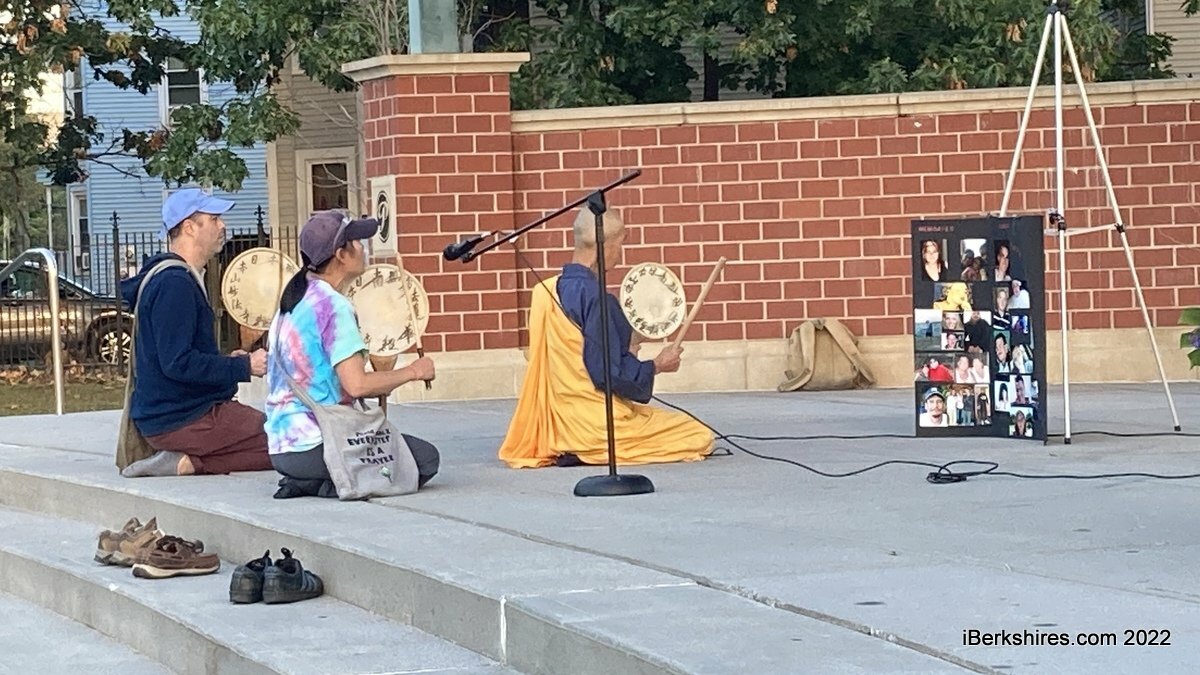
Memorials to Berkshire County residents lost to substance abuse. The images were displayed at Wednesday's Overdose Awareness Day event at Park Square.
image description
image description
image description
image description
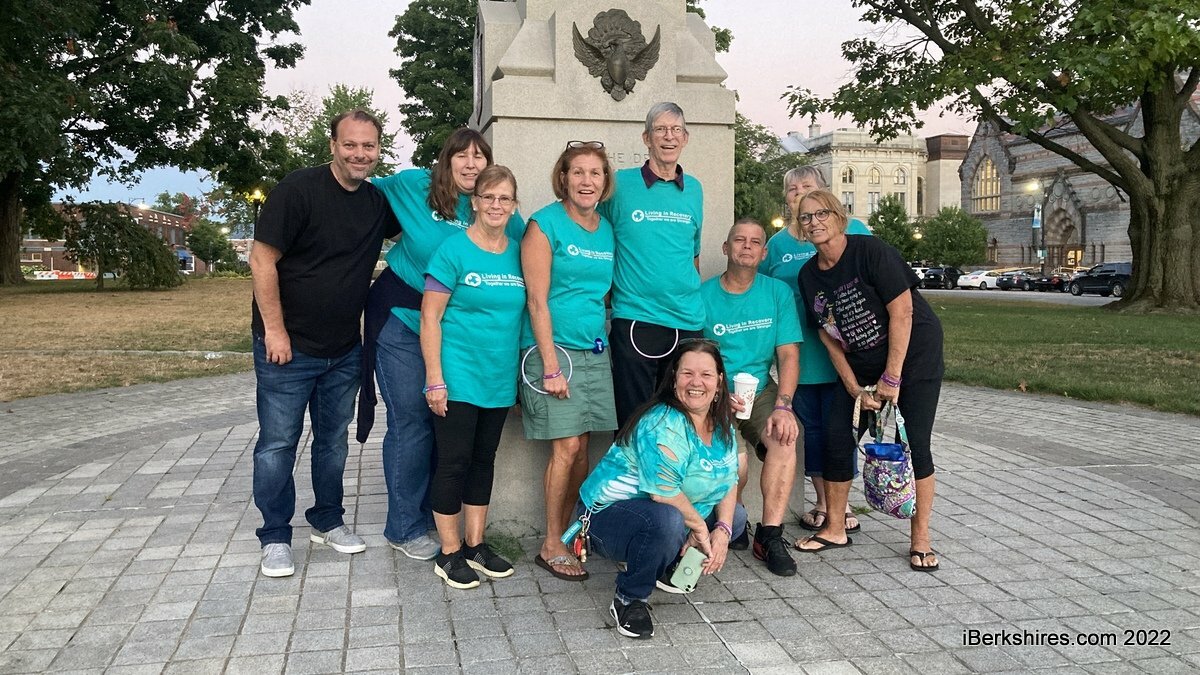
The event was organized by Living in Recovery.
image description

Community Honors Loved Ones on Overdose Awareness Day

By Brittany PolitoiBerkshires Staff
Print Story | Email Story

PITTSFIELD, Mass. — Berkshire County had 62 fatal overdoses last year, 33 occurring in Pittsfield.  

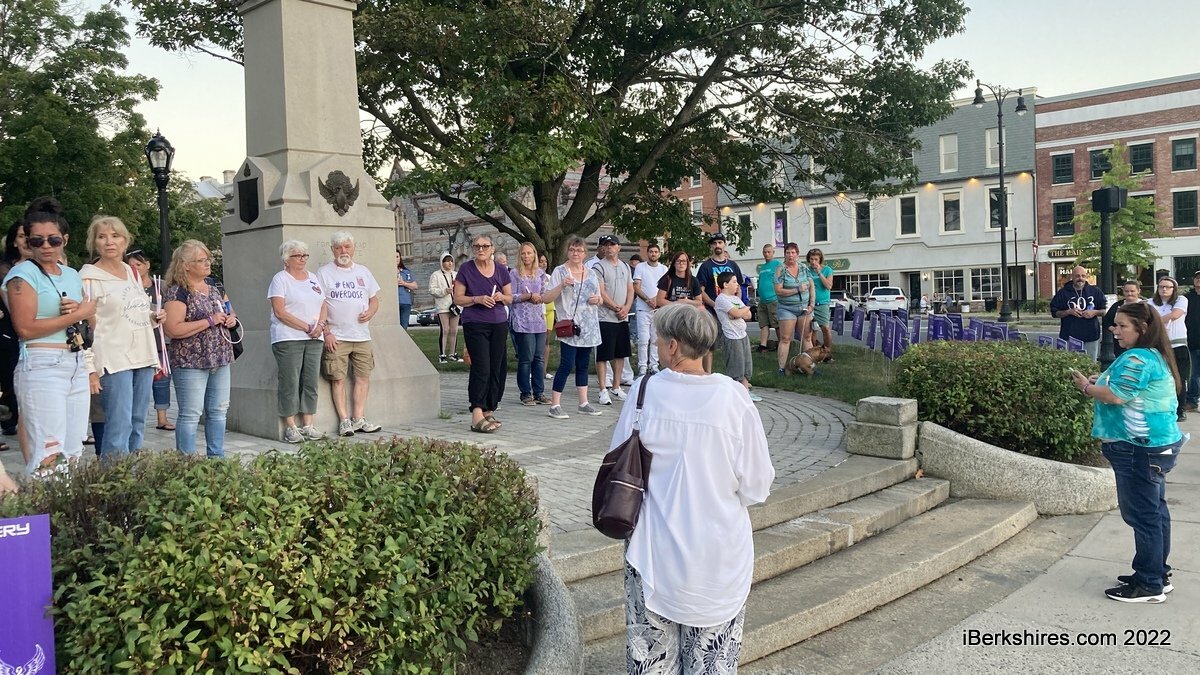
Community members marked National Overdose Awareness Day on Wednesday with a memorial at the Common and a vigil at Park Square.  

The event — organized by Living in Recovery — aimed to memorialize those who have lost their lives to overdose, bring light to an often stigmatized topic, and offer harm reduction and grief support resources.

Program Director Julie MacDonald said overdose rates continue to rise and emphasized the importance of breaking the stigma surrounding substance abuse. 

"There's still so much shame attached to this and so, therefore, our people in our community don't really get to grieve properly because of the shame and stigma," she said.

"And also that which we hide under the bushes, if the light cannot shine on it then it cannot be addressed, it cannot be changed. We can't take any action toward it if we're not willing to, so a big part of the awareness part of the day is to raise the awareness in the community about how we're all affected by this, and how impacted we are by it, and to remind them of that."

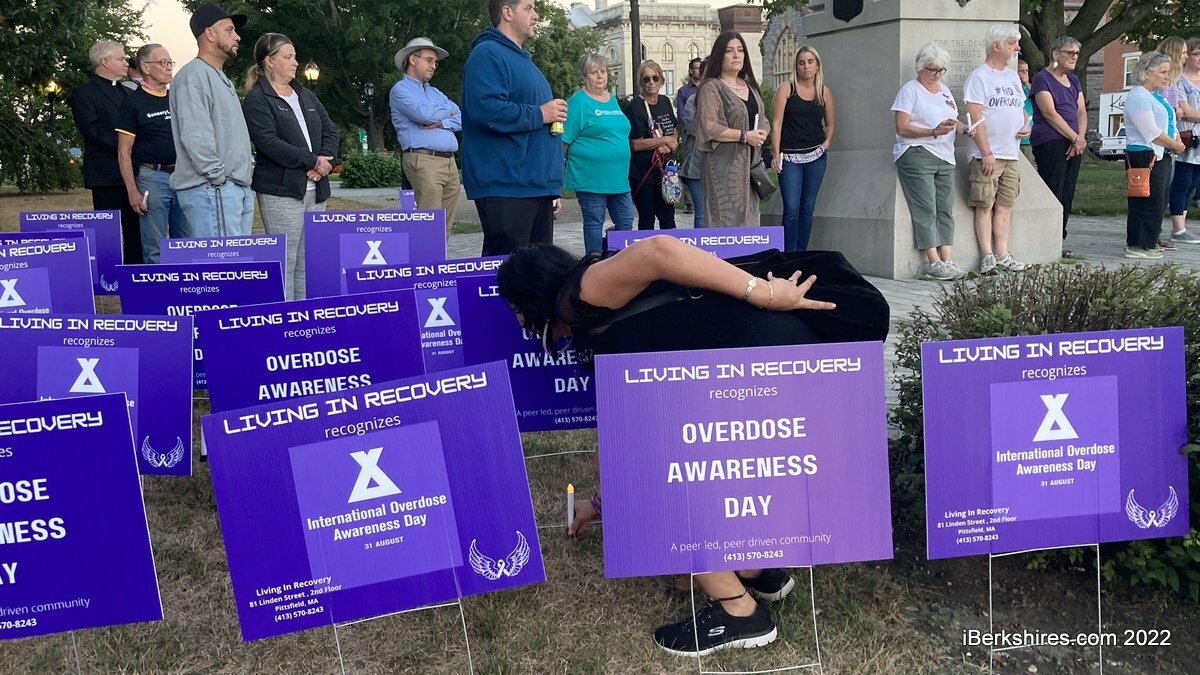
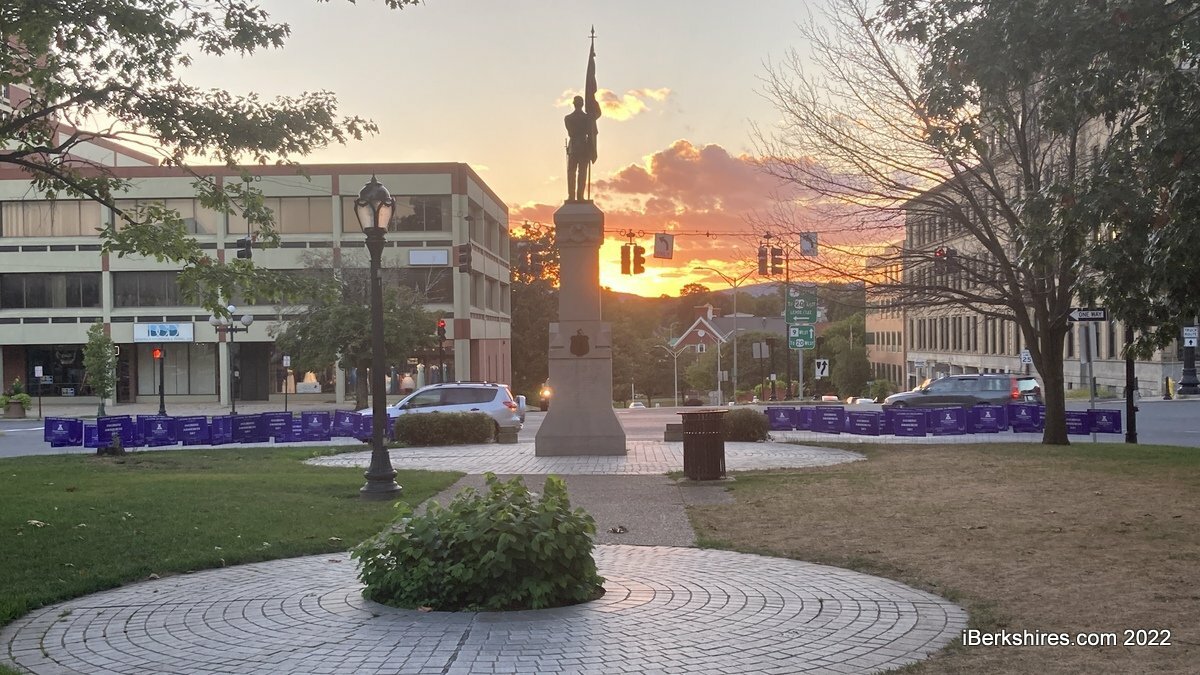
A procession was led from the Common to Park Square, where 62 signs were placed at the intersection of South, North, and West streets to represent those who lost their lives to an overdose in 2021.

MacDonald read the names of those whose families and friends wished to honor them and a battery-operated candle was placed next to each sign.

The display was a jarring physical representation of overdose deaths in the community. Since 2010, there have been 374 deaths from overdose in Berkshire County.

"We come together on this day with a range of emotions as deep and complex as those that we are remembering. Some here may have come feeling bruised by their loss and asking what you could have done to prevent it or what you could have done to lessen your loved one's pain and suffering. For some, there is an array of mixed emotions and the futile search to understand why their loved one suffered so here on the earth and why they were taken from this earth, snatched away in the brutal arms of addiction," MacDonald said.

"But let us remember that no matter how stalked they were by their own pain, their life also had many moments of delight and happiness, caring and friendship, sharing and love. They mattered in this lifetime and today we remind ourselves and our community of them. Today despite our pain, we stand together and we strive to find hope and healing knowing that their pain has ended."

One couple attended the event honoring their son Matthew, who passed away in 2015 on his 30th birthday. They also emphasized the need to destigmatize the topic and said there have been too many lives lost to overdoses.


"We spend every year trying to celebrate him," his mother said. "We celebrate 365 days a year but on this day, and of course on this birthday, with something special."

Larry Lake, chaplain for Hospice of Western and Central Massachusetts, spoke about grief.

"What you want to grieve with is the love you had for that person. To realize in your hearts, that they died knowing they were loved. They didn't die saying 'oh, if he only stayed a minute longer, I wouldn't have done this,' they died knowing that you love them and that's what you honor in your grief," he said.

"Because you need to be able to grieve fully and also live fully and if you're feeling guilt over the loss as if it were anything that you could have prevented, anything you could have cured, anything you could have stopped, that gets in the way of our living for."

Lake advised that a person does not move on from the loss, but carries the person's memory and love with them.

Living in Recovery — located at 81 Linden St. — is a peer-driven program created in 2018 in memory of Joseph R. Botz. 

MacDonald explained that the center offers support to those in recovery, those affected by people with substance use, or those who support the recovery lifestyle.  

"A big part of it is that socialization but also in working as a community and the peers leading it, the members leading it," she said.

"It's part more too of learning cooperation with others, how do we make joint decisions, and so it really sort of touches on every area of someone's life when they are in recovery and it helps to build that skill set."

Learn to Cope, a peer program-led support group for families struggling with another person's addiction; Support After a Death by Overdose (SADOD); and Berkshire Harm Reduction were present to provide resources at the event.


Tags: addiction recovery,   overdose,   substance abuse,   

If you would like to contribute information on this article, contact us at info@iberkshires.com.

Dalton Planners Hold Public Hearing on Tiny Homes Bylaw

By Breanna SteeleiBerkshires Staff

DALTON, Mass. — The Planning Board held a public hearing last week on a bylaw for mobile accessory dwelling units (ADU) that will be brought before a special town meeting.

For nearly two years, Amy Turnbull has been trying to amend the current ADU bylaws to allow mobile tiny homes.  

A movable tiny home is defined as a unit under 400 square feet that meets all of someone's daily needs, including sanitation, cooking, and other facilities, and which is also mobile. Most homes considered "tiny" are built on a trailer so they can be towed.

Her proposal defines a movable tiny house as a "residential property with an existing primary house, intended for year-round living," and outlines eight conditions for approval.

Among these conditions: the unit must adhere to accessory dwelling unit regulations, undergo site plan review, be licensed and registered with the state Registry of Motor Vehicles, have approved energy, water, and wastewater systems, and comply with American National Standards Institute 119.5 and National Fire Protection Association 1192 safety requirements.

Additionally, the unit must be certified for ANSI or NFPA compliance by a manufacturer or third-party inspector, including adherence to Appendix Q and the International Residential Code's structural guidelines and energy efficiency standards. The tiny house cannot move under its own power, and its undercarriage, wheels, axles, tongue, and hitch must be concealed from view. Wheels and leveling or support jacks are required to rest on a level gravel or paved surface.

Turnbull has gotten enough signatures for her petition to amend the current bylaws to add her definition of the mobile ADUs. Last Wednesday, the board held a public hearing on the petitions, which will be voted on at a special meeting.

Turnbull says she has two reasons for wanting to add this to the town's bylaws: aging in place and affordable housing.

"We need a variety of housing types in Dalton, and that we also need to address the idea that you know nearly 30 percent of our population by 2035 is going to be over 65 years old, and it's problematic because  ... there's not enough choice for these people to to age in place,"she said. "What movable tiny houses does, is it provides a less restrictive ADU. It's much cheaper to place, and it's easier to place, less time consuming. And what it offers to people is it offers people who are owners a place for their children to come and live, or a caregiver to come and live, or for the people who own their own house to come and live while they rent out their maybe their three bedroom home to a new family who wants to attend to Craneville simultaneously."

She said people need to move away from calling and treating the tiny homes as though they are trailers, as one former Planning Board member has voiced opinions on.

"That is an opinion, and I think we need to get over that, because I want to say that these are foundation homes, and that the chassis is a foundation, and it's a stick-built home on a chassis, and in very many ways it's like a modular house. I think we will not be surprised in the next 10 years if we see the market turn around and start to make smaller, tiny modular homes, but that is not the case right now, and we have a dire need for affordable housing," she said.

At a former Fire District meeting the Water Department drafted regulations for water hook-ups for these types of homes. The superintendent sent a letter to the Planning Board to be read at the meeting stating it will not be a hindrance for sewer system connection.

"The Department of Public Works does not feel that mobile ADUs will be an issue with the town sewer system. The homeowners will be responsible for any issues outside of the sewer main and connect and responsible for connecting in, so that would address any permits, fees, or anything like that would be added to that," the letter states. 

"The Water Department, as we've stated previous, and as you stated, the water department has come up with their own set of SOPs, standard operating procedures, for hooking up a an adu and a mobile adu, which will then have to meet winterization and all those, but they've laid out a plan for that, that they have, so I'd like to point that out," board Chair Robert Collins said.

One concern was raised that if someone can have a mobile ADU could they also have another tiny home on their property, including the main house. That situation is not likely, said Turnbull, as it would cost a considerable amount of money. Town Manager Eric Anderson also stated that in his former community when they adopted similar laws their first one wasn’t put in until a couple years later and then maybe one a year.

View Full Story

More Pittsfield Stories