Pascual-Polanco Brothers Sentenced to Life for 2019 Homicide
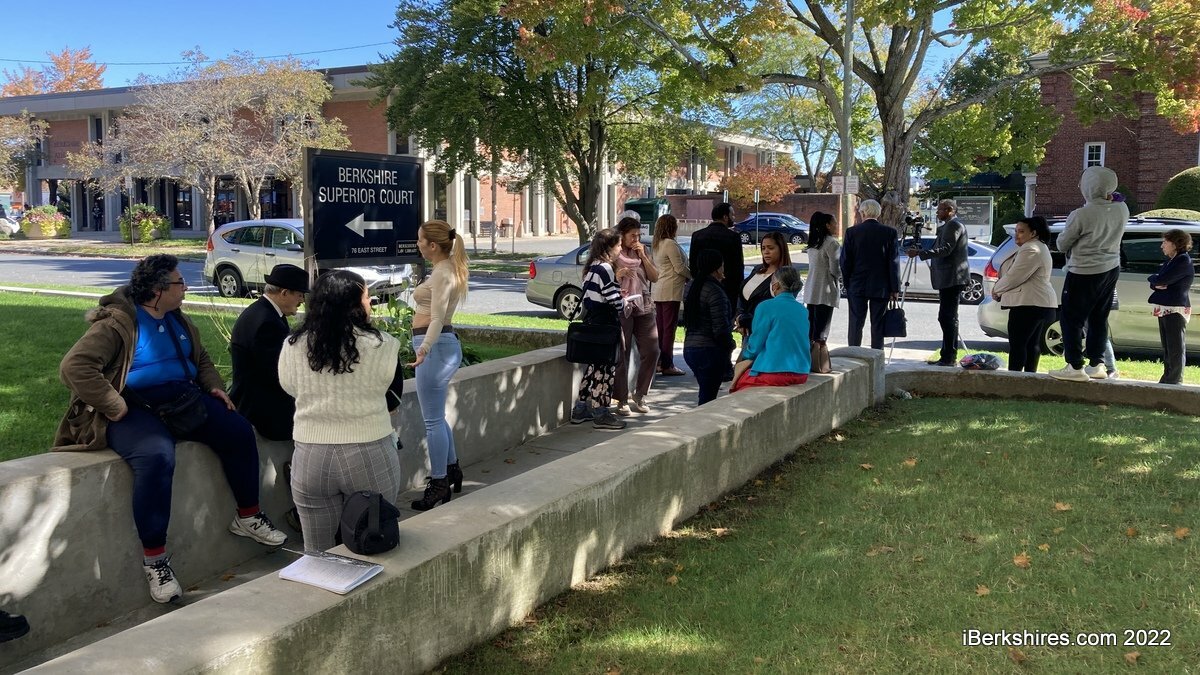
PITTSFIELD, Mass. — Chiry Omar Pascual-Polanco and Carlos Pascual-Polanco on Thursday were given life sentences without possibility for parole for the murder of 18-year-old Jaden Salois in 2019.
"A piece of me is gone that will never be replaced," his mother Megan Bernardini wrote.
"Over the past 3 1/2 years, me and my family have experienced endless sleepless nights and have had never-ending thoughts of why this happened to Jaden and why this happened to us," his cousin Brianna Crucitti said. "We still don't know why it happened to him or why it happened to us."
Family members of Chiry Omar, 26, and Carlos, 22, called the verdict is an injustice, arguing that there was not sufficient provable evidence and that the brothers are innocent.
They did not speak at the sentencing but offered statements to iBerkshires afterward.
Sister Marisela Pascual knew that she and her brothers had "no fighting chance" for their lives in this community and said it is clear that they didn’t commit the crime.
"That didn't matter to the jury who made the deliberations in under six hours," Pascual added. "Obvious to say, they had their minds made up."
Their mother Maribel Polanco said the verdict is a "big injustice" and racism against her children, arguing that it was decided on because they have a Hispanic last name.
Cousin Elina Estrella said the case showed a lot of circumstantial evidence that was not concrete and pointed to a lack of diversity on the jury. She believes that if Salois was a person of color and her cousins were white, it "would have been a different story."
Last month, the brothers were found guilty of murder in the first degree by a Berkshire Superior Court jury following a two-week trial that saw the prosecution call 30 witnesses. They were also found guilty on two counts of possession of a firearm without a firearm identification card, two counts of possession of ammunition without an FID, and possession of marijuana with intent to distribute.
The two were sentenced to life without the possibility of parole in the Massachusetts Correctional Institute at Cedar Junction in South Walpole.
The other counts carry a sentence of two years in the Berkshire County House of Corrections and one carries a sentence of five years in the state correctional facility.
A third co-defendant, Dasean Smith, 24, of Pittsfield, is also charged with murder and will be tried separately.
Salois' grandmother said he had gotten in with the wrong crowd and that his family always hoped that he would realize that this life wasn't going to work out for him. She said they spent a lot of time talking on the phone about how to improve his circumstances prior to his death.
"He had hopes and dreams like we all do. A future life with marriage and children. He knew we wanted to be a dad," Salois' other grandmother said.
"He knew he wanted to have God in his life and I would take him to every church in the city until he found one that he felt comfortable with. He never had a chance to do that because time ran out for him."
Tags: murder,