Dalton Boards Split on Wahconah Track Project
DALTON, Mass. — The Finance Committee advocated against including a new track in the Wahconah Regional High School project just days after the Select Board voted to recommend it.
A special town meeting will be held on Wednesday, Oct. 19, to decide whether to expand the scope of the high school project to include a new track at an added cost of up to $45,000 a year to the town.
The other six communities in the regional school district have or are going to weigh in on the issue. There are so far three acknowledged approvals with Becket and Cummington (which voted Thursday night) and Peru (which declined to vote); Washington and Windsor voting on Monday and Hinsdale at the same time as Dalton. All seven towns must approve.
On Aug. 22, the School Building Committee recommended expanding the scope because the project is $2 million under budget.
School officials have known about the poor state of the track for some time but did not include it in the original scope because the building was a priority and they did not know it would come under budget.
According to a presentation they gave on Sept.12 during a Select Board meeting, the track was constructed in 1980 after receiving a donation from the Lombard family.
It was resurfaced several times, the last being 20 years ago, but it is recommended that tracks be resurfaced every three to eight years depending on the weather.
It was recommended by Berkshire Design Group to remove the existing pavement, repave it, and then apply a new surface to the newly paved track. The design firm did not recommend resurfacing for a variety of reasons. Check out our previous article for the reasons.
The Select Board on Tuesday voted to recommend expanding the scope of the project with Chair Joseph Diver abstaining and another member, John Boyle, absent.
Diver abstained because he believes the decision should solely be up to the voters.
The board voted to recommend the expansion for a variety of reasons, one being that the state of the track is a safety concern.
"I'm not a track expert, but I do know what's been brought to my attention, that the condition that the track is in, maybe not right now, but maybe in a season or two, it's starting to deteriorate," Superintendent Leslie Blake-Davis said during the Sept. 12 Select Board meeting.
"And it's starting to deteriorate to the point where we would start getting feedback from officials, other athletic directors, coaches that they might have concerns about their student running on this track."
Diver reiterated this sentiment during Tuesday's Select Board meeting saying if the students' spikes hit one of the many bare spots they could slip and fall.
If repairs are not completed by the time it is determined that it can no longer be used, then the track team would have to bus to other areas, which would be an added operational cost.
The Select Board also voted to endorse the expansion of the scope because of how under budget the project ended up being.
"I really wanted to congratulate the building committee and all the people who contributed to them coming in $2 million under budget, and that's a victory that should be celebrated," Select Board member Dan Esko said. "But I also can see the need for the track and having that school be a full facility that tracks a part of that picture. It really is."
Although the Finance Committee saw the need for a new track, it voted to recommend against it because it was not part of the original burden.
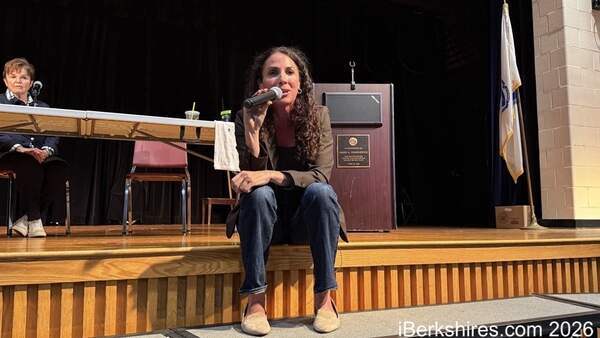
"This has been a burden that people voted to take on, the building project at Wahconah, but this wasn't part of the original deal and so is it right to add something in at this point?" Finance Committee member Susan Carroll-Lombardi asked.
Many members of the committee mentioned holding off updating the track to look into the possibility of getting a grant and going out to bid for another company.
"Having a single company look at it and give us a price is, I mean, you've got to go out for something that's expensive at this price, at least get another company or two out there. There's others that do the tracks too, that can go out there and give you the numbers and give you their opinion," Finance Committee member Michael Jerome said.
"When you're talking this kind of money to go out and get a second opinion, a second number on it is only prudent."
Town Manager Tom Hutcheson said the School Committee will still have to go out to bid for this new procurement.
"I don't think there's another company that's doing work that could be added to their contract to put it that way," he said.
They also noted that there isn't a budget for a maintenance plan to resurface the new track every five or six years.
Diver also mentioned this missing element during the Select Board meeting on Tuesday night and said he will be asking the superintendent for a letter of intent for the town meeting.
Finance Committee Chair William A. Drosehn III has been outspoken about his objections on the school project when it went up for vote in 2019 and his position has not changed.
He also questioned the cost of repaving the quarter-mile track, especially since the town was able to pave a mile and a half of Dalton Division Road for about $300,000.
Droshen has also mentioned that "a common theme with these pieces of equipment and these beautiful buildings that we build is that we seem to forget to maintain them when we get them built."
Dr. Thomas Irwin echoed that sentiment during the Finance Committee meeting on Wednesday night.
"Another objection I have, too, it is that the cracks did not pop up in the last two months. This is something that's going on for years, and they have neglected it. They have no stabilization fund that they've set aside, they have no plan on how to maintain this thing, which is going to require maintenance every five years," he said.
"So the scoop is this seems to be throwing good money after bad. This is really an expense project. It's not an investment project. So to use investment money on an expense item seems inappropriate, which is kind of my gut feel in summary"
Dalton, as the largest community in the district, will pay about 63 percent of the district's cost for the new school, or about $1.4 million a year with a new track included.
When asked about grant opportunities during the Sept. 12 Select Board meeting, the school's Director of Finance and Opportunity Gregory Boino said the district had not yet looked into that.
The Massachusetts School Building Authority reimburses up to 8 percent of eligible site work, which includes basic site preparation, walkways, landscaping and athletic fields for physical education. Officials said even though the scope would expand, and thus the grounds involved, the project is already beyond the 8 percent eligible.
The committee did vote to recommend Article 2 on the town meeting warrant that would transfer $10,000 from the General Stabilization account to the Police Office Detail fund.
The Select Board voted to amend Article 1 at the last special town meeting to not include the $5,000 for the revolving police detail due to concerns raised by Town Accountant Sandra Albano and Drosehn.
The board, Drosehn, Albano, and the Police Department went back to the drawing board to find a way to add funds to the budget without burdening the taxpayers.
"I raised objections at the last special town meeting … about how it was going to be funded. And we went back to the table and we came up with drawing it from the general stabilization so that we can't put this on the taxpayers," Drosehn said during the Finance Committee meeting.
This transfer will allow the officers to be paid for their services the week they work rather than within 30 days.
The payment for working as a police detail is in addition to their wages as public officers. The town gets 10 percent of the detail. The town has received $25,000 in the last four years from police detail.
The revolving police detail fund is supplemented by outside bills but the amount would have assured the officers get paid the quarter of the service.
The revenue account is paid up to $15,000 and is drained substantially when a large number of details happen. It stays drained until it is replenished by the private entities' payment.
The Finance Committee also approved Article 3 that would transfer $380,000 from Sewer Stabilization to pay partial costs of addressing sewer system inflow and infiltration, and other repairs.
The American Rescue Plan Act will cover the remaining costs.
Finally, the committee approved Article 4 that would authorize the payment of unpaid bills of the previous fiscal year.
Approval of this warrant would authorize the payment of $25 for New England Security and $118 for Unifirst for carpet cleaning.
Tags: playing fields, special town meeting, Wahconah,