Clarksburg Gets $1M MassWorks Grant for Middle Road
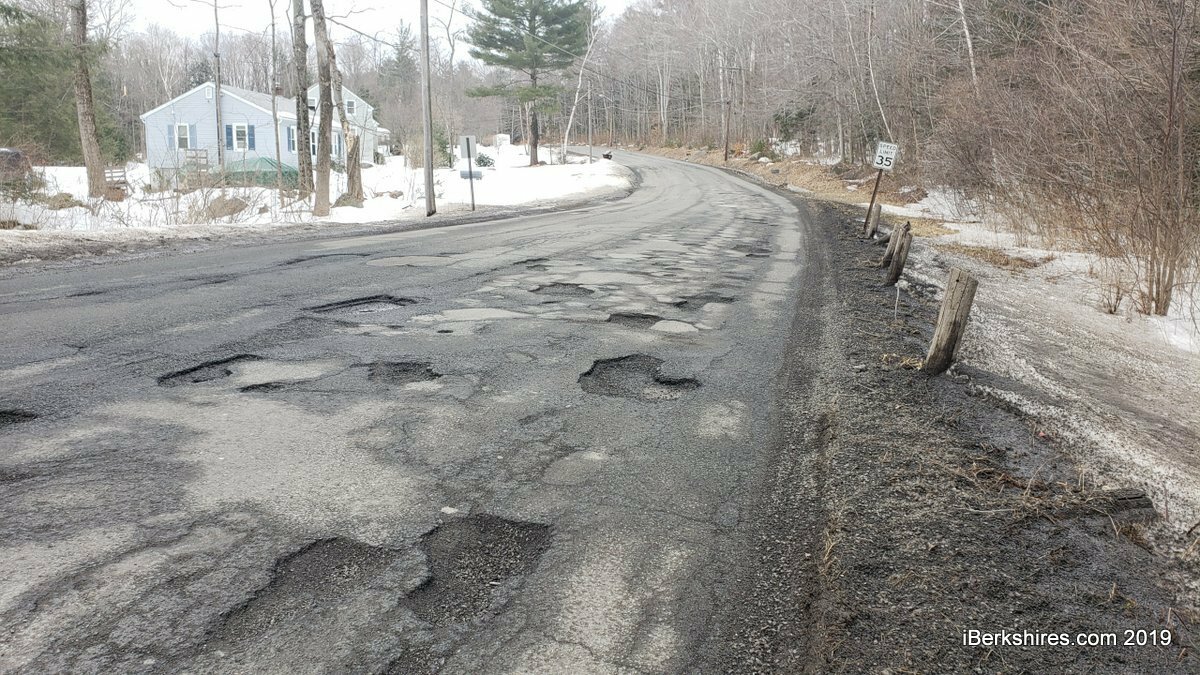
CLARKSBURG, Mass. — The bumpy ride down Middle Road should be alleviated next year thanks to a $1 million MassWorks Infrastructure Program grant.
Gov. Charlie Baker announced the grant on Wednesday, part of the $143 million in grant awards disbursed in this round of which more than $12 million went to Berkshire County.
Town Administrator Carl McKinney and Select Board member Robert Norcross has attended the announcement at Berkshire Innovation Center in Pittsfield. McKinney said the award had been confirmed the week before.
"We were awarded a million dollars for the rehabilitation of Middle Road that will go from where Middle Road reaches Route 8 and will bring it over to Wood Road," McKinney said at Wednesday's board meeting. "Obviously, we're going to be challenged by contractors and the price of blacktop is a concern in the back of miny because it is oil based."
The town plans to use the same process as that done on West Cross Road back in 2015, also through a MassWorks grant. McKinney said Clarksburg was one of the first communities to use "cold in-place recycling."
The asphalt is ground up, heated, a tar-based solution and Portland cement are added to strengthen it, and then the final machine in "the train" relays the pavement.
"We've found that to be incredibly durable," McKinney said. "West Cross Road was done in 2015 and we don't have potholes on that road at all. "If you look at what we did on Horrigan Road (two years later), it was a mill and fill ... we are seeing evidence of, not decay, but cracking ...
"The mill and fill process, although it's quicker and cheaper, in my opinion, is not as durable. And everybody is pretty aware of the financial challenges that Clarksburg faces and I don't want to be coming around and having to doing those roads again."
Norcross said they might be able to do the whole road for $1 million using the mill and fill method.
"But we feel that is just like Band-Aid or something that won't last so this 'cold in place,' because its more expensive, we'd only be able to do from Route 8 to Wood Road," he said. "But we will put in for another grant as soon as possible ... we will keep working on it so we can eventually get all Middle Road done."
The town has previously applied for what used to be the STRAP, or Small Town Rural Assistance Program, for Middle Road, lastly in 2019. Residents and travelers along the road have been complaining for years about its condition. That road and River Road are main connectors to Vermont as well.
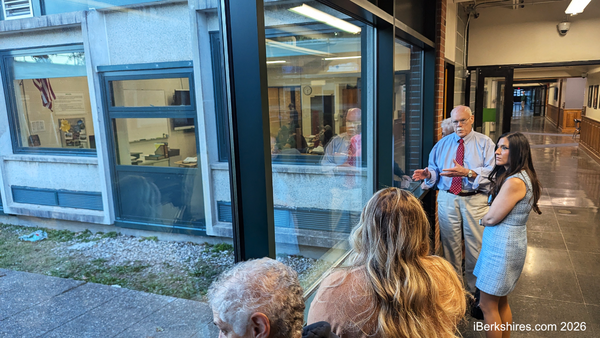
McKinney and Norcross also met earlier this week with the state Department of Transportation's District 1 officials in Lenox about another problematic infrastructure issue: the Cross Road bridge. The best that
The two-lane bridge has been down to one lane with a stop sign for the past five years after the state determined the northern lane was structurally deficient. Town officials have been pressing for the state to take some action on the bridge, which essentially cuts the town in half.
They were told that the bridge will likely be on the Transportation Improvement List next year but it could still be five years before it was addressed.
"I explained to them that we feel it's kind of an emergency situation where the Fire Department, Police Department, Town Hall are on one side of the bridge and you've got the Community Center, you've got the seniors, the school, the DPW on the other side of the bridge," said Norcross. "If there are emergencies going on, that bridge is important."
McKinney said MassDOT has "a very strict criteria" of how projects are listed for federal funds.
"It does take a bit of time to work its way through ... and have the federal government pay for the whole thing," he said.
The town could take on the project, which could run up to a million dollars, or wait the five years for the federal government to cover it. Norcross said Clarksburg is a "poor town" and doesn't have the capacity to take on the cost so they determined to wait the five years.
The state had been inspecting it every two years and should the bridge deterioriate further, it could move up the list.
In other business:
• Jodi Hollingsworth, formerly town treasurer in Lanesborough, was hired as the new treasurer/collector. The board had held an executive session on a personnel matter two weeks ago. Norcross said it was "with a heavy heart" the board voted to end its service with the treasurer and collector. Treasurer Danielle Luchi. Luchi had stepped down from the board to take the post when the job attracted no candidates.
• The town accepted a bid by Top Notch Abatement LLC of Palmer to address asbestos issues in Town Hall.
• The town received a $20,000 grant from the Woodlands Partnership of Northwest Massachusetts, of which it is a member. The funds will be used for surveying the 88 acres behind the Community Center and the development of a management plan for the property that contains the capped landfill. McKinney said there was potential for some lumber revenue and use as a solar field.
• McKinney said he has been speaking with engineers and the building inspector on the installation of a chairlift at Clarksburg School using American Rescue Plan Act funds, as approved by the Select Board. The lift will help to bring the school into compliance with the Americans with Disabilities Act.
• The town administrator reported that the pavilion project is completed. The roofing work was done by carpentry students at McCann Technical School. The board thanked the school and students.
Tags: MassWorks grant,