Racist Incidents at Williams College Spark Town Committee Discussion
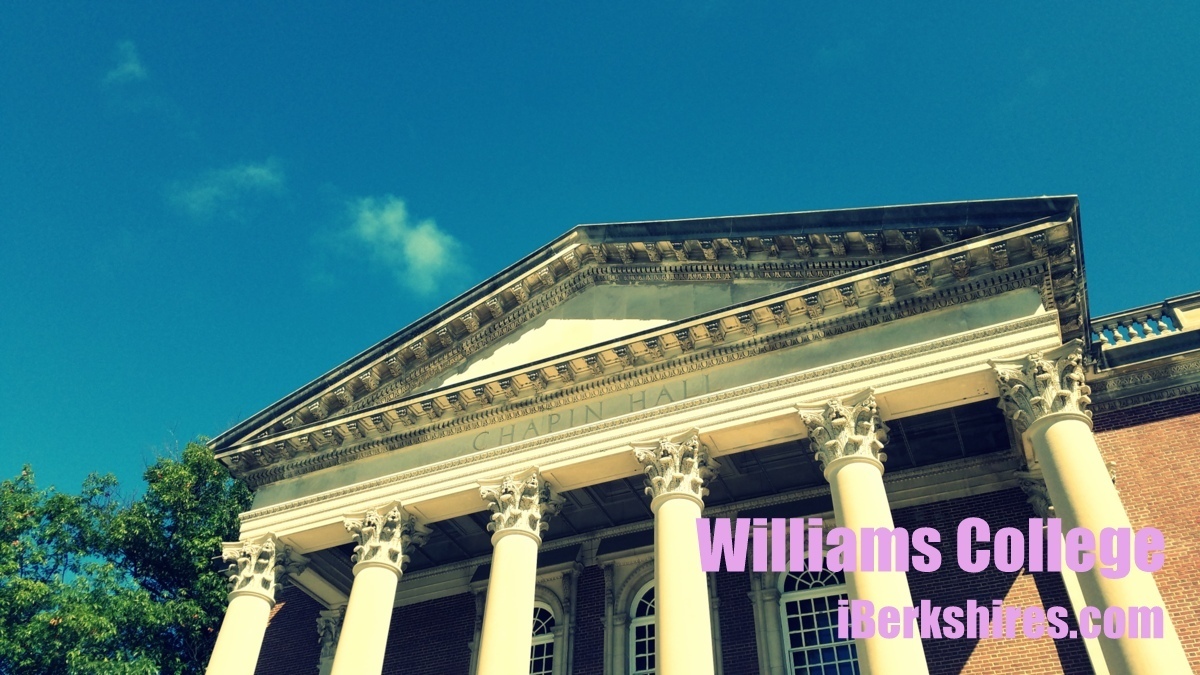
WILLIAMSTOWN, Mass. — In response to a recent string of racist incidents on campus, Williams College last week announced the creation of a new panel to address the issue.
President Maud Mandel, in an email communication to the college community, Thursday said she and the school's vice president for institutional diversity will convene an "Ad Hoc Anti-Racist Campus Task Force."
The move comes after several incidents of graffiti on campus this fall and came three days after a member of a town committee joined voices questioning the college's response to those incidents.
On Indigenous Peoples Day, the school reported that white supremacist messages defaced a Civil War monument near Griffin Hall. On Oct. 24, a racist slur was left on a chalkboard at the school's main library, according to the school newspaper, the Williams Record. This week, the Record reported that students found racial slurs written in dust on cars in a college parking lot.
At Monday's meeting of the town's Diversity, Inclusion and Racial Equity Committee, Shana Dixon said the initial response from college officials to the October incidents minimized the racist attacks.
"[Mandel] sent out this email blast but did not say it was a hate crime," Dixon said. "Saying it was 'bias' rubbed people the wrong way."
Mandel's all-campus email on Oct. 10 did not use the word crime but did say the Civil War monument incident showed, "we live in a world where people hold racist and otherwise hateful ideas" and referred to "Rebel" and the Confederate flag as, "symbols [used] by white supremacists and other extremist factions."
A student quoted in an article published on Nov. 1 on the Record's website said, "[Mandel's] labeling of both of these occurrences as bias incidents is also off-putting, because that's not what they were: They were hate crimes and attacks on Black livelihood on campus."
Dixon picked up on that reaction in her comments at Monday's meeting.
"Nobody is saying [the incidents] hurt people of color," she said. "Nobody is saying people are walking around scared. Because of that non-transparency, people are unaware, and it leaves doors open for other things to happen.
"'Bias incident' bothered me."
Dixon said her impression is that some students feel unwelcome and scared and asked what the town should be doing to change the situation.
"The town … is not helping the students on campus, not helping the community get better by just saying, 'I'm sorry,' " Dixon said. "You have to start saying it like it is because it has to be known."
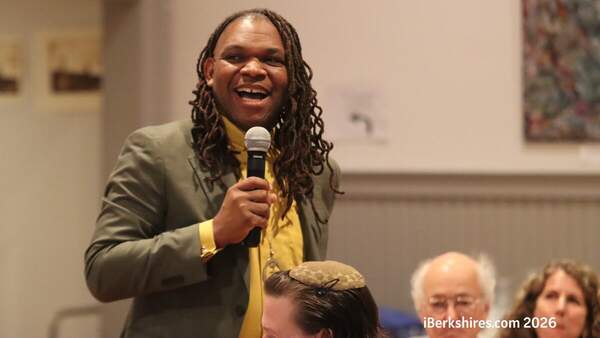
Dixon's DIRE colleague Noah Smalls shared his own experience living in the town of 7,700.
"This idea that racism is not present in America or in Williamstown because people don't consider themselves racist or biased is false," Smalls said. "People, especially in areas where diversity is lacking, are especially vulnerable to acts of racism, random acts of racism like someone meandering through your town and defacing a statue or popping into your classroom and leaving something on the board.
"What else could they be tinkering with? Someone who hates you and wants you to feel fear — that's not hyperbole. That's not hypothetical. It's happening right now."
Smalls said he is interested in finding out more about campus security's and the Williamstown Police Department's responses to and investigation of the recent incidents.
"I'm interested in hearing what happens at the town level," Smalls said. "Are the cops involved? Is there a record of how many of these incidents there are and specificity around the intensity of them, the frequency? I think all of these are things we can dig into."
Smalls cited the DIRE Committee's previous efforts to engage officials of the Mount Greylock Regional School District about racist incidents in the local public schools and said it should have a similar dialogue with officials at the college.
The conversation in Monday's meeting, available for view on the town's community access television station, Willinet, included discussion of what concrete actions the DIRE Committee could take to ensure the safety of Williams' students of color
Andi Bryant suggested the panel could sponsor an event to welcome those students and let them know that the town supports them.
Dixon questioned that approach.
"You can have this great event and have everyone in a room together, but what happens when they go home?" she asked. "There is retaliation. [The event] does pinpoint them.
"There has to be another way … even a Zoom session where people would not have to be visible."
As for the college itself, the new Anti-Racist Campus Task Force will draw from the student body, faculty, staff and administrators. Mandel's email indicated she hopes to name the body later this semester.
"In closing, I want to say something that is often left unsaid in bias notifications," the email concludes. "This Williams community of ours is, at its best, a beautiful, diverse and fascinating community. The efforts to diminish us are cowardly, and we need to resist the ugliness. Doing so will require analyzing social ills, imagining solutions and carrying out strategies for positive change. These are areas of great strength for the Williams community. If we harness our talents, this community has the potential to make lasting progress."
In other business on Monday, the DIRE Committee discussed topics it wants to address at upcoming meetings, including its intention to welcome a representative from the Brien Center at its Nov. 21 meeting to have a discussion about crisis services in North County.