Mount Greylock School Committee Considers Pause
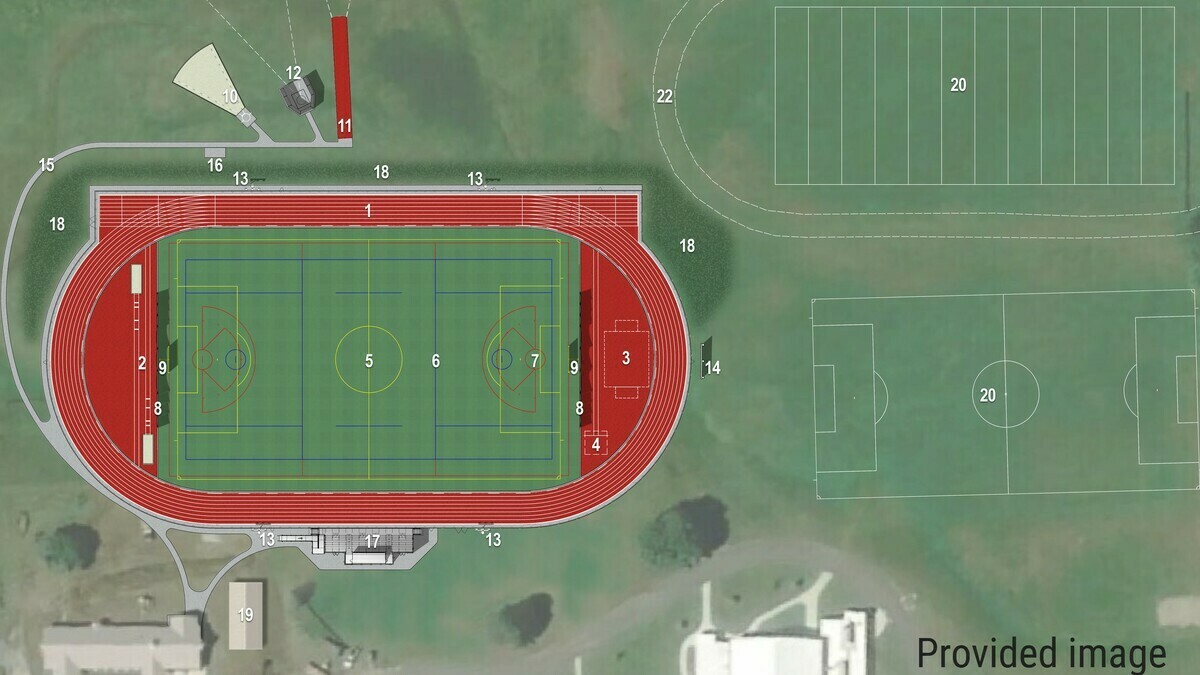
WILLIAMSTOWN, Mass. — The Mount Greylock Regional School Committee on Thursday discussed hitting the pause button on a project to build an eight-lane running track and multi-sport grass athletic field.
The idea was floated as a way to give the district time to secure financing for the project, which has an estimated price tag north of $4 million, well above the balance remaining from a $5 million capital gift the two-town district received from Williams College nearly seven years ago.
The School Committee was on track to vote to put the project to bid at its Jan. 12, meeting a timetable designed to entice prospective bidders in a period when the district hopes to receive the most competitive bids.
But Carrie Greene, a member of both the School Committee's Finance Subcommittee and ad hoc Field and Track Project Committee, Thursday suggested that the School Committee might regrettably want to take more time to finalize its funding plan, which could include a request from Lanesborough and Williamstown for authority to borrow funds to cover the shortfall.
The most recent estimate for the cost of the project is $4.125 million, though the true cost won't be known until bids are received.
The School Committee long has planned to fund the athletic field improvements, which at one time included an artificial turf field, from proceeds of the Williams capital gift.
On Thursday, committee members heard a report on the current value of that gift, which is managed as part of the college's multibillion-dollar endowment.
The gift's value has changed over time, going up as its value appreciates due to investment returns that impact the whole endowment and down due to withdrawals by the district to fund other capital projects on the Mount Greylock campus, notably the district administration building and the improvements to existing playing fields required by the Americans with Disabilities Act and Title IX.
"This points out the benefit of the college's fund management," Business Administrator Joe Bergeron told the School Committee. "We started with a $5 million gift. The college said, 'We will happily manage that as part of our endowment.' And we've spent $4.9 million. We have another $300,000 or so, committed. And, after all of that, we still have $3.5 million available.
"The college turned $5 million into $9-something million."
Greene stressed that the $3.5 million figure was a "snapshot" of the gift's value that the college was able to provide to the district in December. The actual value may have gone up or down since then.
And, Greene continued, the college indicated the district should not plan to withdraw the full sum when it signs a contract for the work – in March under the current timetable.
For purposes of discussion, she suggested that $3 million is a reasonable figure for the School Committee to assume it will have on "closing day."
That means a $1.125 million shortfall if the most recent estimate from the district's architect holds up.
The School Committee has enough funds in its "revolver" accounts (School Choice, tuition and excess and deficiency) to cover the difference, Bergeron told the panel. But using those accounts to fund the track and field could be problematic.
"We have made promises to ourselves and to the towns that we would gradually spend those funds down in an effort to not show large single year [assessment] increases to the towns," Bergeron said. "To use those funds as a way to buffer that and allow [the towns'] contributions gradually to catch up to what the school district needs."
The district started the current fiscal year with around $3 million in those revolver accounts and has committed to, over time, using that money in the operating budget to reduce the annual assessment to local taxpayers.
"If we were to make serious commitments out of that money to this [field] project, to me, it would also signal that we were breaking from the trajectory we were on before, and perhaps the towns would very rightfully say, 'That's money that could be helping us avoid serious increases. We have to have a conversation about that,'" Bergeron said.
That leaves borrowing as the chief mechanism to cover the projected $1.125 million gap.
The district needs approval from each town to borrow funds – either from the annual town meetings in May (Williamstown) and June (Lanesborough) or by asking for a special town meeting in each town this winter.
The need to secure that approval led Greene to suggest the district wait for the town meeting process to play out before putting the project to bid.
"There are reasons why hitting pause might be a good thing," Greene said. "If the towns declined to support that kind of borrowing … and we had already committed [to a general contractor], we'd have to rely on our reserves. Hitting pause means we can still go through the bid documents, but we wouldn't actually go out to bid. We would wait until we had the funds in hand to go out to bid.
"There is another argument, which is we should just move ahead and assume the towns will support this, and if they don't, it's a perfectly good use of our reserve funds. I think that's risky. I think the rest of the Finance Subcommittee does support moving ahead, and I will let them speak to that."
Finance subcommittee member Steven Miller pushed his colleagues to stay with the planned timetable for putting the project to bid. He emphasized that entire cohorts of students will have gone through Grades 7-12 at Mount Greylock in the time that the committee has been talking about utilizing the capital gift to improve the fields.
Miller also argued that the School Committee could assure town officials in both member towns that the district would pay off the bond from proceeds of the capital gift to pay off the bond rather than adding the cost of borrowing to the annual assessments to the towns. Greene noted that the district needs to verify with state officials that such a "promise" is an acceptable maneuver in municipal financing.
"Hopefully, the [college's] endowment continues to grow a little more than the interest rate we'd get [on a bond]," Miller said. "Because over 20 years, that averages out market fluctuations a lot."
"I think we can tell the towns, we got $5 million from Williams, we already spent $5 million, we still have money to spend, and we've spent that $5 million on things it wouldn't have been unreasonable to ask the towns to pay for.
"Historically, the Williams College endowment performs much better than the interest rates we're looking at [for borrowing]. Nothing is guaranteed, but if the endowment is not outperforming, we have bigger problems as a society."
The third member of the Finance subcommittee was more measured.
"I'm really torn," Ursula Maloy said. "I don't want to pause it a year. I agree with Steve on that. I really like the idea of seeing if we can borrow the money like Steve said. I also worry about what happens if it doesn't pan out."
Other committee members expressed similar ambivalence.
"I struggle because this project is so exciting," Chair Christina Conry said. "There are so many deserving track athletes, and overall the middle/high school student body would benefit. But I'm scared of the financial piece of it being so much in question."
Curtis Elfenbein, like all the committee members, agreed that completing the project is a major priority for the district.
"I share [Miller's] sense of urgency with this, both in terms of the duration of the project and what we're trying to address, the social emotional well-being of students," Elfenbein said. "One of the best ways to do that is to give them facilities outside.
"At the same time, I share the concern and wariness of moving forward without such sure footing under us in how to meet the additional expense. It's hard to imagine all the pieces falling in line in a timely fashion. At the same time, wouldn't that be the ideal goal? That's the dream scenario. Can we get all those ducks in a row by a week from now? That's my want.
"I don't think that want is realistic. It pains me to say that."
No votes were held on the process on Thursday. The decision on whether to go to bid is expected to be made at the committee's Jan. 12 meeting.
Tags: MGRSD, playing fields,