Storm's Extreme Weather Took Pittsfield DPW by Surprise
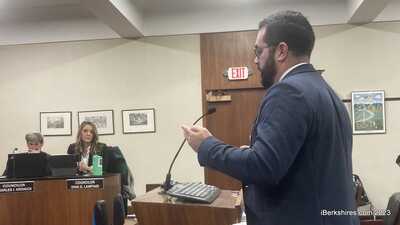 |
| Commissioner of Public Services and Utilities Ricardo Morales reviews a 20-page report on the Christmas storm. |
PITTSFIELD, Mass. — The city's administration says the poor road conditions during the Christmas weekend snowstorm that caused more than three dozen collisions were not due to a lack of response.
The slick and snow-ridden ways have been attributed to extreme, unexpected weather that took the Department of Public Works by surprise.
"Government's greatest responsibility is to ensure the safety of our citizens and to ensure that our community is safe and we take that seriously," Mayor Linda Tyer said to the City Council on Tuesday.
"For the past seven years, Pittsfield has successfully managed many storm events, but the circumstances surrounding the Dec. 23 snowstorm tested our best practices and we missed the mark.
"I'm very sorry for all the distress that was caused to our community over those three days. To rebuild competence, it is necessary that we provide answers and improve performance."
The poor conditions and messy roads lead to a storm of complaints on social media and to City Hall.
The mayor emphasized that the difficulties were not caused by a lack of response.
"Despite our best efforts during and following the storm, our best practices were overwhelmed by several storm-related factors nod the type of materials currently used to treat roads during storm events," she said.
Commissioner of Public Services and Utilities Ricardo Morales reviewed a 20-page report that evaluated the operations and work done on the roads during that time. He concluded that the DPW's best efforts during and following the storm were overwhelmed by several storm-related factors and the type of materials used.
"It's not necessary to say that our Department of Public Service and Utilities is responsible for ensuring of the snow and ice operations, removal and making our streets safe in Pittsfield," Morales said. "As the mayor mentioned, the storm on the 23rd of December was one that tested our best efforts."
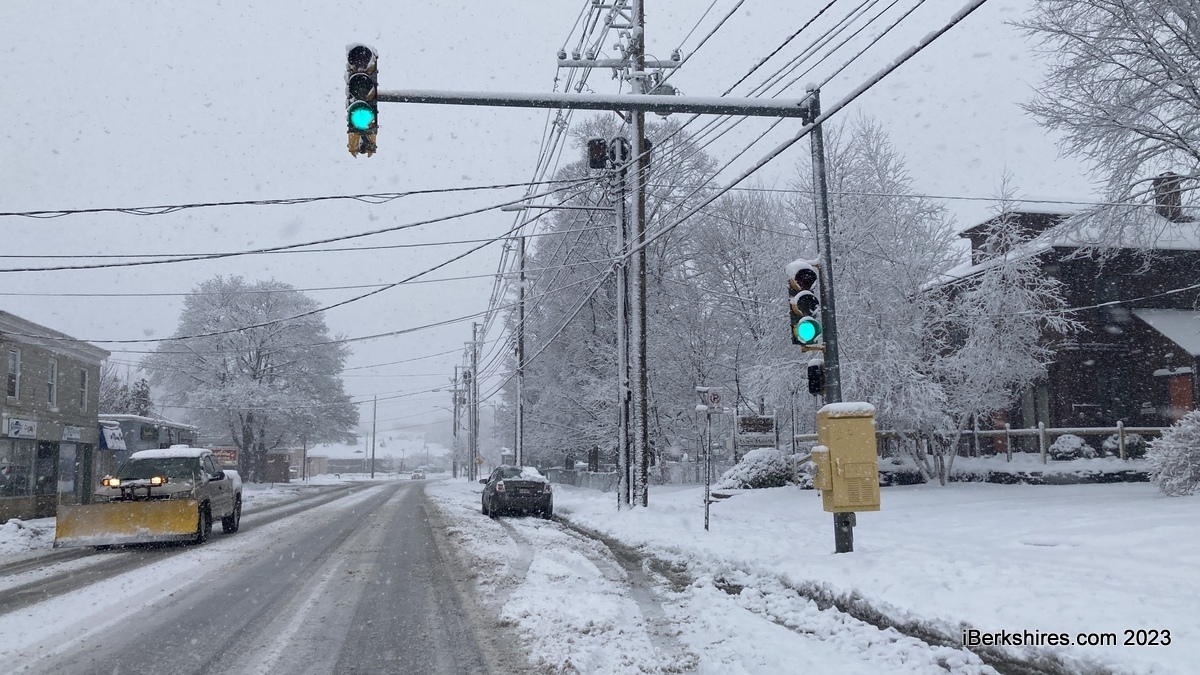
There was a significant drop in temperatures on Dec. 23, a Friday, after a period of heavy rain and wind. This transitioned to heavy snowfall with temperatures staying below 15 degrees for two days, which lead to road conditions that were not suitable for travel.
Roads were not pre-treated with rock salt because it was believed that the rain would wash it, away but it was used when the rain turned to snow.
The department was not expecting an onslaught of snow. What was thought to be 2 inches based on weather reports ended up being about 7 inches.
Snow began at fall around 4 p.m. and eight snowplows were sent out to treat the roads.
"We started noticing the presentation was overpowering. It was coming down around 3 inches per hour so we started calling the contractors in as we had anticipated to call them but not so early," Morales said. "In the first two hours, we saw 6 inches of snow and then there was another inch or so in the next hour."
The city has about 40 contractors who can be called in, he reported, and for snow events, they make sure to have at least one in each of the 32 quadrants.
Despite crews addressing the roads with plowing, rock salt, sand, and hot mix, there were 42 collisions over the three-day period involving 74 vehicles and an influx of complaints from the community.
"With a few exceptions, our crews were out morning, noon, and night and the contractors were working as well under some very difficult circumstances," Tyer said.
Several suggestions were put forward to prevent this from happening in the future such as adjustments to current practices and investments in new equipment and materials.
The city has acquired magnesium chloride rock salt, which is used to melt ice in very low temperatures. It represents a 33 percent increase in cost and $32,000 to retrofit trucks with carrying tanks.
In the report, Morales admitted that some things could have been done differently.
He said it may have been beneficial to have snow crews in 12-hour shifts to prevent three gaps of time with no coverage: from 4 a.m. to 7 a.m. and from 4 to 6 p.m. on Dec. 24, and from 2 to 7 a.m. on Dec. 25.
He also said the city should have issued a snow emergency, CodeRed, and media advisories when it became apparent that the storm was more serious than forecast and temperatures were preventing efforts to de-ice and remove hard-packed snow.
Additionally, Morales observed that the spread rate of materials per mile could be increased and that contractors with larger spreading equipment could have been directed to pre-treat main roads along with the department.
Longer-term suggestions include working with the Massachusetts Department of Transportation to take over about 25 lane miles of maintenance and acquiring two new snow plows, which has been in the fleet management plan for two years and would cost about $720,000.
A month later, councilors were less incensed than they had been but pointed to areas of snow removal that they would like to see improved.
"Obviously it was a very frustrating holiday," Ward 3 Councilor Kevin Sherman said, adding that he is not an alarmist but was alarmed at the conditions of the road.
He raised a concern about the speed that plows travel, pointing to an incident that happened on Monday when East Side Cafe's front window was broken by plowing.
Ward 5 Councilor Patrick Kavey said he has also gotten a lot of complaints about plows speeding.
"I have never seen this many mailboxes get hit," he said, adding that more were hit in one day than over the previous two years.
Morales said he knows "exactly what happened" with all of these incidents, which drivers were involved, and is addressing it.
Ward 4 Councilor James Conant did not support Morales' suggestion to pull contractors out of quadrants to help address main roads based on what happened in his ward the day before.
"The response is all about timing, frequency, and calibration of your spread of equipment," he said.
"I knew from the get-go with all my years of experience in property management, the calibration of the equipment is not right and your findings indicate that."
Conant added that MassDOT is spreading materials at a much higher rate and if the city wants the same results, it needs to do the same.
"Public confidence remains low and we can and we must do better," he concluded. "And I have all confidence that we will."
Ward 2 Councilor Kronick disputed items in the report. At the previous meeting, he advocated for the use of rock salt to pre-treat the roads despite the rain and the commissioner's testimony.
Kronick is also against the acquiring of new equipment, filing a petition to bar it at the last council meeting and filing a petition for this one that he labeled a "joke" for this meeting requesting that a sign is placed on Morales' office door that reads "No New Salts! — No New Salt Equipment!"
"What I would suggest is, contrary to what Councilor Kronick has been saying a couple of times, is that new technology can provide a better service and it can save money and be cost-effective," Ward 1 Councilor Kenneth Warren said, pointing out other communities cost-saving methods by using different ice melting techniques.
Ward 6 Councilor Dina Guiel Lampiasi said the council can talk all it wants about one storm, but it is more about the big picture, how to move forward, and how storm events are changing.
Morales pointed out that climate change is "very real," causing more unpredictable weather patterns.
"I think we as a community need to be thinking about where we're headed," Lampiasi said.
"It doesn't take much to think back on how storms used to be. They were very predictable, we knew what we were getting, the temperature didn't change that much, and now we are seeing these fluctuations."
Tensions started to get high when Kronick said that if the council is going to start talking about climate change then the human species is "doomed to go into extinction in a decade."
Climate change is happening, Lampiasi rebutted, and many parts of the ecosystem are dying.
"I ran a ski center for the last two years and had to study historic data from the 1980s on and our climate is very, very different," Kavey added. "I do think it's important for our commissioner and our highway department to continue to look at what's going in our environment and adjust for that."
When it came to Kronick's petition, he thanked Lampiasi for her "deep and insightful critique" of his response and told her to "suck an egg."
"Grow up Councilor Kronick, if you don't want to legislate, get out," she said, to which Kronick replied that she was interrupting him.
"You do it all the time, I'm sick of it, you do it all the time, you interrupt me all the time, I'll do it to you back, you want that? Piss off, man," Lampiasi said, adding that he is an "incompetent bully."
Tags: snowstorm,