image description

Town Officials Want More Input Into Central Berkshire School Budget

By Sabrina DammsiBerkshires Staff
Print Story | Email Story
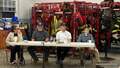
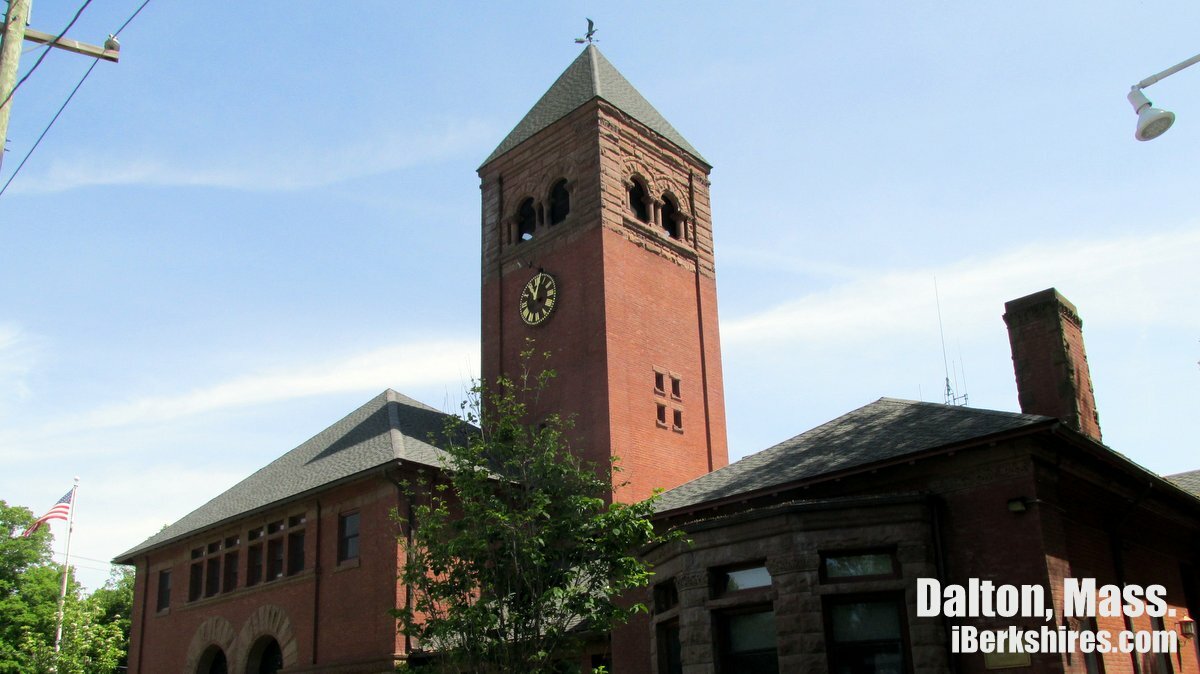
DALTON, Mass. — Elected town officials encouraged the Central Berkshire Regional School District to work on reducing its budget and being more open to collaboration with the towns that fund it. 
 
"We want to get ahead of that so you're aware of what we want to have as a town," said Select Board Chair Joseph Diver at Thursday's public hearing on the fiscal 2024 budget. "And I think the other general comment is I heard over the years that the School Committee members serve students and not the residents of the town who you have been elected by. 
 
"I believe that you need to represent the towns that you're elected by and understand the things that we have coming at us as a town." 
 
The regional district is proposing a $30,078,694 operating budget that is up 3.42 percent, or $994,646, from this year's $29,084,048, and a capital budget of $2,110,239, down $51,354 over this year. Together, they total about a 3 percent increase over this year.
 
Dalton, as the largest of the seven communities in the district, is responsible for more than half the operating budget, or 61.72 percent, base on enrollment. Its assessment is projected at $9.1 million, up about $220,738, or 2.48 percent over this year. Its portion of the capital budget is expected to decrease by $22,124 to $1,269,442.
 
The Select Board and Finance Committee, at a joint meeting last week, raised concerns over escalating school costs and the constraints of Proposition 2 1/2 as it tried to address other needed projects such as a new fire station and road maintenance. 
 
"We're going to be faced with a lot of challenges financially over the next couple of years of trying to figure this out," Diver said, noting the town has no control over the school district or Fire District. 
 
He also held out hope that the passage of the so-called Millionaires' Tax passed last year would start bringing revenue into the schools. The 4 percent surcharge on earned income above $1 million is targeted for education and infrastructure. 
 
Dalton Finance Committee Chair William Drosehn echoed Diver's concerns, encouraging the school to consider limiting its annual increases to 2.5 percent and dip into its excess and deficiency fund to relieve taxpayers. 
 
"And I don't want to say fortunately or unfortunately, but as circumstances have presented, the school budgets have become roughly 60 percent of the overall budget of the towns," he said. "That 3 1/2 percent doesn't happen just this year, that 3 1/2 percent compounds to the next year — and then to the next year and to the next year, because we keep adding on to it. ...
 
"So living within the guise of Proposition 2 1/2 becomes rather difficult for the town side of this equation."
 
Town of Washington Select Board Chair Ken Lew said he had a lot of respect for the challenges being faced by the school district and its staff and believed the administration was taking "great care" to be aware of the impact of the assessments. 
 
But, he said, "it does feel often that these assessments are handed as a fait accompli."
 
"We have to basically rein in our funding of our other responsibilities," Lew said. "We've had to basically underfund our other responsibilities, primarily highway and such, over time."
 
The seven-town advisory board should be brought in earlier in the process, he said, for greater collaboration. 
 
The school district's Director of Finance Gregory Boino said he had suggested at the last advisory board meeting to add a "tickler" to calendar to notify the towns that it's budget season. 
 
Two and half percent is always the goal, he said, but with contractual lines it "tough to get there."
 
Officials said they had been rebuffed when they had reached out to the administration to set up a seven-town meeting. Superintendent Leslie Blake-Davis said the district didn't have good figures at the time and School Committee Chair Richard Peters said it's "not a mystery" of when the committee meets.
 
After some back and forth between town and school officials, they all agreed that open lines of communication were important for the process and to begin earlier next year. 
 
Peters pointed out that the building costs for the new Wahconah Regional High School will be moving out of the operational budget next year and that some towns have already voted to exclude the annual payment from Proposition 2 1/2.
 
"Don't think that this committee and the administration aren't aware of the impact on taxpayers, that comes up in Finance Committee, we have talked about that and that has affected part of the numbers that you see here now," he said. "I'm certain that will be addressed again but will never be as low as you would like, but I'm certain that that will be addressed."  

Tags: CBRSD,   fiscal 2024,   
If you would like to contribute information on this article, contact us at info@iberkshires.com.

PCTV Turns 40, Anniversary Celebration This Friday

By Breanna SteeleiBekshires Staff

PITTSFIELD, Mass. — Pittsfield Community Television is turning 40 this week, and it's celebrating with its viewers and listeners.

This Friday, Sept. 18, PCTV will celebrate at the Berkshire Hills Country Club. Ryan Peterson, WTEN News10 ABC anchor and Pittsfield High School graduate, will give the keynote address. 

Executive Director Shawn Serre, who has been with the station for over 32 years, said it's their chance to celebrate all they have been able to bring to the community.

"It's a chance to reflect on everything that the organization has done over those years, all the people that have been involved. From board members to volunteers to producers to crew people to staff members, and all the different programs that we've produced," he said. "Everything from public programming to education, sports, graduations, parades, government meetings and forums, and election night coverage, and all kinds of other things that just year upon year of history that we've been able to create and document here for the Pittsfield community over those years." 

Serre took over as executive director about nine years ago. Originally a volunteer fresh out of college.

The original board included former mayor Edward Reilly, Dan Dillon, Diane Morgenstern, Bernard Avalle, and John Fukes of the Berkshire Athenaeum. The operation was all-volunteer until PCTV hired the first executive director in January 1989.

PCTV has operated out of its station on Federico Drive since 1999. But originally they worked out of a basement. 

"The first location that we ever had, we had all of our equipment stored in cardboard boxes in the basement of the Berkshire Athenaeum, because the Berkshire Athenaeum at the time was very gracious and allowed us to have some space while we sort of got our feet on the ground and sort of got things organized," he said. "But we had no location. We had no studio. We just had this equipment that was ordered with the money that we had from the original cable franchise grant."

"So that lasted a couple of years, and then we signed and got a lease over in our first studio location, which was over on Fourth Street in Pittsfield," Serre continued. "That was around the time that I first got involved, just before we moved to Fourth Street. So I was there in the basement of the library, opening those boxes up and seeing what we had for equipment. So we stayed there at Fourth Street for about 10 years, and then this building that we're currently in now, over on Federico Drive, was constructed in 1998. It was built kind of custom-made for the cable company and for us and for one other company." 

Serre said one of their proudest moments was saving the radio station WTBR-FM back in 2018. PCTV made space for them so they could continue operation.

"We carved out some space here in our facility for that, and we've been operating that radio station ever since. So those are some of the big milestones of growth of the organization over the years, and the things that we've done," he said.

They have also invested in advanced technology to keep their programming accessible to all.

"Technologically, there's another whole series of things that we've gone through," he said. "We've started out with a single cable TV channel. We grew to three cable TV channels. We started out as standard definition on videotape, and we grew to digital, and then to high definition, and then everything went to the internet. So we're able to offer video on demand and live streams and video on social media. And then with the radio station, we also have a live stream there and podcasting. So we've seen a lot of technological change and tried to roll with that over the years."

Serre said that PCTV strives to keep people informed while also allowing space for people to create their own media.

"The whole idea behind PEG [Public Education and Government Access]...the whole idea behind that back in the 70s and 80s was that people could be left behind with the technology that's available to the big corporations," he said. "So, if you had a cable system at the time, ordinary people maybe they had camcorders at home, but they didn't have access to a TV studio; they didn't have access to the kind of technology that we had to allow them to create programs and share it with the community. So we filled that gap, and that was one of the main things that we did. And then also to be able to create programming for viewers and for the city, so that the municipal meetings can be shown, and so school committee meetings can be shown, and it really brings people in and involved."

View Full Story

More Pittsfield Stories