Peru Searches for Feasible Solution to Damage Fire Department Vehicles
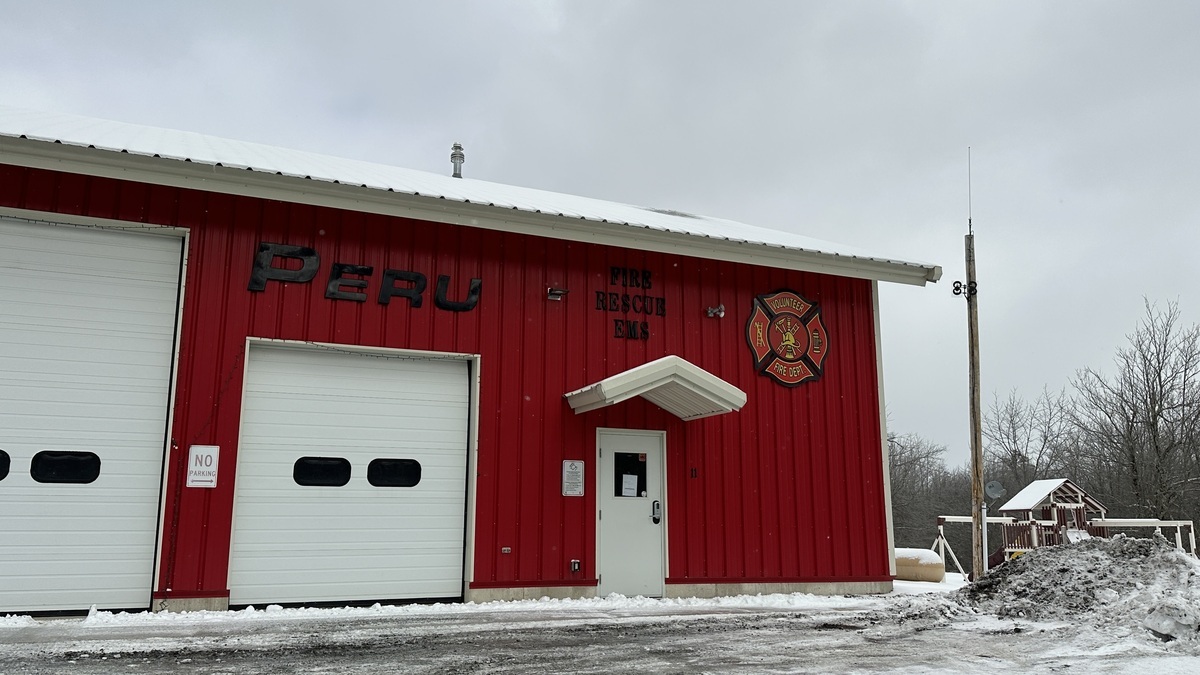
PERU, Mass. — The Peru volunteer Fire Department and town are searching for a feasible solution for the department's run-down vehicles.
Peru Fire Chief Jesse Pelkey said the department's fire engine and rescue vehicle are both old and damaged making it more difficult to provide services to the town.
The Select Board was informed that the engine would not pass inspection in mid-February when it was subsequently taken out of service.
With the fire engine permanently parked, Pelkey said the department is unable to respond to an emergency with only one vehicle that has all the needed equipment. Instead, they have to respond with multiple vehicles to make sure the proper equipment is on hand.
"If you've got, for instance, let's say a motor vehicle accident and God forbid somebody's trapped and it's on fire. I need the tanker, and I need the rescue truck because the rescue truck has the jaws on it," Pelkey said.
This is difficult in a rural community that has fewer volunteers to drive multiple vehicles.
"Instead of just rolling the engine that has the jaws and the water, we would have to make that decision. Do I need to put the fire out or do I need to cut that person out?"
Although the department still has a response time of ten minutes, there are still occasions when they have to rely on outside departments like Dalton and Hinsdale.
The department currently has one fire engine, a tanker, a chief's command vehicle, a retired ambulance that is used for rescue and medical calls, and a brush tanker for calls in the woods.
The department's current rescue vehicle has its own issues and Pelkey said there is antifreeze in the oil. The town has instructed Pelkey to look into the estimates of how much it would cost to repair it.
At the time of publication, the town has not received these estimates because Pelkey said he is having trouble finding a mechanic to give him one.
Based on conversations he has had and his previous experience as a Diesel Mechanic, Pelkey estimates that it would cost roughly $25,000 to repair the rescue vehicle. A new rescue would cost roughly $100,000 to $125,000.
Pelkey said the engine's emergency brakes don't hold. Other issues include an engine oil leak, power steering leak, corroded pressure lines, coolant leak, among other concerns.
The engine's tires would need to be replaced, which alone would cost more than $2,000, Pelkey said.
He said they can "get by" until a resolution is found using the tanker as an engine, but it does not have the capabilities of an engine.
"We've actually ratchet strap a few ladders to our tanker to use that as a primary engine if we need to," Pelkey said.
One of the challenges when it comes to repairing the town's fire engine is that the vehicle manufacturer went out of business making it difficult to get parts, Pelkey said.
In August when the vehicle's windshield cracked. It took four months to have it replaced and the department did not get the new windshield until December.
The town's engine is a 2002 model that they purchased used two years ago for approximately $75,000.
Pelkey brought the engine to the vehicle manufacturer Freightliner for an estimate on how much the repairs would cost for the emergency brake and was informed that it would cost a little under $7,000. Pelkey was informed that repairs are not guaranteed to work.
One of the selectmen worked as a Mechanic for the Massachusetts Turnpike and said that the repairs for the emergency brake should cost between $2,000 or 3,000, Select Board chair Verne Leach said.
At this time, the department is not yet aware of how much the other repairs would cost to get the vehicle to the point where it can pass inspection.
Pelkey has looked into purchasing a used fire engine, but they are not much newer than the one they currently have and cost upwards of $250,000.
To be compliant with the National Fire Protection Association, fire engines would need to be replaced after 20 years, so purchasing a used model would not give the town much time.
A newer used model from 2015 would cost the town between $400,000 and $500,000.
Pelkey said the department did have one engine manufacturer "step up" offering a demo model that will be coming off the line in May. He said it was "built for 2 year ago pricing" so would cost the town $606,000.
He estimated that If the town put in $100,000 as a downpayment it would cost the town approximately $65,000 a year for 10 years and the truck would last at least 20 years.
With warranties, the truck would be far less expensive to repair.
Pelkey said the department takes good care of its vehicles and with his background as a diesel mechanic, he is often able to extend the lives of many department vehicles. For example the town's 2004 tanker has a little over 10,000 miles on it.
"So that truck is still brand new. So, we would know that that truck would last a guaranteed 20 years in this department," Pelkey said.
The value of the truck is approximately $25,000. So if the town continues to make repairs that are not guaranteed to work, then the town could potentially be wasting money.
Even with repairs, Pelkey only expects the truck to last another 8 years at the most.
"...We can't stop putting money into it. You need to be able to pull the plug and you got to have a figure in your head to pull a plug on. Something that is no longer manufactured and very difficult at times to get parts for," Pelkey said.
Leach said it is important that the town see possible repair costs alongside different purchasing options. He said the town still has to have all the numbers to determine what option is the most feasible.
"It's our responsibility to try to spend the taxpayers' money very carefully and just going out buying all new vehicles is not very careful," Leach said.
Tags: fire engine,