Mount Greylock School Committee Advances Administration's Budget Proposal
WILLIAMSTOWN, Mass. — The Mount Greylock Regional School District on Thursday advanced a budget that meets the cost expectations of governments in the district's member towns.
On a vote of 6-1, the committee voted to approve a fiscal year 2024 spending plan that would result in a 3.16 percent increase in the assessment to Williamstown and a 3 percent increase in the assessment to Lanesborough.
The budget represents a 4.6 percent increase in the district's operating budget, which is partially offset by an increase in state aid.
But, as proposed by the district's administration earlier this month, the FY24 budget does not include funding for a districtwide director of diversity, equity, inclusion and belonging or increased staffing recommended by the school councils at two of the district's three schools.
In fact, the budget comes in with a gross operating budget increase of $1.2 million only after eliminating 13 classroom positions: a teacher and a paraprofessional at Lanesborough Elementary School; two teachers and six paraprofessionals at Williamstown Elementary School; and two teacher and one paraprofessional at Mount Greylock Regional School.
"We are decreasing the number of staff in each of our buildings despite the fact that the budget is increasing by the amount you're seeing tonight," Business Manager Joe Bergeron told the School Committee. "The majority of that decrease will happen from natural attrition: retirements, planned departures, moves to other parts of the country or world, moving on to other forms of education and other job opportunities."
Thursday's meeting was the annual public hearing on the budget, and the committee heard extensive comment from the community.
Seven residents of the district who identified themselves as having students in the public schools advocated for preserving either the DEIB director position or creating a new art position in the middle school or both.
Several residents reiterated the arguments first made to the committee at its January meeting about the importance of adding visual arts to the middle school curriculum, as advocated by the School Council.
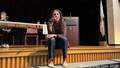
That group included Briee Della Rocca, who gave a presentation in January and on Thursday again told the committee that Mount Greylock's middle school lagged behind its peers in the county and the state.
"This should change and must change and must change immediately," Della Rocca said.
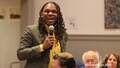
The public comment period ended with an emotional appeal from Ashley Bianchi to preserve the DEIB director position that first was added to the budget — but unfilled — for the 2022-23 fiscal year.
"I extend my full admiration for the work that you do, the time that you spend to support my child and others. "I'm just asking tonight that you continue that support and continue it in the same way you've done before. From what I've heard, you can't do that with a 3 percent increase only. With inflation, that's a decrease in support.
"And that's really disheartening in a moment that our students need you most."
School Committee member Jose Constantine, who ultimately voted against the budget, agreed.
Constantine repeatedly pointed out that the budget, despite its 4.6 percent increase, actually represented a net decrease in services to the students of the district.
All of his colleagues agreed and spoke repeatedly about how difficult a decision it was to support the budget. Likewise, Bergeron and Superintendent Jason McCandless talked about the "agonizing decisions" involved with presenting a budget that does not support all the positions they want to see in the district.
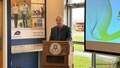
"Nothing that we do stands still," McCandless said in introducing the budget at the public hearing. "Our expenses don't stand still. More importantly, our students' needs don't stand still. … We're also working to be responsive to a changing society. We see societal change all around us. We work hard to respond to that.
"We work to do so in cost-efficient ways. We don't work in a vacuum as a school district. … We are primarily funded through the towns of Williamstown and Lanesborough, and we understand they have needs they must keep in mind and services they must deliver to people who are not a part of the school district."
Later he and Bergeron explained to the committee that a 3 percent increase in the assessment to each town was a request of town officials in both Lanesborough and Williamstown. On Wednesday, the members of Williamstown's Finance Committee thanked district officials for presenting the austere budget; on Monday, the district is scheduled to present the spending plan to the Finance Committee and Select Board in Lanesborough.
"No one likes to talk — including the person talking now — about the political realities that impact this work," McCandless said. "But at the end of the day, we ask our elected and appointed officials in each town to also help us understand what is likely to get passed at town meeting. That's another factor in what we go out to ask for.
"We do not want to be in a position of having a budget rejected at a town meeting. There are processes in place for what happens if the budget fails, but it is a disruptive process."
Just before the 6-1 vote to send the budget to those town meetings, Constantine offered his final argument against the plan.
"We've heard from Jake [McCandless] and Joe [Bergeron] that they can't promise us, even with this 4.6 percent increase in the ask in this upcoming fiscal year that student services won't be impacted, that the most vulnerable of our student population will not be impacted," Constantine said. "And I know that even if we asked for a 20 percent increase, they still wouldn't guarantee it.
"But we also heard that this retraction, real retraction in the budget that we're potentially moving forward for the next fiscal year is making accomplishing the mission of our district difficult. We've heard that from Jake. And I think that's important to acknowledge and something we all have to accept."
Tags: fiscal 2024, MGRSD_budget,