Hidden Heroes: Exhibit, Monday 'Teach-In' Highlight Williamstown's Ishmael Titus
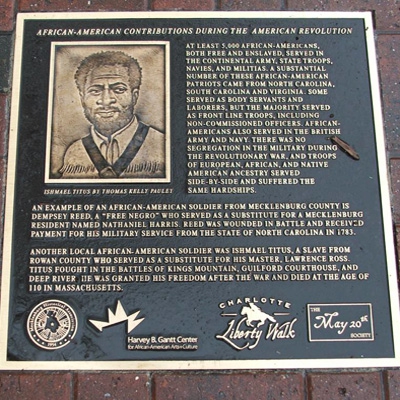
An image of Ishmael Titus on a plaque installed in Charlotte, N.C., in 2015 recognizing his service in the battles of Kings Mountain and Guilford Courthouse with Gen. Nathaniel Greene's forces. Posted by the American Legion.
And they want the town to follow suit.
Tryphena Bossman and Olivia Johnson last week met with the town's Diversity, Inclusion and Racial Equity Committee to talk about the work they have done in an Africana studies class to research the life of Ishmael Titus, an enslaved American who fought in the Revolutionary War and relocated to Williamstown in the earliest days of the republic.
"Ishmael Titus is a Revolutionary War veteran, and he also was an active resident within White Oaks," Bossman said, referencing a neighborhood on the north end of Williamstown. "He served in the war in the stead of his enslaver, Lawrence Ross, and he ultimately freed himself and journeyed to the White Oaks community. He not only resided in White Oaks, he resided in nearby states like in Bennington, Vt."
But Titus' story, like that of other Black residents, largely was written out of the town's history.
Bossman, Johnson and other students from professor Allison Guess' course "Race, Land, Settler Capitalism: Ongoing Topics in (Dis)/(Re)possession," created a display of historical records about Titus that was scheduled to go on view at the college's Sawyer Library this weekend and which the students hope to bring to other locations in town.
And on Monday, at 6:30 p.m., the students will hold a teach-in at the college's Paresky Auditorium that is open to the public. The event will feature Solomon Titus, who will talk about his ancestor's legacy.
"Moving forward, we would love to collaborate with the DIRE Committee on efforts to both mark and preserve Ishmael Titus' memory within Williamstown, specifically within the White Oaks community, where he resided," Bossman said. "One of the ways we'd like to do that is by having a street or park named after Ishmael Titus."
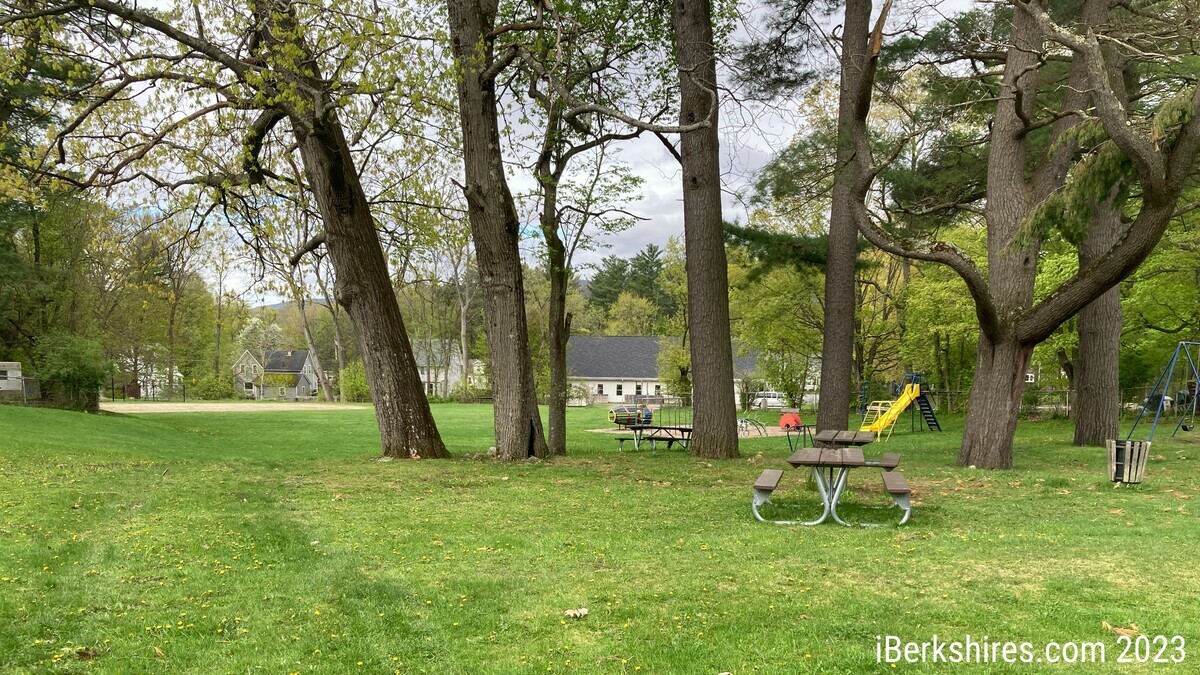
Prior to last week's meeting, a member of the DIRE Committee suggested the students consider Broad Brook playground, adjacent to the former school.
"We want to choose a place that will provide the honor we're looking for, and part of that is choosing something in an area that is close to where Ishmael was, which this is," Johnson said. "We're looking at Broad Brook as a viable option."
One potential problem with the park, the students said, is that a marker at the site dedicates it as the "Lt. Herbert Allan Field Memorial Playground," for a service person who died in action in World War II.
The students' discussion with the committee touched on the fact that the town has other locations named for people whose histories are fraught, including Ephraim Williams himself, now recognized as a slave owner. But the town has little recognition of people of color.
"Ishmael Titus is not the only Ishmael who is a proud patriot from Williamstown," DIRE Committee member Andrew Art told the pair.
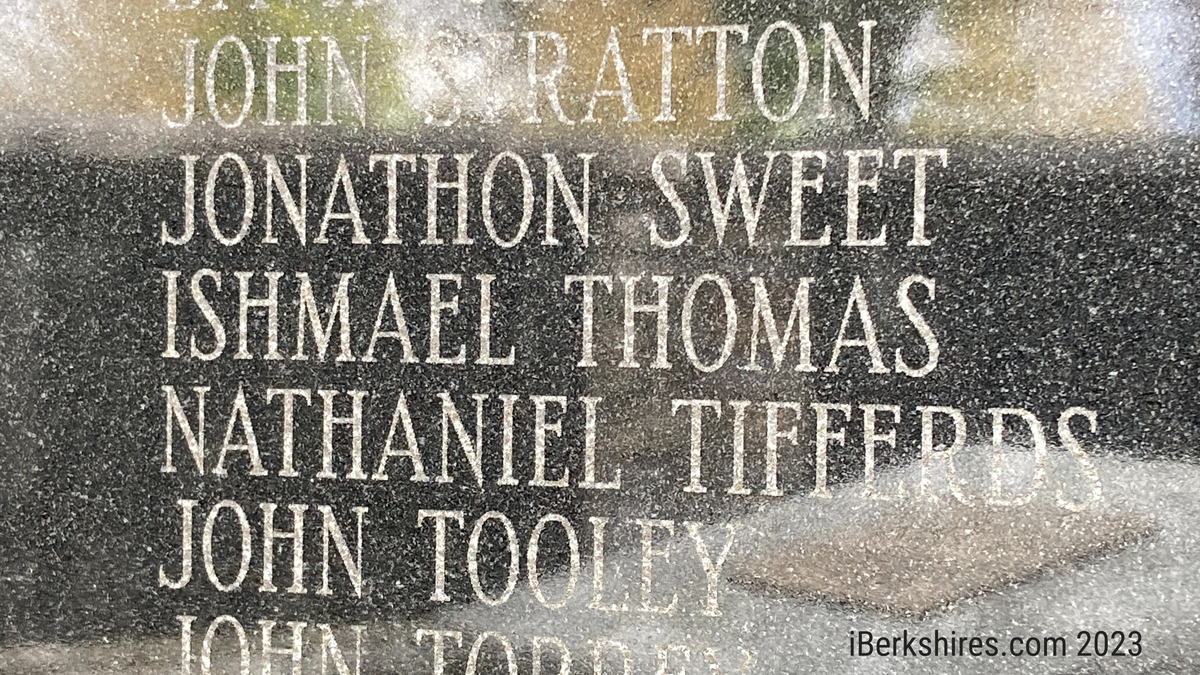
"Ishmael Thomas, who was enslaved by Benjamin Simonds, for whom Simonds Road is named, and who lived in a historic home which has been preserved and has historical markers that make no reference to that enslavement, is also omitted from the Williamstown history."
Art noted that Thomas, unlike Titus, is recognized on the town's war memorial at Field Park. Simonds, on the other hand, has a portion of U.S. Route 7 named for him.
DIRE Committee member Noah Smalls pointed out that memorializing slave owners, like Benjamin Simonds, and erasing enslaved people is a national issue.
"Is there a reason we're holding onto honoring these individuals versus people who are American heroes and under-recognized in American history?" Smalls asked rhetorically. "It doesn't always have to be a swap or a flip-flop, but I think it can be very powerful when it is. It can offer some healing."
Three days after the April 28 presentation from Bossman and Johnson, the topic of historical erasure was still on the table for the DIRE Committee members.
And a choice the town made for its town flag loomed over that table and drew Smalls' attention. While town leaders' discussions about potential flag designs dragged on for weeks back in 2015, none of those discussions included full consideration of the message sent by highlighting the 1753 House, a replica of a Colonial-era structure erected at Field Park in 1953.
"I keep looking at this flag here as it is celebrated," Smalls said, pointing to the flag hung in the Select Board Meeting Room. "It really does speak a lot to history. … At the reception of [the 1753 House's] unveiling, there was a re-enactment of the running off of indigenous people and violent incidents surrounding that. I know this because it was in the newspaper back then, and I read an article that was complete with individuals in headdresses who were not Indigenous."
Art said the replica structure and the flag it adorns celebrate white colonialism and ignore the Black and indigenous people who always have been connected to the town.
"The tragic part to me is, without having a conversation about the actual history, we then have a perpetuation in the form of the flag of this caricatured celebration of Colonial Williamstown," Art said.
In recent years, the residents of a neighborhood of Main Street have disavowed its former name and removed a sign identifying it as "Colonial Village," and the Colonial Shopping Center on Main Street has been rebranded the Williamstown Plaza.
"It's not a coincidence that [the 1753 House] ended up being a symbol of the town," DIRE Committee Chair Shana Dixon said. "It was a caricature then, so it was offensive then. And it has not not softened at all with time or by putting it on the flag. It still represents the same moment. It has the same intent on the flag as it does on the town green.
"What I would suggest here is aggression toward marginalized groups by positioning this in the center of town and positioning it on the flag should not be lost either as we try to work through understanding that these things … don't just happen this way. They're often meant as a different kind of monument. It sends a different kind of message."
The DIRE Committee members agreed to engage the town's Historical Commission and 1753 House Committee about how the town's historical markers and monuments can be made to be more inclusive.
Tags: black history, historical exhibit, historical figure, Williams College,