Long-Awaited Restoration of Springside Pond Coming Soon
PITTSFIELD, Mass. — After more than 20 years of anticipation, Springside Pond is going to be restored.
The Parks Commission on Tuesday approved updated site plans for the rehabilitation and restoration of the once-landmark body of water. Plans include sediment removal, dam repair, an elevated boardwalk, and a paved path for accessibility.
Depending on federal permitting, construction is estimated to begin next summer and will take about three months to complete.
"Really since year 2000, the city has been thinking about the restoration of Springside Pond," Park, Open Space, and Natural Resource Program Manager James McGrath said.
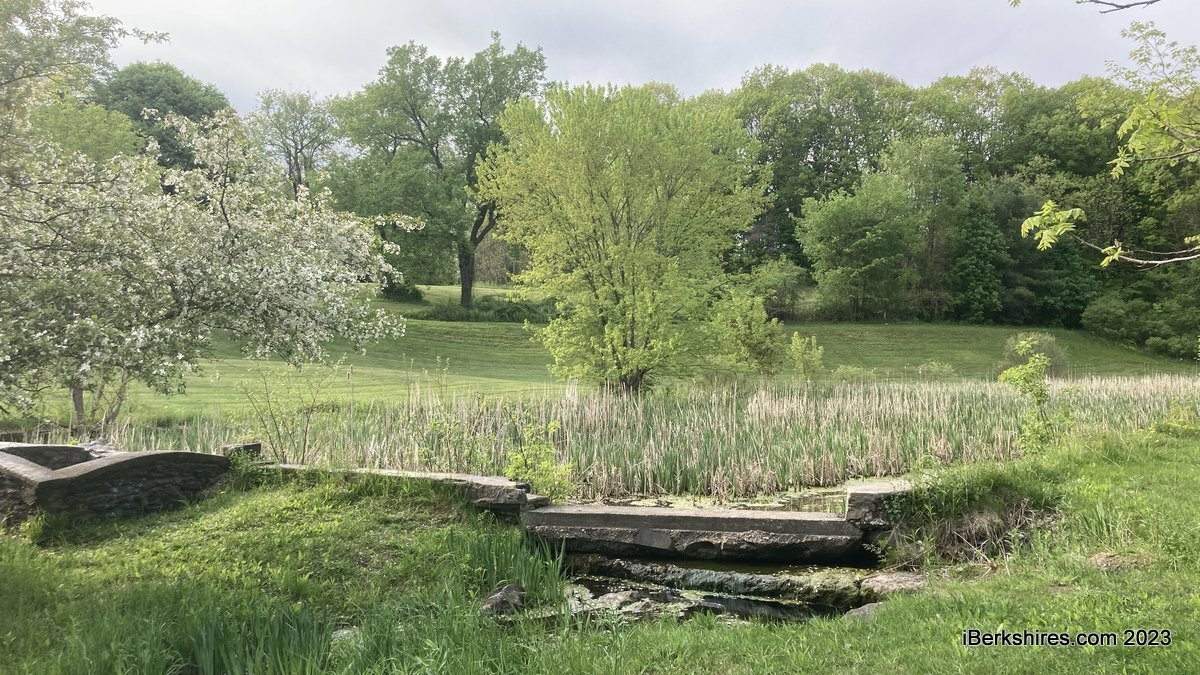
The pond once contained a chlorinated wading pool and was a point place of recreation for the neighborhood. After falling into disrepair, it became riddled with sediment and cattails.
McGrath explained that before his tenure, a grant was received from the state for a feasibility study that articulated a revamped pond.
A couple of years ago, the city began working with SK Design Group on the permitting for the project because there are "heavy duty" permits involved because of the thresholds crossed for sediment removal.
"It's really sediment removal in the pond, it's dam repair, and it's an improvement of the access to the pond because right now, that portion of Springside is not accessible with mobility challenges," McGrath explained.
"So we really felt it was an important component to make certain that we can get people from the sidewalk on Springside Avenue to the pond."
He said the city is almost at the finish line and that will be crossed when the final permits are received.
The document in question is a programmatic general permit that expired and is being reissued by the federal government.
The project is entirely funded through $650,000 of the city's American Rescue Plan Act funds and the project estimate is coming in well below available monies.
McGrath said the city wanted to be clear on project costs because in the past, projects have gone out to bid and funding has come up short.
"That's simply often a matter of construction climate and since COVID, construction climate has been unpredictable," he explained. "So we're in a good position with this to fully fund the project."
It is estimated that about 1,500 cubic yards of sediment will be removed from the water. Testing was done to make sure that it was not contaminated to the level that it would need to be hauled out of state and it came back within regulations.
It will be stockpiled and capped on the eastern side of the park off Broadview Terrace.
Once dredged, the pond will be 3 to 4 feet deep and it is estimated to take about 50 years before it fills up again.
"We will also be repairing the dam became that's one of the major problems here at the site is the dam is breached so the pond can't hold water," McGrath said.
"And that's some of the issues we've seen because the pond can't hold water. Those cattails, which were always sort of emerging in the north side of the pond have crept southernly towards Springside Avenue. The pond is fully consumed by the cattails."
Most of the former infrastructure for the wading pool will be removed as part of this project.
There is an alternative option for a small parking lot nearby that will be decided on after pricing.
"I'm not certain that a parking area here is the right way to go," McGrath said. "Simply because for many, many years the pond has been a neighborhood feature as part of the neighborhood."
He pointed out that there is parking at the Little League field next door and that the city needs to be thoughtful about building another parking lot that would have to be maintained.
"So we want to get a price on it and I think once we have that pricing back it will come back to the commission and have a frank conversation if we can afford it, do we want to build it," he added.
It was noted that there will be some disruption in the Broadview Terrace neighborhood when the extracted materials are being hauled and the neighborhood will be notified.
Last week, Joe Durwin of the Springside Park Conservancy wrote that this plan is a result of decades of advocacy and called for for a natural shoreline, for the historic footbridge to be preserved, and a modernized dam set up to create a "forever pond."
"Springside Pond was closed to people for 15 years of the 'glory days' of Pittsfield due to disrepair and contamination. After years of advocacy by neighborhood residents, in 1959 the dam and retaining wall were completely restored," he wrote in a Facebook post.
"20 years later, it had been allowed to become decrepit again, and in 1980 was nearly filled in with concrete. This was vehemently opposed and that year the volunteer SPAC (predecessor to the Friends of Springside) was formed."
Springside Pond by Brittany Polito
Tags: Springside Park,