Williamstown Watching Washington, Not Yet Fretting Impact on ARPA Funds
WILLIAMSTOWN, Mass. — The town manager Friday was cautiously optimistic that a potential debt ceiling deal in Washington, D.C., that includes "claw back" provisions on American Rescue Plan Act funds would not impact the town's ability to utilize the remainder of $2.2 million in pandemic-related federal relief.
"I'm not especially concerned," Robert Menicocci said. "I always put an asterisk beside something like that when we talk about anything legislative. You never know until it's in ink, when it's signed by everyone — whether local, state or federal legislation."
The $350 billion ARPA passed in 2021 included funding for state and local governments. Williamstown's share works out to $2,222,073, according to the commonwealth's website.
A good deal of that money is already "out the door," spent on both direct COVID 19-related expenses and other items approved by the Select Board over the last couple of years.
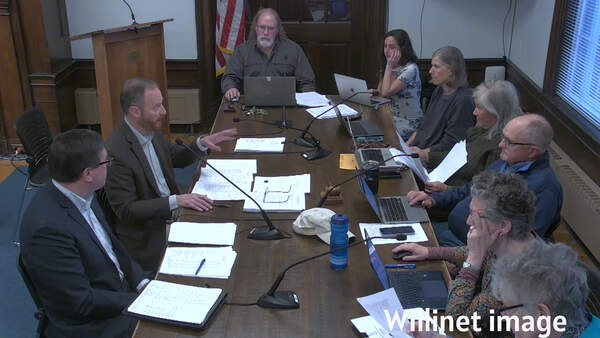
Other funds were designated by that board as recently as late April on projects that are yet to be completed and paid for, like $300,000 for infrastructure needs at the elementary school, some of which were nearly shovel ready but not under contract at the time of the Select Board's decision.
Menicocci said he and colleagues in municipal government have been reaching out to their advocacy groups, and the response so far has been encouraging.
"This is the monitoring phase," Menicocci said. "The guidance we've gotten back is everyone should be OK. We're watching, and if we need to do something, we know what steps we'd need to take."
It is by no means a done deal that the ARPA funds will be part of a compromise between the White House and Congressional Republicans that will allow the debt limit to be extended by next Thursday. That is the date the Treasury Department has identified for potential defaults on the nation's bills if the limit is not raised. But a claw back provision has been discussed by the Speaker of the House of Representatives as one possible spending cut his caucus would like to see in any agreement.
Even if that comes to pass, Menicocci said a final rule on ARPA issued in 2022 allows municipalities to "hold up to $10 million without a great deal of scrutiny."
"If we were a larger jurisdiction, it might need a deeper conversation," he said.
And if a debt ceiling bill next week does include elements that effectively amend the "final rule" from 2022? There are steps the town could take, Menicocci said.
"It's hard to speculate what the worst case would be, but having gone through similar exercises throughout my career, I think, first of all, we'd look at any action that satisfies [the new rule]," he said. "If it was a matter of having to look back at things that have already taken place and seeing if that meets the criteria, we could do that.
"In the emergency status of potentially losing money, maybe we have a conversation with the Select Board."
The board and staff at town hall tried to be transparent and engage the community as much as possible about how to allocate the ARPA funds, Menicocci said. That meant talking about prospective future projects, like the playground replacement at WES, the new fire station on Main Street or town infrastructure needs, like roads.
Menicocci did not think that it will come to a point where the Select Board would have to consider shifting some of the ARPA funds to pay current bills in order to avoid a "clawback."
"If something last minute happens in those [debt ceiling] negotiations and things change … if we had to do something to act quickly, I feel in the worst case scenario we could do what we needed to do," he said.
"As things stand today, I think we're OK."