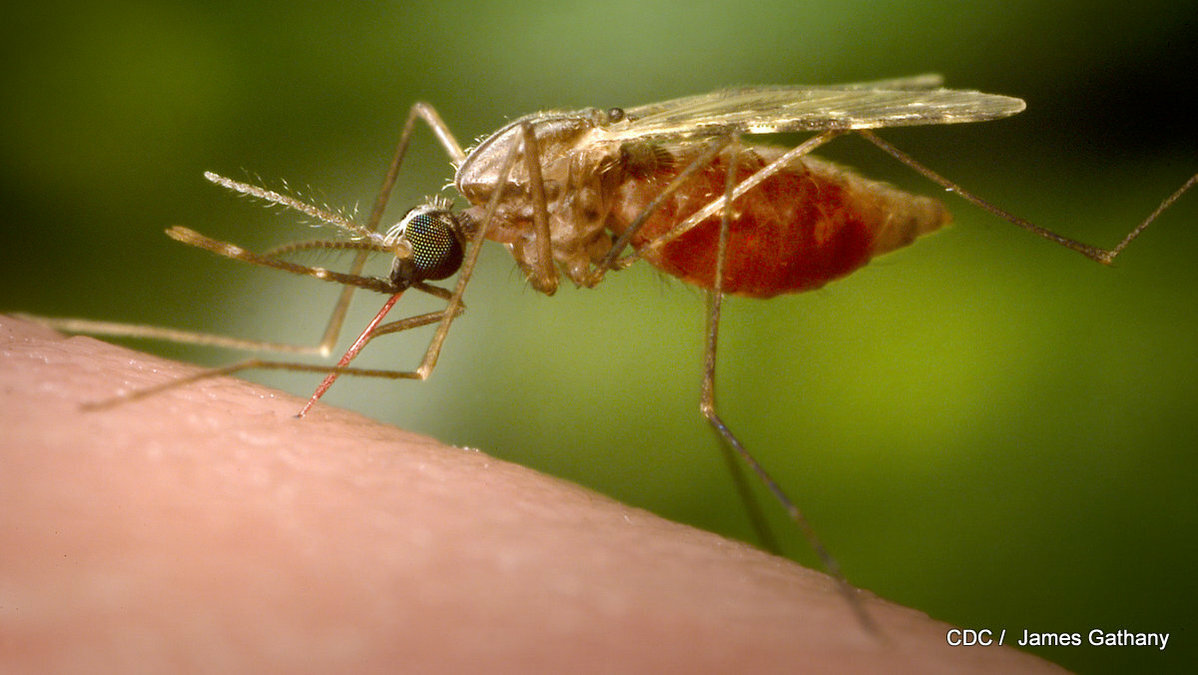
image description
The Pittsfield Board of Health is recommending the resumption of mosquito spraying after two samples of West Nile virus were reported; a third sample came up positive on Friday.

Pittsfield's West Nile Risk Elevated; Council Asked to Resume Spraying

By Brittany PolitoiBerkshires Staff
Print Story | Email Story

PITTSFIELD, Mass. — With three cases of West Nile virus found in recent sampled mosquitos, the City Council on Tuesday will tackle requests to resume adulticide spraying.

On the agenda is a petition from Ward 4 Councilor James Conant requesting to repeal the action that eliminated spray applications for the control of adult mosquitos and that the Board of Health and Conservation Commission develop guidelines and protocols on spraying.

There is also a petition from Director of Public Health Andy Cambi asking the City Council to rescind the vote of no spraying in Pittsfield and review the Berkshire County Mosquito Control program.

Earlier this month, the Board of Health voted to urge the council to resume spraying to prevent human infection. Two years ago, the council voted to opt out of spraying adulticide against the board's recommendation.

There was said to be a "disconnect" between health officials and the city on the health issues. 

Most people don't develop any symptoms from a West Nile infection, but in those who do, it can result in fevers, rashes and nausea or more severe symptoms such as inflammations, convulsions or even paralysis. There is no cure. 

Those who opposed the spraying say the chemical toxins used to kill the mosquitos were themselves a health and environmental hazard and that the low incidence of West Nile and eastern equine encephalitis didn't necessitate the risk.

In the last two weeks of July, two mosquito samples tested positive for West Nile. One was located in the Elm Street and William Street area and the other was in the city center near Wahconah Park.

On Friday, a third mosquito tested positive for WNV in the vicinity of Cheshire Road and the city's risk level was elevated to moderate, meaning that human infection has likely occurred. At the time, there was not a documented case of human WNV.

In his communication to the council, Cambi relayed the information that was given to the Health Board from the mosquito control project's Superintendent Chris Horton during its Aug. 2 meeting.


"Due to the large amounts of precipitation, there has been an increase in the mosquito breeding
conditions. Larval control in wetlands and catch basins have not been as effective because of the
flooding conditions. An influx of flood species has emerged in different collection areas around the city.
These species are primary vectors and bridge vectors for West Nile Virus," he wrote.

"There have been two positive samples of West Nile Virus in the mosquitos collected within two different locations in Pittsfield. This is significant as small samples of mosquitoes are tested, a positive indicates the disease is amplified. Because of these conditions the Board of Health requests the City Council to rescind the vote that was taken in April 2021 and allow adult control spraying."

Cambi also requested that the council comprehensively review the entire mosquito program with the Board of Health present.

"The goal is to have shared discussions to implement a proactive integrated mosquito management plan. I hope these requests can be discussed at the August 15, 2023, City Council meeting," he wrote.

Residents are urged to take precautionary measures that include repairing screens on homes, cleaning up mosquito breeding sites, being aware of stagnant water on private property, wearing long sleeves and pants from dawn to dusk, using netting on baby carriages and playpens, wearing repellent, and mitigating areas of standing water.

Though the city opted out of adulticide spraying, the pre-emptive larval control and catch basin operations have remained.


Tags: mosquito spraying,   

If you would like to contribute information on this article, contact us at info@iberkshires.com.

West Nile Virus Confirmed in Mosquitoes From Pittsfield

Staff Reports

PITTSFIELD, Mass. — The Massachusetts Department of Public Health (MDPH) announced today that West Nile virus (WNV) has been detected in mosquitoes collected from Pittsfield.

The City of Pittsfield has confirmed two isolations at the Pittsfield-Richmond town line on Route 41 and the other at Garland Avenue.

WNV is most commonly transmitted to humans by the bite of an infected mosquito. The mosquitoes that carry this virus are common throughout the state and are found in urban as well as more rural areas. While WNV can infect people of all ages, people over the age of 50 are at higher risk for severe infection. 

At the time, there are no confirmed human cases of WNV, but residents are encouraged to take the following actions:

Avoid Mosquito Bites

  • Apply Insect Repellent when you go outdoors. Use a repellent with DEET (N, N-diethyl-m-toluamide), permethrin, picaridin (KBR 3023), IR3535 or oil of lemon eucalyptus [p-methane 3, 8-diol (PMD)] according to the instructions on the product label. DEET products should not be used on infants under two months of age and should be used in concentrations of 30 percent or less on older children. Oil of lemon eucalyptus should not be used on children under three years of age. Permethrin products are intended for use on items such as clothing, shoes, bed nets and camping gear and should not be applied to skin. 
  • Clothing Can Help reduce mosquito bites. Although it may be difficult to do when it’s hot, wearing long-sleeves, long pants and socks when outdoors will help keep mosquitoes away from your skin.
  • Be Aware of Peak Mosquito Hours - The hours from dusk to dawn are peak biting times for many mosquitoes. When risk is increased, consider rescheduling outdoor activities that occur during evening or early morning. If you are outdoors at any time and notice mosquitoes around you, take steps to avoid being bitten by moving indoors, covering up and/or wearing repellant.

Mosquito-Proof Your Home

  • Drain Standing Water – Many mosquitoes lay their eggs in standing water. Limit the number of places around your home for mosquitoes to breed by either draining or getting rid of items that hold water. Check rain gutters and drains. Empty any unused flowerpots and wading pools and change water in birdbaths frequently. 
  • Install or Repair Screens - Some mosquitoes like to come indoors. Keep them outside by having tightly-fitting screens on all your windows and doors.

While the City of Pittsfield and Berkshire County Mosquito Control project continue to work closely with the MDPH and other agencies, locally we are taking the following actions: larvicide application, conducting targeted education programs, distribution of fact sheets on WNV and on reducing exposure to mosquitos and treating catch basins.

Additional information about WNV and reports on current and historical WNV virus activity in Massachusetts can be found on the MDPH website at: www.mass.gov/dph/mosquito.

View Full Story

More Pittsfield Stories