Pittsfield Charter Panel Hears Opposition to Charter Objection
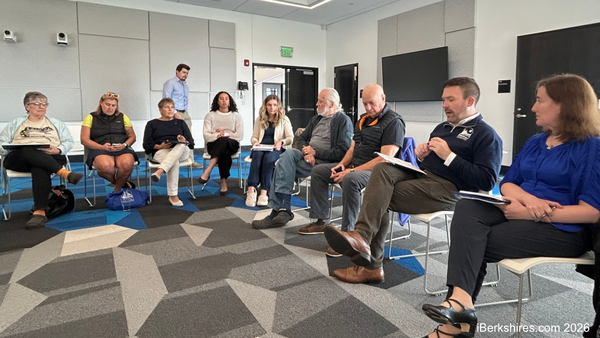
PITTSFIELD, Mass. — The newly reconvened Charter Review Committee began its work last week with a conversation about the charter objection, a motion that has delayed votes and created a stir in council chambers over the last term.
Councilor at Large Peter White presented a petition that asked "Should the charter objection be eliminated or otherwise amended?" Under the rule, if a single member present objects to the taking of the vote it is postponed until the next meeting of the city council.
White feels it is something that has been used wisely but also at times not.
"One of my issues with this and something I've heard from the public is there's no real structure to the charter objection, what it applies to, what it doesn't apply to and it allows one counselor of an 11-member body to shut down all debate, discussion on the item immediately regardless of if that item needs to be addressed that evening," he said.
"I understand that there needs to be safeguards in place if someone feels something is being pushed through too quickly. One of those is we have the option that we can table and I know that could be cumbersome for some because it requires a majority vote of the council in order to table an item and I know there are people who feel strongly that the charter objection should be kept. What I wanted to present to you was just that I think it needs to be reviewed and have a decision made by this body that doesn't use it."
White added that it can be frustrating for members of the public who come to speak on an item and would at least like to hear it debated but instead, it is moved to the next meeting through a charter objection.
"One of the concerns about the charter objection that has come up from residents that watch our council meetings, attendees, and general I would say dissatisfaction with how it has been used at times has been the question of resident participation and stakeholders that do come to meetings," Ward 6 Councilor Dina Lampiasi, who is a member of the committee, said.
He suggested that if is kept, it should require an affirmative vote of around three members to move forward with the charter objection.
A handful of charter objections have been used in the last term, some being controversial.
The motion became a prominent tactic during the budget hearings last year when Ward 2 Councilor Charles Kronick called a charter objection on the $189 million fiscal 2023 budget and derailed the vote. Because of this, a budget was adopted by default but Mayor Linda Tyer agreed to apply $116,000 in recommended increases from the council after the matter.
During a press conference, Tyer said the charter objection caused "manufactured chaos" and Council President Peter Marchetti described it as "very reckless."
"It was used late in the process. If the mayor and council president hadn't come to an agreement, it would have eliminated everything the City Council had worked on during the budget sessions because two weeks would have put us over the time that the City Council has to act on the budget before it automatically is adopted as the mayor put it forward," White explained.
"So this could also be used as a tactic to force through a budget. Say if the City Council made reductions to several departments or requests for additions because we can't add but we can reduce and there was one councilor, because all it takes with a charter objection, who wanted to eliminate all of the reductions made by the City Council, that councilor could make a charter objection,"
"If not enough foresight is being put into it for when we get the budget by charter and everything else, you could really bypass the council almost every budget season by using the charter objection so it becomes an extra dangerous tool in councilors' toolboxes when it comes time to pass a budget when we're under strict deadlines of when something has to be passed."
In February, Councilor at Large Earl Persip III put a screeching halt to an unclear conversation about Councilor at Large Karen Kalinowsky's bike lane ballot question proposal with a charter objection. The next month, councilors rescinded a former vote taken on the question that supporters argued placed it on the ballot.
Kronick's charter objections caused unrest in the chambers again in June when he used the motion to delay three time-sensitive financial orders.
The councilor came to the committee's meeting to defend the charter objection and his use of it.
"The charter object itself does not shut down debate. What it does is it puts a delay and if only one city councilor utters the charter objection, that delay is that is no less than two days," he said.
"If it is a major crisis, it has to be done that right now this week, two days later, the council can reconvene here so there's no real crisis ever really instituted by a charter objection and the fact is as far as my turn on that council, there's never been a crisis instigated by any charter objection, nor a catastrophe."
Kronick said the motion is not a rare and obnoxious event but just a part of governance.
Ward 1 Councilor Kenneth Warren said, overall, it is a good provision and should not be abolished but suggested tweaking it.
But because he does not feel the budget process is rushed, he does not see it as an appropriate time to charter object.
"Even with all these instances, we've in two years only used six, and like I said, if you really go back, and I know that one councilor, and he even said it, it's on record but he made it clear that he said, 'Since a charter objection was made earlier in the night, I'm going to make a charter objection,'" Warren said in regards to one of the charter objections.
"And so the point was, of those six, I think only two or three were really to the heart of the matter and I think the first one was the budget one and it threw everybody off their guard."
The committee was reconstituted this summer with a mission to examine the city's charter to determine whether any changes to the present structure of government should be recommended to the citizens of Pittsfield. In the coming months, the panel plans to hold a public hearing for the public to voice their recommendations.
Tags: charter objection,