North Adams Police Chief Says Body-Worn Cameras Beneficial
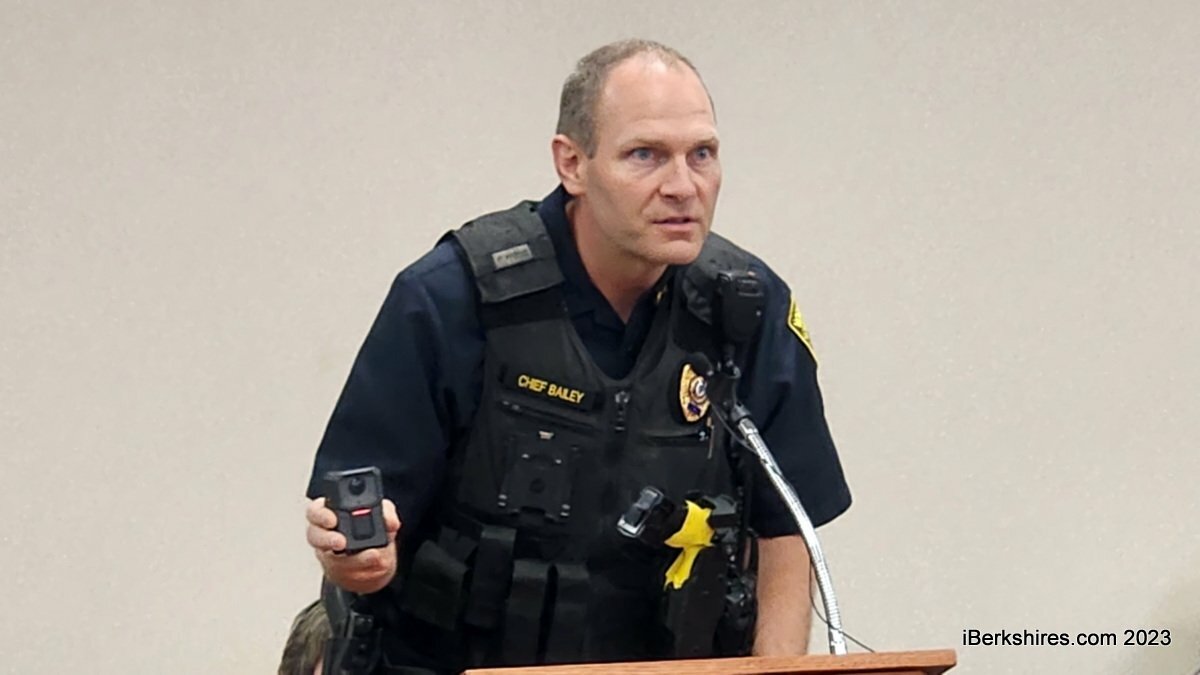
NORTH ADAMS, Mass. — The Police Department's new body cameras are already proving beneficial to the force, interim Police Chief Mark Bailey told the City Council on Tuesday.
"There's two instances that come to mind that officers were completely exonerated for citizen complaints," Baily said. "We can review the body camera very quickly and we can show the citizen who is initiating the complaint what actually happened and it doesn't lead to an internal investigation."
The cameras also cause a "civilizing effect" for both officers and citizens to be on their best behavior, he said, referring to studies done by the city of Rialto, Calif. "With the body-worn cameras, it's been shown that we have, like I said, lower citizen complaints, lower use of force and it's just a better piece of equipment for police officers in general."
The department received a $94,492 grant last October from the Executive Office of Public Safety and the Office of Grants and Research for the body-worn camera program, receiving 29.
The police union wrote a letter of support for the cameras and the pilot program was rolled out in May. All officers began wearing cameras in June.
Bailey said the department has applied for another grant for more cameras for special and retired officers who work details.
"The plan is to make sure everybody who carries a gun has a body camera," he said.
The city is expected to expend a little over $5,000 a year for the software and cloud storage. The videos are uploaded through a docking system to a secure offsite storage facility and are kept for up to a year unless being used as evidence in a case. Bailey said the state statute has a minimum of 180 days.
In answering councilors' questions, he said there are several levels of access. Officers can review their footage except in complaints of use of force. In those cases, they must write out their incident report first before being allowed to review. Supervisors have access for reviewing all recordings but only the chief and the lieutenant have the authority to make deletions, such as if an officer accidentally films a family member.
Officers also have to tell the person they are speaking with that they are being filmed but the subject may, if they are in their home and there are not "exigent circumstances," request not to be filmed. But if they're in public, the officer has the right to film.
Bailey demonstrated how easy it is to operate the camera and said its battery lasts about a full shift.
"It creates evidence that we can use in court so our officers won't have to testify as much if we have that hard evidence to show the jury," he said. "It also saves us money having to go through motions, having to send our officers to court on overtime. And it just saves us time in general to get cases adjudicated faster."
Officers don't have to use pens and paper to take down witness statements, he continued. "I don't have to take them back to the station to have them dictate what had happened. I can get everything that happened right on scene, move on to my next case."
He noted he could also narrate what he's seeing at an accident scene and be more situationally aware instead of concentrating on writing.
"There's different things that the officers can do with this body-worn camera that we haven't been able to do in the past," Bailey said. "And it's like I said, it's just beneficial to us in the long run. It is really helping us out and at very minimal cost to the city."