BCC to Participate in Space Flight Experiment
PITTSFIELD, Mass — Berkshire Community College (BCC) has been selected by the Student Spaceflight Experiments Program (SSEP)'s Mission 18 to participate in a microgravity research
experiment headed to the International Space Station (ISS).
The BCC experiment, which is currently under development, will be announced closer to launch date. The target date for the selection of the Mission 18 flight experiments is Dec. 15, 2023, while the launch is planned for spring or summer 2024.
The SSEP Mission 18 program is supported through a grant from the Massachusetts Space Grant Consortium (MASGC) and the BCC Foundation, a non-profit corporation established to encourage and receive gifts in support of the mission of the College. The Foundation has pledged $19,000 to help fund the project.
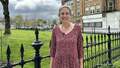
"BCC heartily supports STEM programs like this one, which puts the College at the forefront of scientific experimentation and innovation," said BCC President Ellen Kennedy.
"We are so excited to see what the final project is, and to witness it launch into space. We are grateful to the Commonwealth and to the BCC Foundation for their support of this exciting program."
Experiments will be sent to the ISS via private launch company SpaceX's Dragon 2 spacecraft, which will be launched atop a Falcon 9 rocket during a cargo supply mission.
When the automated rocket reaches the ISS, astronauts will unload a payload box containing student microgravity experiments. The astronauts will follow instructions on how to operate each of these experiments and then send the experiments back down to Earth, where students will compare the results to the control version operated in full gravity.
Each school selected for the project is known as an "SSEP community." One student-designed experiment in each SSEP community is selected to fly to the ISS. The essential question for the design of an experiment is, "What physical, chemical or biological system would I like gravity to be seemingly turned off for a period of time, as a means of assessing the role of gravity in that system?"
BCC students involved in the project are currently submitting final proposals to a BCC review board, which will review them and choose up to three experiments. The top selections will be sent to SSEP, which will conduct the SSEP National Step 2 Review Board. This board will select the flight experiment from each participating community.
The SpaceX Falcon 9 rocket will launch from NASA's Kennedy Space Center in Cape Canaveral, Florida. SSEP students and their families, teachers and community stakeholders will be given the opportunity to attend the launch in person.
About the Student Spaceflight Experiments Program
SSEP immerses students across a community in every facet of authentic scientific research of their own design, using a captivating spaceflight opportunity on the International Space Station. Through scientific inquiry and within real-world constraints, SSEP empowers students as scientists.
SSEP allows students to:
- Design an experiment with real constraints imposed by the experimental apparatus, current knowledge and the environment in which the experiment will be conducted
- Write a formal research proposal requiring critical written communication skills
- Experience a real two-step science proposal review process
- Have their own science conference, a venue where they are immersed in their community of researchers and in which they can communicate their thoughts, ideas and experimental results to their peers
The Student Spaceflight Experiments Program (SSEP) is a program of the National Center for Earth and Space Science Education (NCESSE) in the U.S. and the Arthur C. Clarke Institute for Space Education internationally. It is enabled through a strategic partnership with Nanoracks LLC, which is working with NASA under a Space Act Agreement as part of the utilization of the International Space Station as a national laboratory.
Tags: BCC,