Strong Little Souls Founder Advocates for Pediatric Cancer Research Fund
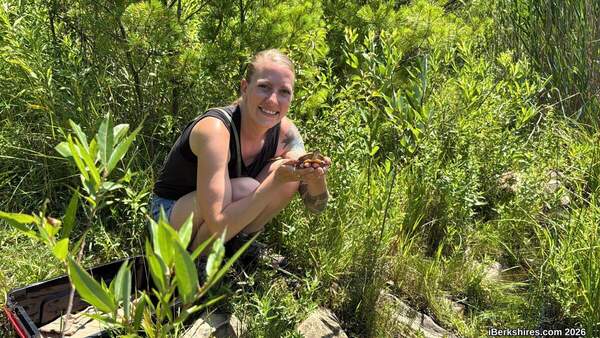
PITTSFIELD, Mass. — Strong Little Souls founder Madison Quinn headed to the State House two weeks ago to advocate for a bill that would provide funding for pediatric cancer research.
"Pediatric cancers are desperately underfunded," said Quinn, now a pediatric nurse.
Quinn was showing support for Bill S.2496 An Act Improving Pediatric Cancer Research at a public hearing of the Joint Committee on Public Health. If voted into law the act would establish a Pediatric Cancer Research and Resource Project Trust Fund.
The committee was hearing testimony on more than a dozen bills.
Also testifying on the need for cancer funding were Kathy and Joseph Arabia of North Adams, founders of the AYJ Fund, which raises money for childhood cancer research and family support.
Although there is federal funding currently, Massachusetts does not fund any pediatric cancer research, Quinn said.
According to the American Childhood Cancer Organization, cancer is the No. 1 cause of death by disease for children in America. Each year an estimated 15,780 children between the ages of birth and 19 are diagnosed with cancer.
The fund would provide grant funding for pediatric cancer research and resource projects in Massachusetts. This would include causes, prevention, education, screening, treatments and cures as well as research on the symptoms and effects patients experience after completing a course of treatment.
Quinn noted in her testimony that many of the treatments were developed decades before and primarily for adults.
"The incident rate of childhood cancers is rising and still the development of new treatments for childhood cancer remain stagnant," she told the lawmakers, and that these "harsh and aggressive treatments" can be as deadly as the disease.
"These treatments leave survivors with lifelong devastating side effects," Quinn continued. "I've seen time and time again children become cancer free just to succumb to the treatments that were supposed to cure them."
Both Quinn and the Arabias noted the state's world-class medical facilities and the importance of Massachusetts taking the lead in pediatric cancer research.
The Pediatric Cancer Resource Project is defined by the bill as a community-based project that aims to improve the lives of pediatric cancer patients by providing educational, informational, and financial resources to help reduce the burden of childhood cancer and its long-term impacts.
Historically only 4 percent of the federal cancer budget is allocated for childhood cancer; the remaining 96 percent has gone to adult cancers.
Although the budget increased to 8 percent last year, the funding allocated for cancer is currently at risk of being reduced, Quinn said.
The reason the federal cancer budget underfunds the pediatric cancer budget is because "they choose to invest in cancers that are more prevalent. They tend to look at that more than the life lost," Quinn said.
When an adult is diagnosed with cancer the average life lost is about seven years but when a child is diagnosed with cancer the average life lost is 70 years, she said, "because these children are just getting diagnosed and passing away so young. So the research is just not there at a federal level."
Tags: cancer,