image description
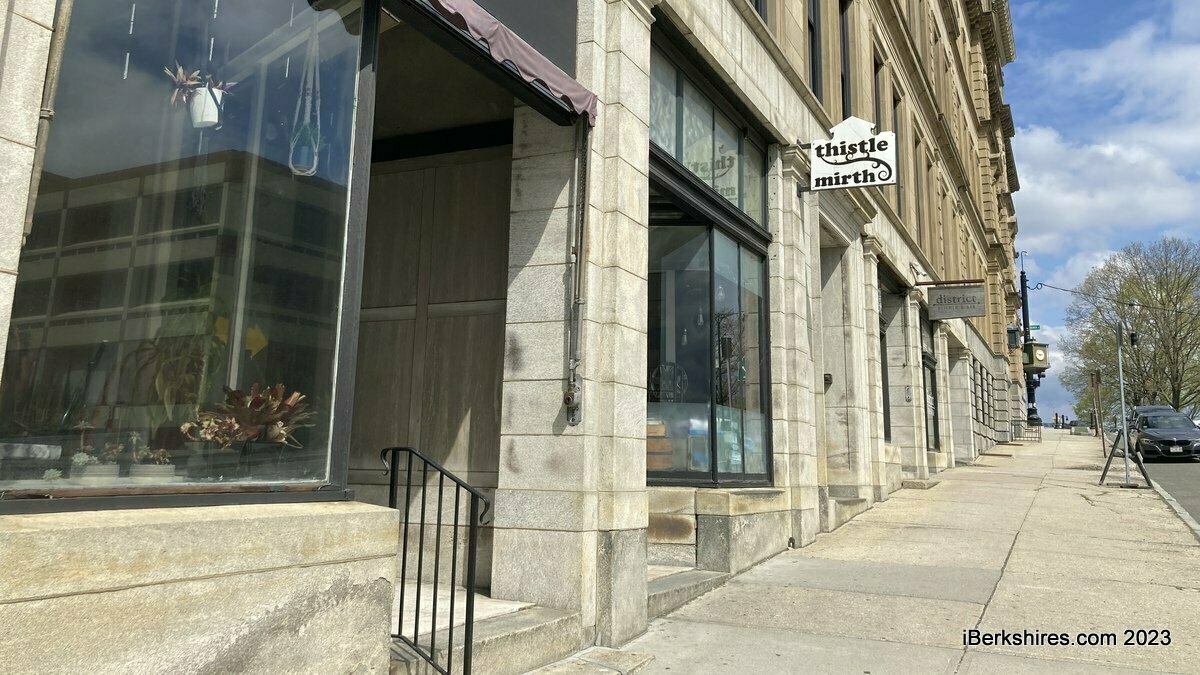
The owners of Thistle & Mirth on West Street are hoping to raise $8,000 from patrons to turn the bar into a pizzeria with 'safe closing hours.'

Thistle & Mirth Turns to Patrons for Help With Pizza Rebranding

By Brittany PolitoiBerkshires Staff
Print Story | Email Story

PITTSFIELD, Mass. — The owners of Thistle and Mirth are fundraising to rebrand to the bar's "nerdy and artsy roots" with the addition of pizza.

An Indiegogo has been launched to raise funds for the revision, rebranding, and reopening of the establishment after a stabbing on Thanksgiving Eve closed its doors. The plan is to reduce the footprint to the "old Mirth," install a pizza oven, emphasize games and artsy community events, focus on well-curated craft beer, and have earlier hours.

"After 13 years, we don't want to give up so easily," owners Joad Bowman and Austin Oliver wrote on social media.

The fundraiser aims to collect $8,000 to support the effort and has raised more than $3,800 so far. The owners have been deep cleaning, repairing, and painting the former bar and ramen restaurant.

"As many of you know we had a violent incident invade our space on November 23, and we made the decision to close our doors due to the rise in criminal activity in Pittsfield nightlife," the fundraiser reads.

"For us, the expansion that COVID forced on us had already taken a toll on our spirits, and the wallets. But we were making progress and had come almost out of the deep end. Until the incident."


Over the following week, Bowman and Oliver decided they could not cut ties with Pittsfield that easily and would try to move past this with a transformed space for the people who have supported Thistle and Mirth in its 13 years of operation.

Last week, Thistle and Mirth's ramen menu was moved to sister eatery Lulu's Tiny Grocery. Lulu's, located inside Crawford Square on North Street, was opened as a breakfast and lunch spot last year.

"Mirth will rise again, but we can't do it alone," the two wrote. "It is only with great reluctance that we are using this channel for fundraising, and are only doing it because of the tremendous circumstances and because we are attaching perks and rewards for those who would like them."

Closing on the busiest day of the year and the time following has reportedly "decimated" the restaurant's accounts and brought them to the brink.  

"We are returning to our nerdy and artsy roots: board games, communal events, safe closing hours….a pizza party!" they wrote.

The fundraiser has multiple levels of giving for larger donations that include a menu item in your name, a keychain, or even a pizza party around the donor's birthday.


Tags: bars, taverns,   business changes,   pizza,   restaurants,   
If you would like to contribute information on this article, contact us at info@iberkshires.com.

Pittsfield Man Creates Device to Clear Lakes of Algae Blooms

By Breanna SteeleiBerkshires Staff

Marc Bellora holds a jar of lake water, left, to compare to water cleaned by his Aqua Clarifier Water System.

PITTSFIELD, Mass. — Marc Bellora has high hopes for a device he's created to treat lakes from harmful algae blooms.

His patented water clarifier can physically remove captured material rather than letting the nutrient-rich material settle back into the lake, which occurs when herbicides are used.

"It's a long-term lake management tool that can be used to reduce legacy nutrients in lakes and ponds over time," he explained. "We built the prototype, this is a prototype. It does approximately 65 to 70 gallons per minute. It's very environmentally friendly. Can be used with air only, or we can use a low-dose potable polyaluminum chloride (PACL) or chemical on board that can help improve results."

The water clarifier barge is based on well-proven technology for water treatment, he said. "It's a self-contained, portable, mobile unit that removes algae blooms, nitrogen, phosphorus, and the associated nitrogen and phosphorus within lakes."

Bellora founded Clear Waterways Group with business partner Mark Simon. They built a prototype mobile unit and are still working out the kinks. It's taken Bellora about five years to bring the project to fruition as he is also a full-time Realtor.

He says the repurposed barge they use has a device that uses air to filter the water to separate harmful bacteria or uses a chemical at low doses. They are testing both to see how well each does at cleaning the water.

"They would do the same thing here, except they would spray it, and it blocks all that stuff together," Bellora said of the use of herbicides. "But then it drops to the bottom. So now all the nutrients that are attached in that plot go to the bottom and contribute to the legacy nutrients only to fuel next year's bloom. Ours removes it."

He said just using air alone has removed 70 to 90 percent of harmful algae where he has been operating on the south end of Pontoosuc Lake.

"Essentially, we take in the bad stuff, we take in the lake water. We separate the good stuff from the bad stuff. Clean water goes back into the lake, and the bad stuff can either be composted, or it can be taken to the wastewater treatment plant, which is what we're doing here," he said. 

Bellora explained that tiny air bubbles attach to particles in the water, making them buoyant so they rise and can be removed. The unit can operate with air alone, or with a low dose of potable polyaluminum chloride.

PACL helps through flocculation: it gathers small particles into larger clumps that are easier for air bubbles to capture. He said this can help remove dissolved nutrients that air alone may not capture as effectively. 

Bellora said he was inspired to build something like this after noticing the lakes he enjoys being shut down because of algae blooms. 

The city issued a health advisory for Pontoosuc in August, warning residents not to swim or come in contact with the lake water because of an algae bloom. The cyanobacteria can cause skin irritations, vomiting and diarrhea and nerve or liver problems. 

Bellora previously worked for a company that used traditional dissolved air flotation (DAF) systems to treat water. In that role, he traveled around the country to work at paper mills and food-processing plants.

That experience gave him a practical understanding of DAF, and while flying between jobs, he would see green ponds and wonder whether the technology could be adapted to treat lakes. 

View Full Story

More Pittsfield Stories