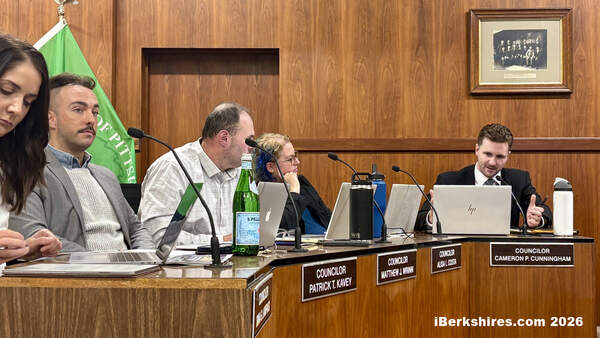
Dalton Select Board Discusses Housing Rehabilitation Fund
DALTON, Mass. — The Select Board started initial discussions surrounding the possibility of implementing a housing rehabilitation fund.
During the two sessions at which this initiative was discussed, it was demonstrated that there are a lot of components that need to be considered to successfully implement a fund like this in a fiscally responsible and effective way.
"It takes a lot to administer a fund, especially if it's public money and you want to make sure it's being used well, and it's being overseen, and people are paying attention to what's going on, and scheduling cleaners, and working with the person, and all of that. It actually takes an awful lot of time," Town Manager Thomas Hutcheson said during last week's Select Board meeting.
This is very early in the process, the goal of presenting it to the board on Monday was to start a conversation surrounding what it would take to actually have a fund like this, that would work, be accountable, and would be useful, Hutcheson said.
He presented two early draft proposals, as a start to think about what would be involved in this effort.
There are currently about a dozen homes that could "easily soon be condemned." Most of these homes are occupied, as opposed to the homes that are abandoned, Hutcheson said.
"[A fund like this] wouldn't really just benefit the person involved, it also benefits their neighbors," Hutcheson said.
"It also benefits their neighbors for a variety of reasons which is sometimes why the health agent gets involved. We have had recent reports from neighbors about rats, for example."
Hutcheson has been working with Health Agent Agnes Witkowski to discuss the details and requirements of the endeavor and discovered this type of initiative would require hiring a social worker.
Hutcheson has not had a chance to "flesh out" what it would mean to have a position like this but Police Chief Deanna Strout is interested in having a social worker who could also work on mental health calls with police.
The Senior Center's Shine and Outreach staff member Patricia "Pattie" Pero also does a lot of social work in a "very practical way" but is not necessarily trained or dedicated to that work, he said, but rather in helping seniors navigate agencies that a social worker would also do.
In regards to the abandoned houses, Select Board member Robert W. Bishop Jr. asked if the town could take them over.
Most of the abandoned homes are in tax title, however, there are now problems with the town actually taking ownership because of a recent Supreme Court decision, regarding a case in Wisconsin, Hutcheson said.
If the town cleans up the property and sells it the town no longer gets to keep the money from selling, it goes to the owner, he said.
"The amount of money we can recoup is still very much in play, there's virtually no case law on it so far, this has happened about a year ago," Hutcheson said.
"I mean changing the locks, yeah that's easy, that's minor, doing a demolition is much more involved."
Witkowski has been trying to help residents in these types of situations but this is not something she is tasked to do or is trained to do. Sometimes a little money can make a difference but the work would require assistance from other staff, Hutcheson said.
"Based on the amount of time that she spent and the amount of time she could have spent with a number of these houses it seems to both of us that she's not only not trained to do it, but it really is taking a toll on her work in general," he said.
According to the proposal, the goals of this fund would be to provide seed money for a revolving fund to help cover the cost of a cleaning, and refer residents to other services as needed.
The town would strive to communicate with residents who are in danger of having their housing condemned. The fund would need to be managed, including filing liens for nonpayment,
The funds would help residents cover the cost of repairs and cleaning needed to improve the existing housing conditions enough to qualify for Community Development Block Grant housing rehabilitation assistance.
Hiring a social worker sounds like a long-term goal because there are a lot of stakeholders involved in that, Select Board member Marc Strout said.
Strout was not opposed to allocating $20,000 for a fund, since the town has the free cash.
Administering the fund would take a tremendous amount of work and the town does have anyone in a position to do that, Hutcheson said.
According to the proposal, to administer the fund, the town would also need to establish and implement policies for selecting applicants and repaying loans, pay vendors, track loans, consult with town counsel, and file liens as needed.
"And she really believes that it would require another assistance from some other staff and that was one of the ways that the idea of some kind of social worker came into the discussion," Hutcheson said.
Strout noted that the town could allocate the money now and have it sit there until someone can be hired to take on the role of administering the fund.
Hutcheson agreed and said funding it in this way would also provide some momentum to the initiative.
One of the proposals included the possibility of re-organizing 500-Series Account Departments, which is "one of the basic categories the Department of Revenue uses to analyze municipal spending."
"Relevant Dalton accounts include the Health Agent and Board of Health; the Public Health Nurse service for which we have a contract with BRPC; the Council on Aging and Senior Center expenses; the Veterans’ Agent, for whom we have a contract with the City of North Adams; and it is also where our BRPC technical assistance is located," the proposal reads.
This would mean designating a health and human services director. Hutcheson recommended, in the proposal, that this director be the Senior Center director. This would require a pay raise due to the additional responsibilities of managing the health agent and veterans agent.
In addition to that, Hutcheson recommends in the proposal hiring "an additional staff member, a social worker whose job would be to assist seniors; veterans outside of the Veterans’ Agent’s sphere of responsibility; those who are having problems with their housing; and residents who need social services but are not able to get such services on their own."
A midyear hiring is not completely out of the question but there are a lot of moving parts surrounding the initiative, especially when taking into consideration re-organizing 500-Series Account Departments, Hutcheson said.
Vice Chair Dan Esko recommended Hutcheson continue to flesh out the proposals and that they consider money articles for the town meeting warrant in May. This will likely come up as a future Select Board agenda item.
Background:
The prospect of establishing a fund like this was pitched by Chair Joseph Diver in October after reading of the circumstances surrounding the Board of Health's decision to condemn, vacate and secure 96 Anthony Road.
Since this decision, the board has had to take the homeowners to land court due to the condition of the home.
Although at the time, Diver felt the actions the Board of Health took were "reasonable," he wondered whether there is more the town can do to help residents struggling in the face of these circumstances. Diver was not present at last Monday night's meeting.
During a previous meeting, Witkowski said, in cases where a home needs to be brought back up to safety standards due to hoarding or other mental health disorders, cognitive therapy may be needed to correct the behavior and prevent the situation from repeating.
It's a complex issue because there are a variety of organizations that could potentially be involved in the condemnation process depending on the circumstances including protective services, Elder Services, police, fire, among others, Witkowski said.
Based on her experience when approaching cases similar to these instances, Witkowski said there are a lot of components involved in resolving the issue including a mental, financial, and familial.
Then there is the financial component — it can sometimes cost thousands of dollars to bring a house back up to code and make the conditions livable. That can be overwhelming for the occupants and hinder any progress they are attempting to make.
The type of family dynamic also needs to be considered because the resident may not have the support service to help them if they are estranged from their families, she said.
This was further demonstrated by Hutcheson during last week's meeting.
"You heard [from Witkowski] earlier, the housing stuff is kind of burning her out because, she's asking for somebody else specifically to help just with the inspections, let alone the work to try to keep a house from getting condemned or keep somebody from being evicted as a result of it being condemned because it's never a good time to get evicted," Hutcheson said.
"And mostly we're talking about people who are elderly and not really able to do a lot for themselves and sometimes they have family who are willing to help, sometimes they have family who have their own interests in mind, sometimes they have only farflung family," he said.
Tags: Housing program,