Dalton Talks Fund for Occupants of Condemned Houses
DALTON, Mass. — The Select Board approved exploring the development of a program that aids residents facing condemnation during its meeting on Monday.
Town Manager Thomas Hutcheson will be collaborating with Health Agent Agnes Witkowski and the Board of Health to discuss the details and requirements of the endeavor.
Select Board Chair Joseph Diver presented the idea to the board after reading of the circumstances surrounding the Board of Health's decision to condemn, vacate and secure 96 Anthony Road.
The action that the Board of Health took is all reasonable, Diver said, but it begs the question whether there is more the town can do to help residents struggling and in the face of these circumstances.
"As a country we're spending a ton of money on migration and things like that but yet we're kicking people out of their homes because of the conditions in the homes," Diver said.
There is a lot to consider when approaching establishing a program like this because each circumstance is different, Witkowski said.
There are a lot of organizations and resources that residents can reach out to and the Board of Health tries to work with residents to meet safety standards but at the end of the day it is up to them to utilize these resources, she said.
When looking at situations like this, Witkowski always thinks about ways the community can be better, and the different ways of approaching the situation.
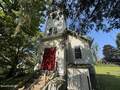
The town has condemned three houses — 96 Anthony Road, 77 High St. and 463 High St.
The Board of Health recently condemned the Anthony Road home because the owners were unable to
Clean the home enough to meet safety requirements.
The 1950s single-family home at 77 High St. was condemned last fall after the building department determined it was unsafe because of collapsed flooring in certain areas.
The home's oil tank needs to be removed and the asbestos survey needs to be submitted to the contractor. Once the oil tank is removed the homeowner will need to reach out to the Fire Department.
The single-family home, located at 463 High St., has long-standing code violations that pose a serious risk to public health and is a safety hazard.
It was last reported that the receiver of the property intended to back out because they did not want to lose money from the demolition. Since then the property has been sold and the owner is repairing the home.
Based on her experience when approaching cases similar to these instances, Witkowski said there are a lot of components involved in resolving the issue including a mental, financial, and familial.
In cases where a home needs to be brought back up to safety standards due to hoarding or other mental health disorders, cognitive therapy may be needed to correct the behavior and prevent the situation from repeating, she said.
The type of family dynamic also needs to be considered because the resident may not have the support service to help them if they are estranged from their families, she said.
Then there is the financial component — it can sometimes cost thousands of dollars to bring a house back up to code and make the conditions livable. That can be overwhelming for the occupants and hinder any progress they are attempting to make.
Witkowski also reaches out to other health inspectors and enrolled in a six-hour class on hoarding at Boston University.
It's a complex issue because there are a variety of organizations that could potentially be involved in the condemnation process depending on the circumstances including protective services, Elder Services, police, fire, among others, Witkowski said.
There are grants available but they are limited so may not cover all of the cost and the town does not have control over it.
Although a fund to aid individuals is complicated it sounds like a great idea, Witkowski said. It provides the town more tools to support them.
Although multiple board members supported creating a fund to help residents faced with similar circumstances they agreed it needed to be done in a way that would protect the town.
Officials may want to be compassionate, but the owner's have a lot of equity so how can the town aid these types of circumstances while also protecting itself, Select Board member John Boyle asked.
It may take some creativity like adding a stipulation that any funds granted eventually be reimbursed, he said.
It is unclear what mechanism would be used to reimburse the funds. The Board of Health will think through the best model and structure that would work best for this type of fund in collaboration with Hutcheson in preparation for the next town meeting.
Tags: condemned,