image description
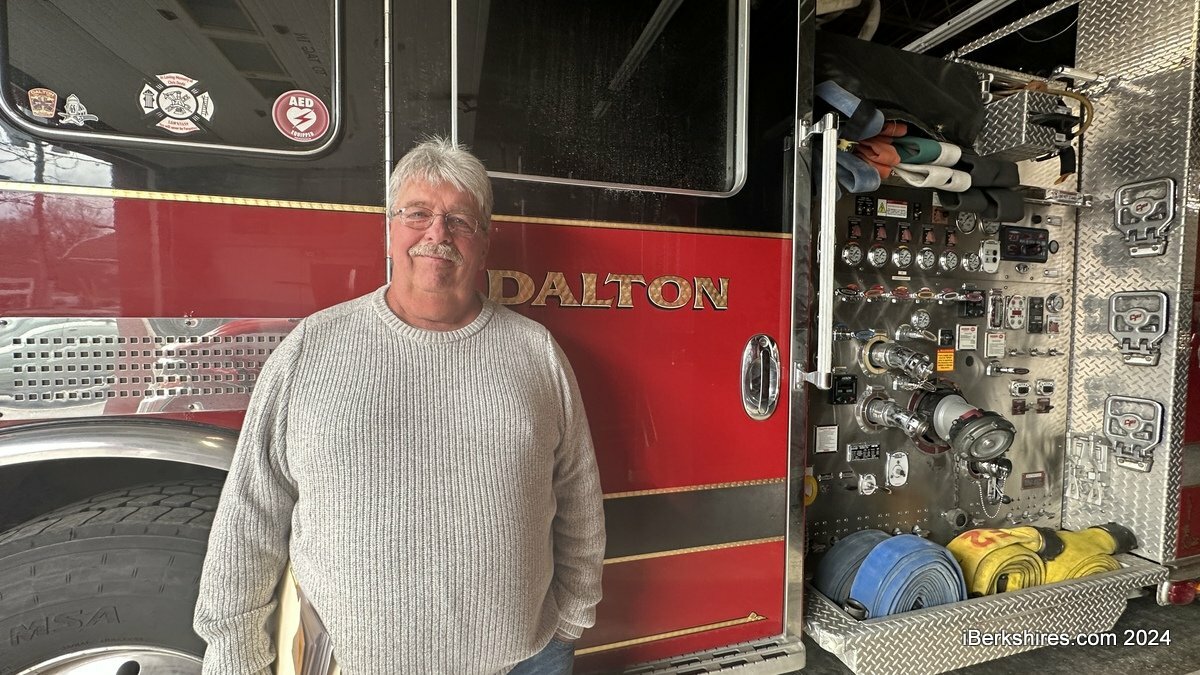
Michael Kubicki has been serving on the Dalton Board of Water Commissioners since 2009 and is seeking a sixth three-year term.

Water Commissioner Incumbent Talks Priorities If Re-elected

By Sabrina DammsiBerkshires Staff
Print Story | Email Story
DALTON, Mass. — Michael Kubicki says his priorities if re-elected to the Board of Water Commissioners are to ensure the fire and life safety of the Fire District and make sure the district goes in the direction the members want. 
 
Kubicki has been serving on the board since 2009 and is seeking a sixth three-year term. He is being challenged by former firefighter Ken Sagendorf in the May 14 election. 
 
He said he has seen many changes and tribulations, including the hiring of a new fire chief, the Fire District assuming responsibility for the ambulance, and navigating a pandemic. 
 
He emphasized the need to ensure the district is funded properly with a little bit of excess so it can rebuild its free cash and set aside money for future needs or capital items, such as vehicle replacements. 
 
Over the last few years, the district has been stringently budgeting to take the burden of the taxpayers during the pandemic and was using free cash to cover shortfalls. The commissioners say the proposed fiscal 2025 budget will more adequately cover costs. 
 
"We know what we need to operate. We assume we have, based off of the calls we have. As those calls go up, it costs us more to provide that service. So, we've got a little bit of flexibility in that budget for that," Kubicki said. 
 
If the district can find ways to save money to come in under budget, it can put that money back into stabilization and free cash for the major purchases it needs to subsidize, he said.
 
The district cannot cover the full cost of the major purchases but having stabilization and free cash would allow it to make a down payment to help defray some loan payments, Kubicki said. 
 
Kubicki was a maintenance manager at Crane & Co. for 25 years, which he said gave him extensive experience developing budgets for multi-trade maintenance departments, similar to what he helps do on the board.   
 
One of the biggest issues the district is facing is the reimbursements for ambulance services.
 
"They kind of balk at what the cost is for an ambulance, but they certainly don't walk when they need it," Kubicki said. "So, financing the ambulance and then staying after the insurance companies and Medicare to make sure that we get the payment that is due to us for the service we provide."
 
One of the things the district is considering is sharing the cost of ambulance services with surrounding communities that call upon its services.
 
"I think [the surrounding communities] understand that, too, that they can't staff an ambulance. So, they're depending on us to be there when they need help. So, start, maybe you start sharing some of that costs," Kubicki said. 
 
Kubicki agrees with pursuing legal action against the company that failed to complete the fire truck order to regain some of the money it lost from the down payment. He said the negotiations were bad from the start. 
 
There were complaints last year about a lack of communication within the Fire Department and Fire District. Communication can always be improved, said Kubicki, adding the district has already taken the steps to do so under the direction of its new Fire Chief Christian Tobin, Kubicki said. 
 
"We've made some really great progress in establishing policies and procedures," he said. "The number of our calls is going up, and our response time to the calls is appropriate."
 
The district also has to find a way to present the information to the district's voters, whether through the Internet, print, its website, or social media, he said. 
 
"We've got to use all of our options to get information to people so that they can get the information in the method that they like it," Kubicki said. 
 
Tobin has had a lot of great ideas, such as an outreach program with the schools, and informational meetings, he said, and there was a meeting for seniors at the American Legion and another one planned at the Senior Center in a couple of weeks.
 
The district also intends to have someone at town events to improve its connection with the community, Kubicki said. 
 
"I don't talk much about the Water Department because that's a department that basically runs itself. It's very well managed. There's not a whole lot of oversight that has to happen with the Water Department," he said. 
 
"So right now, the area that needs the most attention is fire and ambulance because we've gone through quite a changeover in the management of the Fire Department and then also assuming the responsibilities of the ambulance."
 
The Fire District will hold its annual election on Tuesday, May 14, from 8 a.m. to 7 p.m. at the fire station. Offices up for election are one member of the Board of Water Commissioners for three years; one member of the Prudential Committee for three years; and one moderator and one auditor, each for one year. 


Tags: election 2024,   town elections,   


If you would like to contribute information on this article, contact us at info@iberkshires.com.

Dalton Planners Hold Public Hearing on Tiny Homes Bylaw

By Breanna SteeleiBerkshires Staff

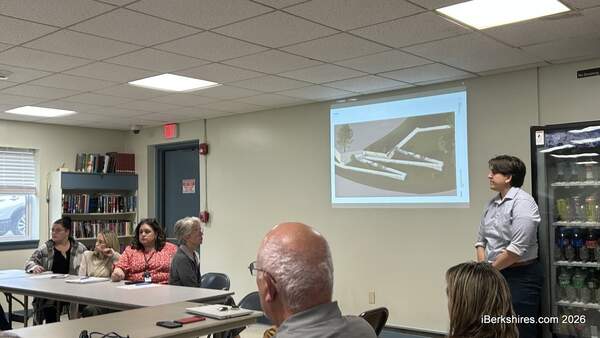
DALTON, Mass. — The Planning Board held a public hearing last week on a bylaw for mobile accessory dwelling units (ADU) that will be brought before a special town meeting.

For nearly two years, Amy Turnbull has been trying to amend the current ADU bylaws to allow mobile tiny homes.  

A movable tiny home is defined as a unit under 400 square feet that meets all of someone's daily needs, including sanitation, cooking, and other facilities, and which is also mobile. Most homes considered "tiny" are built on a trailer so they can be towed.

Her proposal defines a movable tiny house as a "residential property with an existing primary house, intended for year-round living," and outlines eight conditions for approval.

Among these conditions: the unit must adhere to accessory dwelling unit regulations, undergo site plan review, be licensed and registered with the state Registry of Motor Vehicles, have approved energy, water, and wastewater systems, and comply with American National Standards Institute 119.5 and National Fire Protection Association 1192 safety requirements.

Additionally, the unit must be certified for ANSI or NFPA compliance by a manufacturer or third-party inspector, including adherence to Appendix Q and the International Residential Code's structural guidelines and energy efficiency standards. The tiny house cannot move under its own power, and its undercarriage, wheels, axles, tongue, and hitch must be concealed from view. Wheels and leveling or support jacks are required to rest on a level gravel or paved surface.

Turnbull has gotten enough signatures for her petition to amend the current bylaws to add her definition of the mobile ADUs. Last Wednesday, the board held a public hearing on the petitions, which will be voted on at a special meeting.

Turnbull says she has two reasons for wanting to add this to the town's bylaws: aging in place and affordable housing.

"We need a variety of housing types in Dalton, and that we also need to address the idea that you know nearly 30 percent of our population by 2035 is going to be over 65 years old, and it's problematic because  ... there's not enough choice for these people to to age in place,"she said. "What movable tiny houses does, is it provides a less restrictive ADU. It's much cheaper to place, and it's easier to place, less time consuming. And what it offers to people is it offers people who are owners a place for their children to come and live, or a caregiver to come and live, or for the people who own their own house to come and live while they rent out their maybe their three bedroom home to a new family who wants to attend to Craneville simultaneously."

She said people need to move away from calling and treating the tiny homes as though they are trailers, as one former Planning Board member has voiced opinions on.

"That is an opinion, and I think we need to get over that, because I want to say that these are foundation homes, and that the chassis is a foundation, and it's a stick-built home on a chassis, and in very many ways it's like a modular house. I think we will not be surprised in the next 10 years if we see the market turn around and start to make smaller, tiny modular homes, but that is not the case right now, and we have a dire need for affordable housing," she said.

At a former Fire District meeting the Water Department drafted regulations for water hook-ups for these types of homes. The superintendent sent a letter to the Planning Board to be read at the meeting stating it will not be a hindrance for sewer system connection.

"The Department of Public Works does not feel that mobile ADUs will be an issue with the town sewer system. The homeowners will be responsible for any issues outside of the sewer main and connect and responsible for connecting in, so that would address any permits, fees, or anything like that would be added to that," the letter states. 

"The Water Department, as we've stated previous, and as you stated, the water department has come up with their own set of SOPs, standard operating procedures, for hooking up a an adu and a mobile adu, which will then have to meet winterization and all those, but they've laid out a plan for that, that they have, so I'd like to point that out," board Chair Robert Collins said.

One concern was raised that if someone can have a mobile ADU could they also have another tiny home on their property, including the main house. That situation is not likely, said Turnbull, as it would cost a considerable amount of money. Town Manager Eric Anderson also stated that in his former community when they adopted similar laws their first one wasn’t put in until a couple years later and then maybe one a year.

View Full Story

More Pittsfield Stories