Geothermal System Recommended for New Greylock School
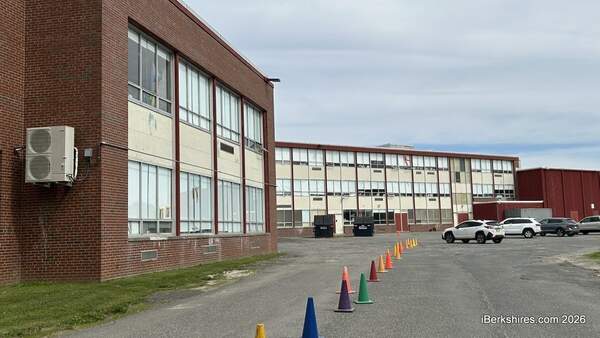
NORTH ADAMS, Mass. — The new Greylock School may get a geothermal system that could significantly reduce operating costs in the years to come.
Jessie Saylor of the project's designer, TSKP Studios, updated the School Building Committee on Tuesday of some of the working group's findings regarding energy efficiencies.
Installing a geothermal system, which uses water heated by the earth, is estimated at $2.7 million. But, system could be largely offset by some $2.4 million in federal funding from the Inflation Reduction Act.
"The IRA definition of geothermal systems is broad," said Saylor. "It includes incentives for the pumps in the wells, but it also includes reimbursement for the mechanical system that the pumps and wells support."
The federal funding would not affect the reimbursement from the Massachusetts School Building Authority, which reduces its share when some types outside grant funding are used for building projects. This exemption also includes Mass Save energy rebates for all-electric that could be applied to the project.
"Geothermal makes our buildings more energy efficient, and thereby, we'll receive some amount of Mass Saves additional rebates and I think we've been pretty conservative here at $100,000 really, maybe more," Saylor said.
"We ended up with a net cost for the geothermal of $200,000, which I think the workgroup felt was was really quite good."
Rough estimates put the cost savings at $50,000 a year, meaning the system would pay for itself in four years and the city would begin to benefit financially.
Some committee members questioned the lifespan and ability for it to be maintained in the future. While a closed loop system, the designers estimated the pumps and some equipment would probably last about 20 years.
"We did determine that there is a workforce that could support geothermal and or solar down the road if we phase that in," said committee member Benjamin Lamb, who also attended the working group. "And I think that that was a really important hurdle for us to acknowledge that we weren't sticking ourselves with technology that is too novel or wouldn't have the workforce available to keep it up."
Robert Flaherty, director of facilities for the schools, said the proposed system is similar to what was installed at Colegrove Park Elementary nearly a decade ago.
That system has had issues because some elements were "plumbed backwards," he said, and the transition from heating to air conditioning has to be manually done. The Greylock one "pretty much runs by itself."
"With Colegrove, we've got most of the bugs run out. So it's running about efficiently as it can," Flaherty said.
The working group was not as confident about using photovoltaic power because of the upfront costs and longer rate of return.
Initial estimates are $1.8 million to place 1,000 solar panels on the school roof; of that, the IRA would cover about $400,000. The payback would be $100,000 over 12 years.
It was recommended that the roof "solar ready" so panels could be installed at some point in the future.
In addition to the Mass Save program, the project can also get up to an extra 4 percent reimbursement from the MSBA for attaining energy efficiency and sustainability. All schools must attain LEED (Leadership in Energy and Environmental Design) silver certification; projects that higher opt-in standards and certain on indoor air quality are eligible for the extra points.
"It looks like the project is well on its way to being LEED silver certified," said Saylor.
This working group also looked the potential of the school becoming an emergency shelter but the Federal Emergency Management Agency standards would add more than a million dollars to the project. The building would have be hardened against meet tornado and seismic events, its windows would have to withstand missle impact and it would have to have storage capacity for water and waste.
"The direction was to continue with the project just seeing a warming and cooling condition and not pick up these FEMA requirements to be in emergency shelter," said Saylor.
Also in the plans is moving the ballfield at Greylock to Noel Field Athletic Complex on State Street because the cost of renovating the field was more than putting in pickle and basketball courts.
"We're able to add on the Greylock site a basketball court for the community and a pickleball court as well as the providing the Appalachian Trail kiosk which has always been in the project," said Saylor. "We thought that was a win win, the community gained some amenities and saves a little bit of money in the process."
Mayor Jennifer Macksey noted that discussions about moving the field had been ongoing for years.
"I did approach the Cal Ripken League and we about the possible move and they are very enthusiastic about moving to Noel field as well as our staff that maintains the field," said the mayor. "And I think it was Mr. [Richard] Alcombright who said that years ago, that was the plan for Little League or Cal Ripken, as we call it now."
The committee also heard a pitch from Joe DiPasquale of Audio Enhancement of Utah about an audio system that enhances teachers' classroom speaking, particularly for students who have hearing issues.
It is can be part of an integrated system that includes intercom, cameras, schoolwide announcements, door security, alerts and individualized communications within the school. This presentation was around the school's plans for universal design.
Saylor said the the design has planned for microphones for teachers and speakers within the classroom. He thought trying to go with a specific company could be difficult because of the state's public procurement process "because proprietary specifications are difficult." The more typical approach would be to seek similar or same functionality from multiple manufacturers.
He also noted that the current approach to the project has been for a general contractor rather than a construction manager at risk and estimates are being based on that.
"We see the alternative as being a more expensive approach. Our cost estimates from feasibility study carried an 8 percent premium to use a construction manager," he said. "We see it as a significant cost without significant benefit in this case."
Matthew Sturz of owner's project manager Colliers International said the project remains on budget and that the schematic design will be submitted to the MSBA on May 2 for an expected positive vote by the MSBA board on June 26 for project scope and budget agreement authorizations. The City Council will hold a debt-exclusion vote in August.
Tags: brayton/greylock project, school building committee,