Williamstown Select Board Votes Down Gaza Ceasefire Resolution
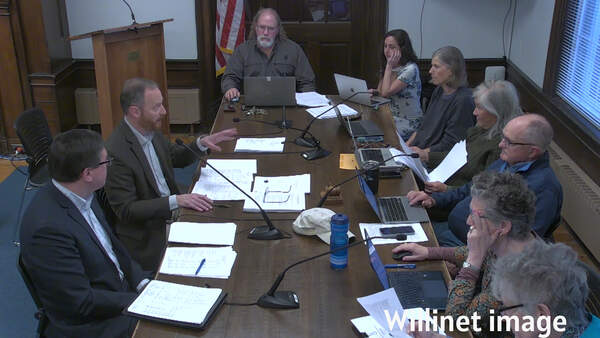
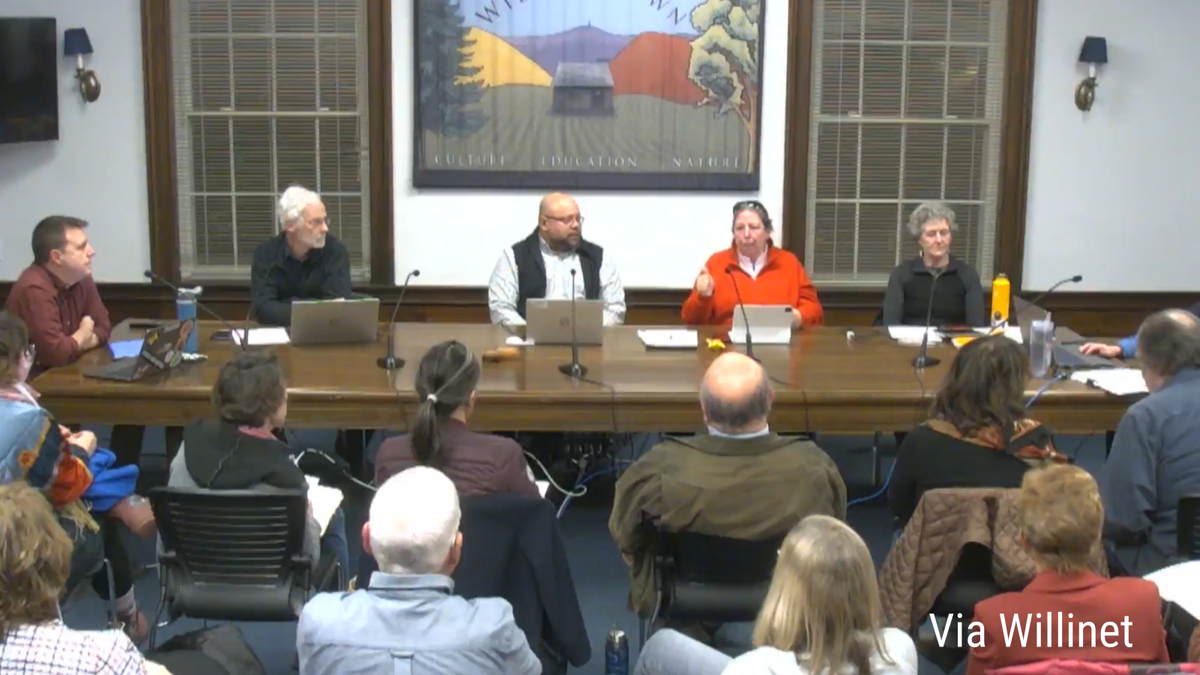
WILLIAMSTOWN. Mass. — The Select Board on Monday voted, 4-1, not to adopt a resolution calling for a ceasefire in Gaza.
After several weeks of passionate testimony on both sides of the question at board meetings and countless hours of conversations in town and online, the decision for several members came down to a basic principle: It is not the job of the board to speak for the town on complex, politically divisive issues like the conflict between Israel and Hamas.
Andrew Hogeland, one of the longer-tenured members of the board who has been associated with the concept that the elected body should "stay in its lane" and not take sides on issues outside town governance, on Monday noted that the months-long discussion of the resolution, "is not something that can be reduced to the phrase, 'stay in your lane.'"
Like his colleagues, Hogeland said he has lost sleep on the question and read the hundreds of emails on both sides that have flooded the Select Board members' inboxes over the last few weeks. And after much deliberation that challenged his own beliefs about the Select Board's role, Hogeland returned to the principle that has guided him in the past.
"It's a deeper philosophy about governance, about being mindful that there are limits to our duties and not letting our natural urges to be expansive in what our job is get out of hand," Hogeland said. "This table is not a pulpit. No one elected us to opine on Mideast politics, military strategy or the terms of prisoner exchanges."
Hogeland said it would be presumptuous of the board to think that a majority of its members, just three people, could make pronouncements that claim to be speaking "for the town" on an issue like the war in Gaza.
"I would also say to the petitioners and all of us to think about the principle and precedent you want to establish," he said. "Please think about the consequence of giving three volunteers in town government with no particular expertise in the subject matter the power to issue declarations on whatever global or national controversy may come up.
"Future Select Boards may issue declarations based on their political views that are completely opposite of what you believe, and they might presume to speak for the entire town in which you live."
Randal Fippinger, who voted in the minority of a 4-1 vote not to adopt the resolution, said he appreciated Hogeland's perspective but said that people in town and in other communities were watching the board's deliberation and looking to see how it would act.
"Whether we vote to adopt a resolution or vote not to adopt a resolution, both of those are active choices," Fippinger said. "It's not neutral to say, 'No,' to this.
"Many folks who want us to make a resolution are members of communities who have been asked to hold, been asked to wait and told, 'We'll come to you, we'll get to you, we'll support you.' And many of those folks in those communities are tired of waiting. They'd like us to do something. They'd like us to make a statement."
Jeffrey Johnson and Jane Patton joined Hogeland in arguing that the resolution on the table was not in the board's purview.
Johnson, the board's chair, said he looked at successful ceasefire resolutions passed at the municipal level in the commonwealth and found a common element: All were passed by city councils.
And that was a crucial difference, Johnson said.
"When you have a city council form of government, that [council member] becomes your vote," Johnson said. "We don't have that here. We have an open town meeting.
"When I look at this right now, it's beyond the scope [of the Select Board], no matter how much, emotionally, I want it to be [in the board's purview]. If we were a city council, I'd be voting for this in a second."
Patton, the longest serving member of the board, said the ceasefire resolution is the thorniest issue to come up in what has often been a tumultuous tenure on the body.
"I shared with some folks today that I received an email to my personal email address — it was done in a way that's not trackable — where I was called a Nazi," Patton said. "That's hard to hear. But it's nothing compared to what is happening to people [in the Middle East]. I recognize that that's part of sitting at this table. It's not ideal."
Patton was not the only member of the board to express disappointment that the ceasefire resolution proponents did not follow the board's advice and bring the question to May's annual town meeting, where all registered voters would be eligible to cast their vote.
"We are not qualified to make this decision and statement for every single person in this town," Patton said. "We are not qualified. We are not authorized. … I looked and looked and looked for a town with open town meeting that has done this [at the select board level].
"It hasn't happened."
Stephanie Boyd, who ultimately voted against adopting the resolution as drafted, disagreed that any resolution on the war in Gaza was outside the Select Board's purview.
"I don't think there's any way I'd say I'm speaking for everyone in our community," Boyd said. "There is no way to get everybody to agree.
"We're the supposed leaders. You elected us to sit at this table, so we have to do our best. I'm willing to entertain some sort of resolution."
And, later, Boyd read aloud a resolution she drafted that included the following language:
"[T]he Williamstown Select Board expresses its support for the immediate release of all hostages in a bilateral, negotiated and sustained ceasefire in an effort to bring permanent peace to the region along with provision of urgently needed supply of humanitarian aid to the civilians of Gaza.
"Be it further resolved that the Williamstown Select Board stands against bigotry in all forms and all xenophobic rhetoric and attacks and calls on all Williamstown residents to respect the rights of freedom of speech and peaceful protest and to strive to treat one another with empathy, grace and understanding."
Boyd, who was out of the country for the last couple of board meetings, said she developed her alternate language based on her conversations with constituents since returning to town.
"What I heard from our community is we just want people to ask for peace, and we want to treat each other well in our town," Boyd said. "That's what I tried to express."
Later, she added, "I think we, as a board, should be able to say, 'We're sort of against people killing each other.' "
Before the vote to not adopt the resolution submitted to the board by residents, Fippinger asked if the board had the ability to draft its own resolution to send to town meeting. Hogeland agreed that the board could do so but indicated he would be disinclined to vote in favor of such a move.
The board is scheduled to finalize the town meeting warrant at its April 8 meeting.
Tags: resolution,