It's a hard lesson, almost counter intuitive, that development does not necessarily mean a net increase in a town's tax revenue. On the contrary, as numerous studies have shown, residential development generally increases the tax rate for a community, whereas farm and forested land pay in more than they require in services.
    The overly simplified answer as to why that should be so is "schools." Unlike a multi-house development that might be built on a former farm, the farm itself sends only one family's worth of children to school and a forest, none.
    So it goes with other demands on town services, such as roads, sewers, water, fire and police protection. With a housing development, the expenses simply rise faster than the income from property taxes.
    That is why, together with all the other attributes open space provides, it is fair to tax it at a lower rate, as happens in Massachusetts through the Chapter 61 programs for forest, farm and recreational land - provided the owner applies and is accepted into the program.
    The development of second homes might appear to be an exception, since presumably people only here for vacations don't require full town services. Yet that is only partially true. In some instances, second home owners are far more demanding of services than full-time residents. Perhaps they want the gravel road on which they live paved or they demand more police protection for their unoccupied homes.
    But the main reason that second homes fail as a cash cow is that they eventually become year around homes, with school children to serve. Simply consider the history of second homes in Berkshire County, whether located on lakes or by ski areas. Often they must be substantially altered, but permanent residences they become. There are no legal impediments to second homes built now following the same course.
    Short term vs. long term
    As "Community Choices," The Trust for Public Land's 1999 study of tax and land conservation in Massachusetts, points out, short-term land protection can reduce the tax base and result in a tax increase. If a non-taxable land trust, for example, buys a large hunk of land, that can adversely affect a town's tax rate - especially if the land was not already in a tax reduction program.
    Long term, however, the evidence is that such conservation improves a town's tax position.
    Even short range, the increase is likely to be small. Lee is one of seven communities across the state which the Trust for Public Land uses as an example of what would happen if property worth $500,000 were acquired by a group that would neither pay taxes on it nor make payments in lieu of taxes. The immediate effect in Lee would be a $2.29 total increase on the average property tax bill. If the state bought the land and made payments in lieu of taxes at its present rate, the average annual property tax bill would go up by only $1.11.
    These calculations do not consider the likely outcome that the private land nearby the protected land would increase in value. Thus, although the average in town would go up, the amount might be redistributed, with non-adjacent residents' bills staying steady or even decreasing.
    An increase could of course be painful to people who want to continue to live next to the protected land. On the other hand, assuming the assessment process is based on what people would be willing to pay for that property, the land is worth more - and so therefore are its owners.
    Arguments that land conservation is unjust to longtime residents because the value of adjacent lots, or even the entire community, rises should be directed not at conservation but at the use of the property tax to meet a community's expenses. James Caffrey made that argument in a recent letter to the editor of The Eagle: the property tax system may have worked in an agrarian society when someone's worth depended on his amount of land. When wealth has more to do with paper stock than livestock, perhaps local schools and government would more fairly be supported by an income tax.
    Conservation saves
    The way to prove intuitively the proposition that developed land costs towns more than conservation land is to consider who pays higher taxes, those who live in heavily developed areas or those who live in rural areas. People want to move to the country to improve their quality of life and pay less taxes.
    The studies bear this out: areas where there are more acres per capita have lower tax rates. Areas of denser development, with more business and commercial expansion, and with more jobs - have higher tax rates. If it were really true that increasing development lowered tax rates, none of these conditions would obtain.
    Yet even those who have accepted the fact that more residential development drives up taxes still believe that business and commercial development can lower the residential rate. So it can, if taken in isolation. Like forests, stores don't send kids to school.
    Business and industry provide jobs, however, which attract workers, which creates more residential development. The net result, therefore, is often a loss, according to "Community Choices."
    The results could be skewed. If town A had all the businesses and adjacent town B, all the bedrooms, A might theoretically come out ahead. In practice A is likely to inherit a disproportionate share of expensive problems.
    It is usually the more developed communities that have a larger number of low-income residents,who therefore have to pay more and a larger percentage of their income in property taxes than do the better off citizens in town B.
    We would like to think that those communities with the highest tax rates spent the most on their schools. Unfortunately, once again, the high tax communities spend less per pupil than the lower tax towns. In other words, cities tend to spend less on their pupils but nevertheless have higher tax rates.
    The reverse is also true. People who are better able to pay are more willing to spend money on schools and other local services through their town meeting votes. Therefore children from more affluent communities may be receiving a better education in the public schools. Massachusetts has come up with a complicated state aid formula to try to counteract this effect.
    Non-monetary goals
    Contrary to suspicions, protecting one or several parcels usually does not prevent development. It may instead channel it to a location the community finds more suitable. Conservation is not a matter of total acres; it is a matter of strategic acres.
    But the most compelling reasons why a community might want to conserve a parcel are not related to the tax rate or even to fear of the general prospect of development.
    They may be defensive, but specific to a certain parcel. The land to be set aside might have been targeted for an alternative use that offended the community's taste, would threaten existing businesses or decrease the enjoyment of community resources.
    The reasons may be proactive. Conservation of a certain parcel might protect community water supply, assure animal habitat or provide recreational opportunities.
    Or, more generally, a community might feel that it is protecting its economic value by protecting certain parcels that make it attractive to residents and visitors. These parcels are crucial to how the town looks and feels.
If you would like to contribute information on this article, contact us at info@iberkshires.com.
Your Comments
iBerkshires.com welcomes critical, respectful dialogue. Name-calling, personal attacks, libel, slander or foul language is not allowed. All comments are reviewed before posting and will be deleted or edited as necessary.
No Comments
Companion Corner Grey Boy at No Paws Left Behind
By Breanna SteeleiBerkshires Staff
NORTH ADAMS, Mass. — There's a cat No Paws Left Behind still waiting for his forever home.
iBerkshire's Companion Corner is a weekly series spotlighting an animal in our local shelters that is ready to find a home. He was previously highlighted but he now has new information.
Grey Boy is 10 years old and is a gray and white domestic shorthair and was previously highlighted on Companion Corner.
The shelter's Executive Director Noelle Howland introduced us to him and his long journey to be ready for adoption.
"He's been here a couple months. He was a transfer from a rescue in Bennington. They were out of space, so we had taken him in with a few other cats. So he's been here a couple months. He came in with what we believed was a respiratory infection," she said. "So it took us a little bit to get him ready, and then he also needed a dental. So he has nice, clean teeth. He had some teeth removed, and then he has to go back in and have one more dental. So he'll be all ready to go."
It was previously thought that he has feline herpes but he was recently diagnosed with a palette fracture because of how bad his dental disease was, which is what is causing his sneezing. He can now go home with cats, a cat-savvy dog and children.
"He has had two dentals since being with us. Due to the palate fracture he will be sneezy for the rest of his life, not contagious sneezing, but that doesn’t stop him from living a perfectly happy life. He should be on wet food with chunks due to this and since he has had many teeth removed," Howland said.
Grey Boy loves to play with toys and enjoy treats. He would also love to have a window to lounge or bird-watch in.
"He is not afraid of anything. He's very curious, so I'm sure he'd love if you have windows for him to look out of. He still plays, even though he's 10 it does not stop him. So any home would be a good fit for him."
Now that he is ready to be adopted, he is excited. When you walk into the room with him he will rub up against your leg introducing himself and asking to be pet.
"Usually, I would say, when you're walking, he'll bonk into you so he might catch you off guard a little bit. He constantly is rubbing against you," Howland said. "He really, I would say he's lazy when you want him to be, and he's active when you want him to be. He'll play with toys. He's usually lounging away. And then when he comes out he'll play. He loves it. So, very friendly, easy going cat."
He is now perfectly healthy with his dentals all done and veterinary care up to date and is ready to find his forever family.
"I would say the friendliest, easiest cat you could have. He's just, he's just gonna be a little sneezy sometimes, but that doesn't stop him from doing anything," she said.
Grey Boy's adoption fee is sponsored by Rooted in Balance Counseling LLC.
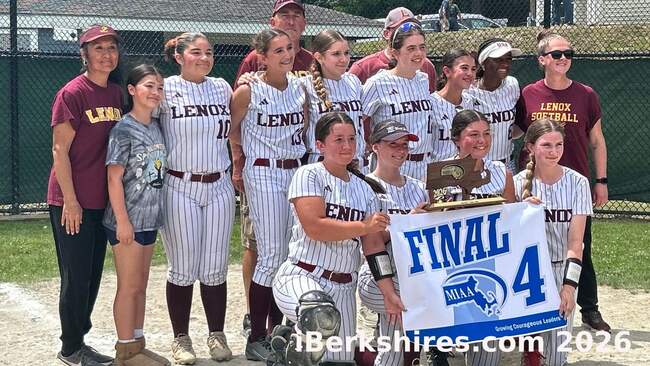
Cassidy Flynn scattered five hits in a complete-game effort in the circle as Lenox upset top-seeded Hoosac Valley, 3-2, in the quarter-finals of the Division 5 State Tournament. click for more
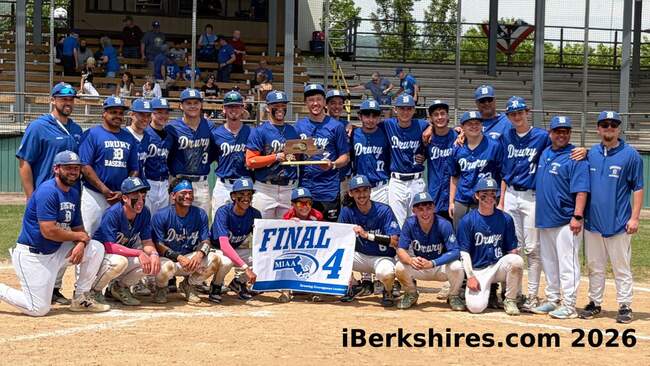
Brayden Durant struck out seven and walked one in a complete-game effort on the mound Saturday to pitch the Drury baseball team to a 6-0 win over Keefe Tech in the quarter-finals of the Division 5 State Tournament at Joe Wolfe Field. click for more