Clark Art Lecture On Native American Burial Mounds
Print Story | Email Story
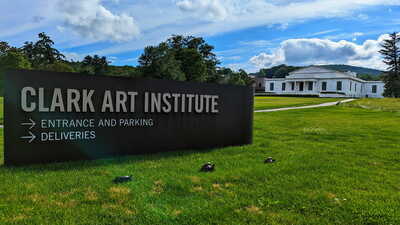
WILLIAMSTOWN, Mass. — On Tuesday, May 7 at 5:30 pm, the Clark Art Institute's Research and Academic Program presents "Putting The Mounds In Perspective," a lecture by Michael Gaudio (University of Minnesota/Clark Professor 2023–2024).
 
In it he explores a much-discussed feature of the nineteenth-century North American landscape: Native American burial mounds. 
 
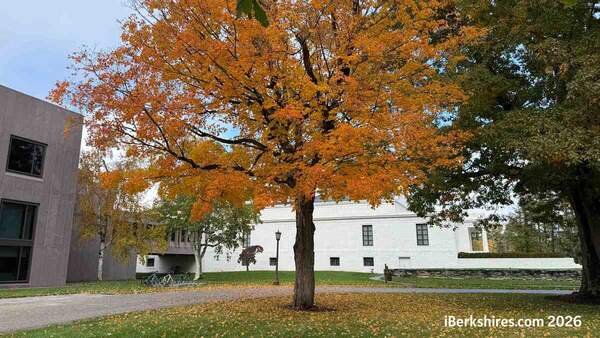
The talk takes place in the Clark's auditorium, located in the Manton Research Center.
 
According to a press release:
 
In 1899, the art historian Alois Riegl declared that the content of modern art, and of landscape painting in particular, was a scientific "mood" in which the chaotic world, seen from a distance, resolves into a sense of perspectival harmony. As elevated points in the landscape, burial mounds were frequently treated as ideal viewing platforms—sites from which to survey and understand the surrounding country—but as objects of a nascent archaeological discipline that placed the Indigenous inhabitants of North America into historical perspective, the mounds proved elusive. Belonging to none of the established categories for historical evaluation, the mounds disrupt the contemplative mood of both landscape art and nineteenth-century academic science.
 
Michael Gaudio is Professor in the Department of Art History at the University of Minnesota. His research interests focus on the intersections of artistic practice, science, religion, and cultural contact in the Atlantic world. He has written on topics including early modern costume studies, early American natural history illustration, and thirteenth-century cartography. He is the author of three books: Engraving the Savage: The New World and Techniques of Civilization (2008), The Bible and the Printed Image in Early Modern England (2017), and Sound, Image, Silence: Art and the Aural Imagination in the Atlantic World (2019).
 
Free. Accessible seats available; for information, call 413 458 0524. A reception at 5 pm in the Manton Research Center reading room precedes the event.

Tags: Clark Art,   
If you would like to contribute information on this article, contact us at info@iberkshires.com.

Mount Greylock Schools Draft Budget Sees Double-Digit Percentage Hikes for Towns

By Stephen DravisiBerkshires Staff
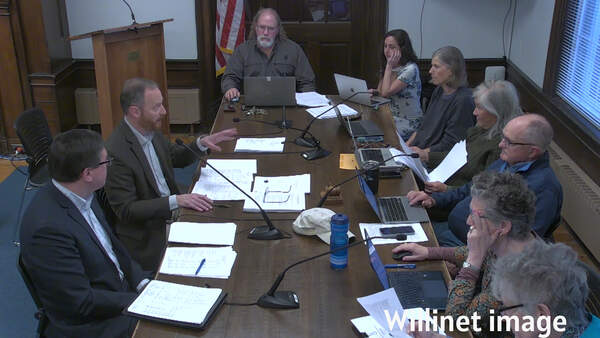
WILLIAMSTOWN, Mass. — The Mount Greylock Regional School Committee on Tuesday began consideration of whether it wants to send its member towns fiscal year 2027 assessments that are 12 to 13 percent higher than the bills Lanesborough and Williamstown paid for the current school year.
 
The committee held a special meeting with a single item on the agenda: the draft FY27 budget prepared by the administration.
 
That spending plan, which comes with no net increase in staffing or services, would result in an 11.73 percent increase in the assessment to Lanesborough (up by $801,742 from FY26) and a 12.71 percent increase to Williamstown (up by $1,883,944).
 
The draft budget could address some of the needs expressed by the school councils in each of the district's three schools. But it does so by reallocating positions in the FY26 budget and without adding any full-time equivalent positions (FTEs), Superintendent Joseph Bergeron told the School Committee.
 
Both Lanesborough Elementary and Williamstown Elementary listed the addition of a math interventionist as one of their top priorities for FY27 in presentations given to the School Committee over the last couple of months.
 
"Both elementary schools have potential paths to gaining math interventionists," Bergeron said. "The increases that you see within what we have here, meaning the 12 and 13 percent increases, those embed with them the ability to gain those math interventionists within the staffing. In order to do that, we would need to move pieces around within schools.
 
"If we wanted to … purely increase FTEs in order to achieve math interventionists at the elementary schools coming in from the outside? Each town's budget would need to increase by about another $100,000, and that equates to increasing each town's percentage [increase] by another .4 to .5 percent."
 
View Full Story

More Williamstown Stories