Williamstown Housing Trust Close to Transfer of Summer Street Lot
WILLIAMSTOWN, Mass. — Work could begin as early as July 7 on a road for a small subdivision on a town-owned parcel off Summer Street.
By that time, the board of the town's Affordable Housing Trust hopes to have transferred the 1.75-acre lot to Northern Berkshire Habitat for Humanity, which plans to build a four-home Meadowlands Subdivision on the site.
On Wednesday, the trustees held the latest in a series of meetings to discuss the deed restriction that will keep those four homes affordable to people making up to 60 80 percent of the area median income.
"We got the good news recently the state has approved our application," Northern Berkshire Habitat board member Laura Gura told the trustees. "That was the big thing we were working on. They were happy with the form of the affordable housing restriciton we all worked on togehter with town counsel."
Gura, a practicing attorney, was the main Habitat representative of the non-profit in a series of conversations with the AHT board throughout the spring.
At its May meeting, the board and Northern Berkshire Habitat for Humanity agreed on a framework for the deed restriction that the non-profit would send to the commonwealth's Executive Office of Housing and Livable Communities
Now that restriction needs to get final sign off from the Select Board, which was scheduled to take up the matter at its Monday, June 23, meeting.
With the deed restriction in place, the closing can proceed on land that the trust first purchased in 2015 with the intent of developing income-restricted housing.
Northern Berkshire Habitat CEO Keith Davis told the trustees on Wednesday that the nonprofit has issued a request for proposals for contractors to build a new road off Summer Street to serve the planned four single-family homes.
"We sent the RFP to five contractors who are already working on contracts on Williamstown roads, Maxymillian, people like that," Davis said. "We should expect all those bids to come in by [June 20]. We know htere is interest, becuase [the contractors] asked a couple of questions."
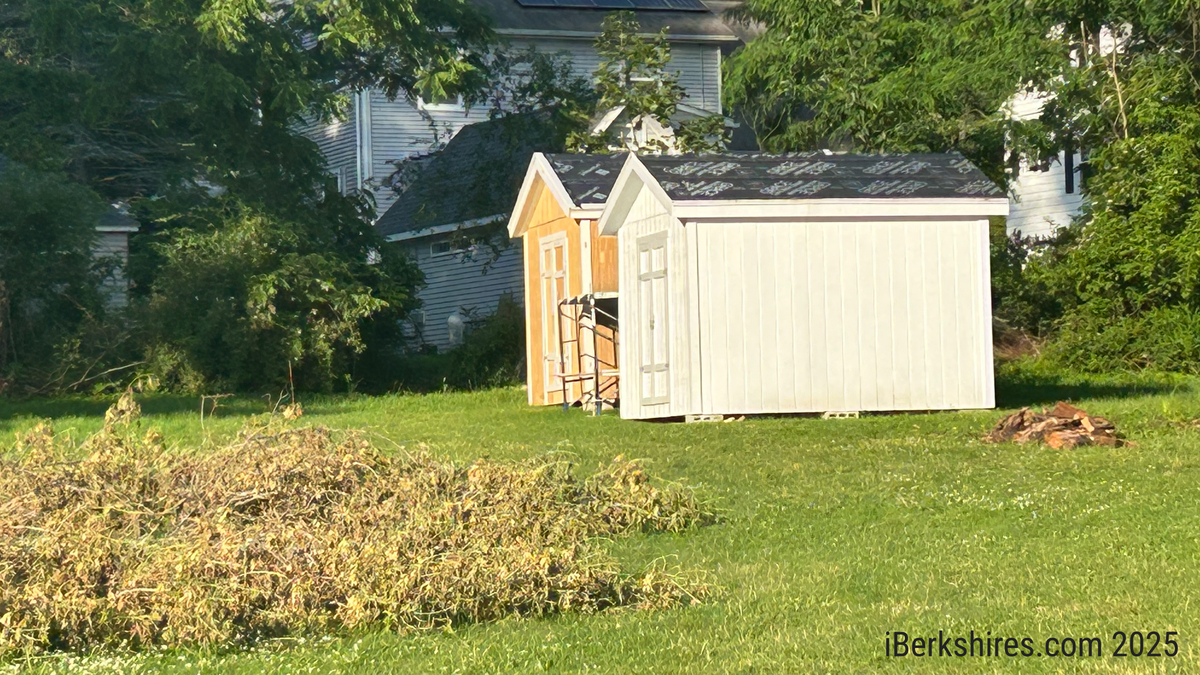
In the meantime, volunteers with Northern Berkshire Habitat have been clearing brush and small trees to make room for the planned road, Davis said. The RFP calls for the successful bidder to complete the road and associated infrastructure by Nov. 1, allowing the volunteers to begin work on the first of the homes in the spring.
Northern Berkshire Habitat plans to build one home per year — along with the first families selected to live in the homes, who contribute "sweat equity" under the Habitat for Humanity model.
Wednesday's meeting with the trust board consisted largely of going over the final language in the deed restriciton and making sure that all the "Is" were dotted and "Ts" were crossed to keep the closing on track.
The trust did vote unanimously to recommend to recommend that the Select Board approve the deed restriction, which, if signed by the town, will return to Boston for final sign-off.
Robin Malloy, a real estate attorney and member of the trust's board, and Gura said they would attend Monday's Select Board meeting to address any questions the elected officials may have.
One of the last items to be ironed out between the non-profit and the town board was language in the deed restriction around communication between Northern Berkshire Habitat and the town after the homes are built and sold.
Town counsel had written language that would have required regular reporting from the non-profit in perpetuity to verify that owners of the homes remain in compliance with terms of the deed restriction.
Representatives of the non-profit were hesitant to make such a commitment.
The parties landed on language that reads, "[Northern Berkshire Habitat] shall also promptly provide notice to the Town and the Trust if it learns, at any time, that a Unit or Unit Owner is out of compliance with the terms of the Deed Rider and, upon the Town or Trust's request, provide a certification, to the best of [Northern Berkshire Habitat's] knowledge, as to each Unit's compliance with the terms of the Deed Rider."
While Wednesday's meeting wrapped up the trust board's work to transfer the property to Northern Berkshire Habitat for Humanity, the project likely will be on the board's agenda for its July 16 meeting. In 2023, the board agreed to redirect $120,000 in Community Preservation Act funds granted by town meeting to Northern Berkshire Habitat to pay for the road.
Next month, the trustees hope to finalize the grant agreement that will allow that transfer.
While representatives from the non-profit were before the board on Wednesday, Trustee Thomas Sheldon asked Davis whether there had been any further communication with members of the Summer Street neighborhood. Some neighbors objected to the planned subdivision, at one point appealing a decision by the local Conservation Commission to the state, an action that likely delayed the start of construction.
Davis said that several of the neighbors have taken him up an offer to include them on a weekly email to volunteers laying out work plans for the site, and the offer still stands if any other nearby residents want to be added to that list so they can know what is happening on the property.
Tags: affordable housing, habitat for humanity,