Berkshire Communities Awarded FY25 Chapter 90 Funds
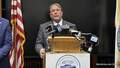
BOSTON — Gov. Maura Healey signed legislation at an event in Melrose which authorizes $200 million for fiscal year 2025 to fund bridge and road maintenance and other infrastructure projects in municipalities across the state under the Chapter 90 program In addition, the legislation will fund a total of $175 million more for six transportation infrastructure grant programs.
The Chapter 90 program provides municipalities with an annual funding source for improvements to and investments in local transportation networks. Every municipality in the state is allocated a portion of total program dollars, which allows them to evaluate their unique transportation needs and goals and allocate funding dollars accordingly.
In Berkshire County:
- Adams: $284,946
- Becket: $233,920
- Cheshire: $195,993
- Clarksburg: $73,345
- Dalton: $214,429
- Egremont: $150,037
- Everett: $696,953
- Florida: $159,304
- Great Barrington: $400,670
- Hancock: $66,837
- Hinsdale: $152,640
- Lanesborough: $212,254
- Lee: $284,382
- Lenox: $274,945
- Monterey: $194,808
- New Ashford: $42,533
- New Marlborough: $337,028
- North Adams: $414,871
Chapter 90 funding helps cities and towns compete for new levels of federal grant opportunities under the Bipartisan Infrastructure Law, as proof of available matching funds is generally required as a condition of applying for a federal award, and showing the availability of dedicated funds for this purpose dramatically strengthens applications to any such federal program.
"We know that residents' quality of life and our state's economic strength depends on people being able to get where they need to go safely and on time," said Healey. "These Chapter 90 funds and millions more for six grant programs will help us deliver on critical road, bridge and infrastructure projects that communities and the traveling public need. We're proud to sign this bill into law today and grateful to the Legislature for their partnership."
The funding will facilitate longstanding and newly identified projects and improvements, including bridge repairs and reconstruction; roadway, bike path, sidewalk, and curbing construction; accessibility improvements; milling and paving; and lighting and traffic signal improvements.
In addition to the $200 million total in Chapter 90 funding, the Rural Roadway Funding program and six transportation infrastructure grant programs will each receive a total of $25 million:
- Municipal Pavement Program, which focuses on the improvement of municipally-owned state-number routes. Projects are selected based on pavement condition data, the proportion of state numbered routes in poor condition in a municipality, and geographic equity.
- Municipal Small Bridge Program, which provides financial assistance to cities and towns for small bridge replacement, preservation, and rehabilitation projects. To be eligible, bridges must be on a local public way and must be on the State Bridge Inventory with a span between 10 and 20 feet.
- Rural Roadway Funding Program, which distributes funds to all 351 municipalities using a formula based on local road mileage, municipal population, and rurality.
- Complete Streets Funding Program, which provides funding for municipalities to build infrastructure for "complete streets" projects that support travel for everyone whether they walk, bicycle, take public transportation, or drive.
- Municipal Bus Enhancement Program, which provides grant funding to build out infrastructure related to mass transit by bus.
- Mass Transit Access Grant Program, which provides grants for design and construction improvements to access commuter rail stations or other mass transit stations, such as parking lots, drop-off and pick-up zones, bicycle storage infrastructure, and electric vehicle charging infrastructure.
- Municipal/Regional Transit Authority (RTA) Electric Vehicle (EV) Grant Program, which provides grants to RTAs and municipalities for the purchase of electric vehicles and related charging equipment.
The governor signed the bill in Melrose alongside Lt. Gov. Kim Driscoll, Administration and Finance Secretary Matthew Gorzkowicz, Transportation Secretary Monica Tibbits-Nutt, and Mayor Jennifer Grigoraitis.
Tags: Chapter 90,